
Idea 1
Rediscovering the Power of Slowness
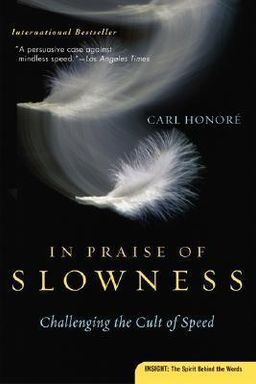
When was the last time you sat still without checking your phone, hurrying through a meal, or rushing to the next item on your agenda? In In Praise of Slowness, journalist Carl Honoré argues that our modern obsession with speed is eroding happiness, creativity, and human connection. We live in a culture that equates “fast” with good—faster work, faster communication, faster results—while dismissing anything slow as weak, lazy, or outdated. Honoré contends that this belief, what he calls the “cult of speed,” is both pervasive and destructive. The antidote is a global Slow Movement, which doesn’t reject speed but seeks balance—living at the right pace, or what musicians call the tempo giusto.
Drawing on historical analysis, global examples, and stories of ordinary people who decelerate to live better, Honoré explores how slowing down transforms everything from work and sex to food and education. He moves from urban planning in Italy to yoga studios in London, revealing how reclaiming time changes the way we think, eat, love, and create. What emerges is a deeply human story about how speed, once a symbol of progress, has become a threat to the very things that make life meaningful.
The Speed Trap of Modern Life
At the heart of Honoré’s diagnosis is what physician Larry Dossey once called “time-sickness”—the pervasive feeling that time is slipping away and we must hurry to keep up. In fast-forward societies, from Tokyo to Toronto, people structure every moment around efficiency. Clocks and screens dominate our days; schedules rule our decisions. Yet the faster we go, the less time we seem to have. Honoré traces this to cultural and historical roots: the Industrial Revolution, which transformed time into labor; capitalism’s mantra that “time is money”; and our digital age, where constant connectivity blurs the lines between work and rest. The faster technology moves, the faster we believe we must live.
This speed addiction delivers declining returns. Rushed workers burn out, families grow distant, communities fragment, and creativity dries up. Honoré describes how “doing everything faster” has become the default modern answer—even when it makes things worse. Our world, he writes, has become a 24/7 treadmill that exhausts the body, mind, and planet alike.
The Philosophy of Slow
Yet the author doesn’t call for rejecting speed altogether. The Slow Movement is not about idleness or nostalgia for a pre-industrial past. It’s about reclaiming our own rhythm—choosing when speed serves us and when it steals from us. “Being Slow,” Honoré explains, “means controlling the rhythms of your own life.” This is the movement’s moral compass. You can still travel fast, work smart, and love passionately; what matters is balance and awareness. The Slow philosophy invites us to rediscover presence: when eating, thinking, working, or making love, we give ourselves fully to the moment instead of rushing to the next task.
Honoré visits communities that embody this ethos. In Bra, Italy, birthplace of the Slow Food movement, meals are about connection, tradition, and care. In Orvieto’s Slow Cities, people walk more, drive less, and revive communal life. In yoga studios, on Tantric retreats, and even inside corporate offices experimenting with shorter workweeks, the same principle applies: reclaim time to restore quality.
Why Slowness Matters
Honoré warns that our fixation on haste isn’t just a lifestyle choice—it’s a cultural disease that distorts how we define success, intimacy, and happiness. By slowing down, we gain clarity. The “slow” virtues—patience, mindfulness, craftsmanship, empathy—are the foundation of creative thinking and strong communities. Science supports this: slower brain states (alpha and theta waves) foster insight and emotional balance. In societies that measure life by GDP and deadlines, rediscovering stillness becomes both a personal rebellion and a form of collective healing.
As Honoré journeys across continents—from the kitchens of Slow Food chefs to the meditation halls of Burmese-inspired retreats—he demonstrates how deceleration is not regression but progress of another kind. To go slow is to go deep; to take fewer turns but with greater awareness. In the chapters that follow, he explores how this simple shift reshapes our relationship with food, cities, work, sex, medicine, education, and leisure. Together, these portrait a hopeful truth: the cure for the age of rage may be as simple as learning, again, how to breathe, listen, and live at the right speed.