
Idea 1
The Wisdom of Folly: Truth Through Satire
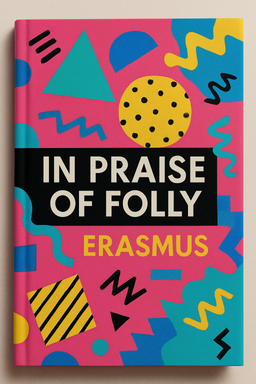
What if everything you thought was wise was actually foolish—and what the world mocks as folly is, in fact, the truest kind of wisdom? In In Praise of Folly, Desiderius Erasmus turns this question into a sparkling exploration of human vice, hypocrisy, and self-deception. Writing in the voice of Folly herself, Erasmus gives the world a biting—yet playful—critique of society and the church at the dawn of the Reformation.
In this witty oration, Folly argues that she is the true source of joy, friendship, power, and even faith. Life itself, she claims, would be unbearable without her—because wisdom brings only worries, while folly inspires love, action, and contentment. Through her speech, Erasmus lays bare the pretensions of scholars, theologians, kings, and popes who claim wisdom yet display absurd vanity and vice. Beneath the humor lies a deeply moral purpose: to reveal the corruption of institutions meant to embody truth and goodness, and to invite readers to rediscover the humility and simplicity of authentic Christianity.
Folly as Humanity's Mirror
Erasmus’ choice to make Folly speak for herself was an ingenious device. Folly boasts of her divine lineage—born of Plutus (Wealth) and fed by Drunkenness and Ignorance—and claims she brings happiness to gods and mortals alike. Through her cheerful arrogance, she exposes human hypocrisy. Everyone relies on folly, she asserts: lovers, rulers, scholars, and saints all serve her in their own way, yet none will admit it. By showing everyone’s dependence on her, Erasmus forces readers to confront their own foolishness and pride—and to laugh at it.
The device recalls classical satire, especially Lucian, whose mock orations Erasmus admired. But unlike Lucian, Erasmus aims for reform, not mere ridicule. His Folly holds up a mirror that exposes vice but also urges mercy—she mocks not out of malice, but out of love for humankind’s contradictions. As in the biblical tradition of the foolish prophet or the holy fool, she becomes the paradoxical voice of deeper wisdom.
The Renaissance Humanist Context
When Erasmus wrote In Praise of Folly in 1509, Europe was ripening for reform. The abuses of the Catholic Church—its greed, superstition, and rigid formalism—had alienated both believers and thinkers. But Erasmus was no revolutionary like Luther; he sought to purify, not destroy. As one of the great Christian humanists, he believed that education, reason, and a return to biblical simplicity could renew the faith. Folly’s playful invective thus becomes a tool for moral instruction. By laughing at others’ pretensions, readers might recall Christ’s warning against pride and rediscover the virtues of humility and charity.
This theme anticipates later works of social satire—from Swift’s Gulliver’s Travels to Voltaire’s Candide—in which irony unmasks society’s self-delusions. Yet Erasmus’ tone remains tender: even the foolish are objects of divine mercy. His irony never slides into cynicism.
The Structure: From Merriment to Morality
The work unfolds like a carnival that gradually turns serious. Early sections celebrate Folly’s gifts: how fools enjoy life, how love and friendship thrive through self-deceptions, and how even learning and government owe their vigor to irrational desire. Folly explains that without her, life would stop—it is folly that makes parents care for children, that binds friends, and inspires soldiers or lovers to brave death. But as her speech continues, the humor darkens. She criticizes philosophers who prize abstract knowledge over virtue; theologians who twist scripture for profit; monks who confuse ceremony with holiness; and prelates whose pomp contradicts Christ’s humility. Her praise becomes a scalpel that carves out moral truth.
In the end, Folly praises not the ignorant, but the simple-minded faith of “fools for Christ.” This paradox recasts foolishness as a form of divine wisdom—echoing Paul’s words that “the foolishness of God is wiser than men.” To embrace such holy folly is to renounce false pride and to live by love rather than logic.
Why This Matters Today
Erasmus’ satire still feels fresh because the tensions he exposes are timeless. We still mistake cleverness for wisdom, confuse conformity with faith, and cling to illusions that comfort us. His Folly reminds you that humility, laughter, and honest self-critique are vital to moral and spiritual health. Like a friend who teases you into self-awareness, Folly teaches that joy and imperfection belong together. Her message—delivered through laughter—is that reform begins not in condemnation but in compassion: a message as urgent now as it was in Erasmus’ Europe.