
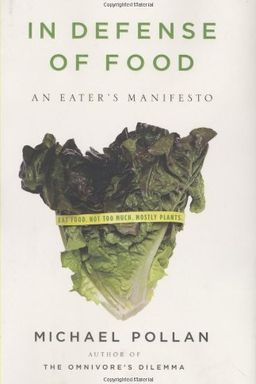
In Defense of Food cover

In Defense of Food

by Michael Pollan

In ''In Defense of Food,'' Michael Pollan critiques the rise of nutritionism and its impact on health, urging a return to whole foods and traditional eating practices. This enlightening manifesto challenges modern dietary norms and proposes a more natural, balanced approach to eating.

Eating Real Food in an Age of Nutritionism

What if the solution to our constant dietary confusion could fit into seven simple words: Eat food. Not too much. Mostly plants. That’s the question journalist Michael Pollan poses in his book In Defense of Food: An Eater’s Manifesto. For decades, Americans have been surrounded by conflicting nutritional advice—low-fat one decade, high-protein the next, antioxidants today, omega-3 tomorrow. Yet despite this obsession with healthy eating, chronic illnesses like obesity, diabetes, and heart disease continue to rise. Pollan argues that the problem isn’t just what we’re eating, but how we think about food itself.

At the core of Pollan’s argument is the idea that we’ve replaced food with “nutrients” and eating with “feeding.” In what he calls the Age of Nutritionism, Americans have come to see food as a collection of chemical components rather than something grown, cooked, and shared. This shift has given enormous power to food companies, scientists, and policymakers to define what counts as “healthy,” often in service of industrial and commercial interests rather than human well-being. The result? An epidemic of confusion, disease, and cultural disconnection from the act of eating itself.

From Food to Nutrients

Pollan traces this transformation to a 1977 Senate report led by George McGovern that linked rising rates of heart disease and cancer to the American diet. The committee’s original advice—“eat less meat and dairy”—was quickly rewritten under industry pressure to the more scientific-sounding but politically safe guidance to “choose meats, poultry, and fish that will reduce saturated fat intake.” This subtle shift marks, for Pollan, a milestone in American food culture: plain talk about foods was replaced by vague recommendations about nutrients. Ever since, government guidelines have avoided telling Americans what foods to eat, opting instead for abstract warnings about saturated fats, carbohydrates, or cholesterol—terms nearly impossible for ordinary eaters to interpret.

This linguistic sleight-of-hand allowed scientists, the media, and the food industry to create endless cycles of panic and profit. Once fat was demonized, food companies engineered “low-fat” products loaded with sugar. When carbs became suspect, “high-protein” became a marketing goldmine. And as nutrition science advanced, it gave the industry ever more ingredients to fortify, remove, or boast about—all while real food quietly disappeared from supermarket shelves.

The Ideology of Nutritionism

To describe this reductionist worldview, Pollan borrows the term “nutritionism” from Australian scholar Gyorgy Scrinis. Nutritionism is not a science but an ideology—the belief that food is best understood by studying its chemical parts. Under nutritionism, the act of eating becomes a scientific problem to be solved, and eaters must rely on experts to tell them what’s healthy. We begin to think of “good” and “bad” nutrients the way older religions thought of sin and virtue. Each decade brings new saviors (fiber, antioxidants, omega-3s) and new villains (cholesterol, carbs, trans fats), turning eating into a moralized, anxiety-inducing activity.

This worldview has profound social consequences. By focusing on invisible nutrients, it erases differences between actual foods and their processed imitations. Margarine, for instance, was once promoted as “smarter” butter because scientists believed vegetable oils were healthier than animal fats. When margarine was later linked to trans fats—now known to be more dangerous than saturated fat—industry simply reformulated it again, proving Pollan’s point: what counts as “healthy” changes, but food corporations remain the beneficiaries of every shift.

The Western Diet and Its Discontents

The tragedy, Pollan says, is that humans historically thrived on an extraordinary range of traditional diets—from the high-fat Inuit diet to the rice-and-vegetable-based diets of Asia—but wherever people adopt the Western diet of processed foods, refined grains, and sugar, a predictable wave of “Western diseases” follows: obesity, diabetes, heart disease, and certain cancers. This pattern has been documented among populations as diverse as Australian Aborigines, Pacific Islanders, and Native Americans. When these groups revert to their ancestral diets and lifestyles, even briefly, their health rebounds within weeks. The problem, then, is not fat, sugar, or carbs individually—it’s the industrialization of food itself.

Pollan’s ecological view of eating redefines health not as a matter of nutrients alone, but as a web of relationships: between soil, plants, animals, and humans. Healthy soil produces healthy plants, which feed healthy animals and, ultimately, healthy people. When industrial agriculture simplifies this web—depleting soil with chemical fertilizers, feeding cows corn instead of grass, or selling ultra-processed derivatives of those crops—it undermines the health of the entire chain.

Escaping the Western Diet

The book’s final section outlines a way out: eat real food, mostly plants, not too much. Each part is deceptively simple yet rooted in deep insight. “Eat food” means choosing whole, traditionally recognizable foods instead of processed “food products.” “Mostly plants” reminds us that fruits and vegetables, especially leaves, form the cornerstone of nearly every long-lived culture. “Not too much” encourages mindfulness about portion size, time, and community—reviving rituals of eating we’ve lost to speed and convenience.

Drawing lessons from longevity hotspots like Okinawa, Italy, and France, Pollan highlights how culture itself protects health. When meals are social, portions smaller, and pleasure emphasized over guilt, people naturally eat less and enjoy food more. Meanwhile in America, where eating is often solitary, distracted, and saturated with moral anxiety, we consume the most “health food” and yet remain the sickest. His final prescription is not another diet but a cultural shift—that we slow down, cook again, and remember that eating is an agricultural and communal act, not a scientific experiment.

Ultimately, In Defense of Food challenges you to reclaim agency over eating—by mistrusting health claims, shopping the edges of the supermarket, cooking your meals, and seeing food as more than numbers or labels. In doing so, Pollan offers not just a guide to nutrition, but a gentle manifesto for pleasure, humanity, and connection in an age of industrial food.


The Rise of Nutritionism

Pollan explains that the modern fixation on nutrients over real food stems from a twenty-first-century ideology he calls nutritionism. This worldview defines food by its measurable components—proteins, carbohydrates, fats, vitamins—and assumes that understanding these parts is the key to eating well. It sounds scientific, but Pollan argues it’s more like a belief system, one that has reshaped how you shop, eat, and think about what nourishes you.

How Food Became Science

Nutritionism’s roots go back to nineteenth-century chemistry. German scientist Justus von Liebig identified the macronutrients—protein, fat, and carbohydrates—and claimed he had solved the mystery of nutrition. Others followed, distilling food into a list of its “essential” elements. Vitamins, discovered in 1912 by Casimir Funk, added glamour to this emerging science, offering middle-class consumers the promise of “positive health.” Over time, food stopped being understood in terms of culture, pleasure, or identity; it was now a biochemical puzzle awaiting expert interpretation.

The 1977 U.S. Senate hearings led by George McGovern amplified this trend. Pressured by meat and dairy lobbies, the committee replaced “eat less meat and dairy” with “reduce saturated fat intake,” turning specific food advice into scientific jargon. Americans now needed translators—nutritionists, journalists, and marketers—to decode the new dietary language. With that, the modern cult of nutrients was born.

The Good Nutrient vs. Bad Nutrient Game

In the ideology of nutritionism, every nutrient falls into a moral category. There are good ones (fiber, polyunsaturated fats, antioxidants) and bad ones (cholesterol, saturated fats, trans fats). Each decade brings its own salvation narrative: in the early twentieth century it was protein, later carbohydrates, then fats, and today, perhaps, sugar or gluten. Pollan compares this cyclical obsession to a theological drama, complete with dietary original sin and redemption through consumption of the newest “superfood.”

The problem, he says, is not that nutrition science is useless—it has taught us a great deal—but that the reductionist impulse blinds us to the synergy of whole foods and eating patterns. A vegetable or loaf of bread isn’t the sum of its parts; pull nutrients out of context and their effects change entirely. Beta-carotene supplements, for instance, failed to reproduce the cancer-preventive effects of carrots themselves and sometimes did harm. As Pollan puts it, “You can’t do a trial on broccoli.”

Why Nutritionism Persists

Nutritionism endures, Pollan explains, because it benefits powerful interests. Food manufacturers thrive when consumers believe they need expert products rather than simple ingredients. Scientists depend on measurable variables to publish research. Governments prefer giving abstract advice (“reduce sodium”) to politically risky guidance (“eat less fast food”). And as eaters, we’ve learned to outsource common sense to experts, surrendering the pleasure and trust that come from knowing our food intimately.

“Nutritionism holds that foods are essentially the sum of their nutrient parts… Even processed foods may be considered healthy if they contain the right quantities of key nutrients.” —Michael Pollan

For Pollan, the irony is that nutritionism, supposedly designed to make us healthier, coincided with an explosion of chronic disease. We are better fed but more poorly nourished. The very language of “good” and “bad” nutrients has distracted us from what truly matters: the wholeness of foods, the rhythms of meals, and the wisdom of culture. Escaping nutritionism, he argues, begins by replacing scientific “why” with human “how”—how we grow, cook, share, and enjoy what we eat.


The Western Diet Problem

The Western diet, Pollan argues, is the global export of industrial food: refined grains, added sugars and fats, cheap meat, and processed products stripped of nutrients and full of calories. Wherever this diet arrives, a predictable cluster of illnesses follows—obesity, diabetes, cancer, and heart disease—collectively known as the “diseases of civilization.”

Lessons from the Aborigines

One of Pollan’s most striking examples comes from nutrition scientist Kerin O’Dea’s study of diabetic Australian Aborigines who returned to the bush to live as hunter-gatherers. Within seven weeks on their traditional diet of fish, shellfish, yams, figs, and bush honey, participants lost weight, blood pressure dropped, triglycerides normalized, and diabetes symptoms reversed. Their health deteriorated again when they returned to processed food. This experiment dramatizes how swiftly the body recovers when freed from industrialized eating.

A Century of Warning Signs

Doctors from Weston A. Price to Denis Burkitt observed similar patterns across cultures. In non-industrialized societies—whether in the Swiss Alps, the African highlands, or the Pacific islands—dental decay, diabetes, and heart disease were almost unknown until sugary, refined Western foods appeared. Weston Price, a dentist in the 1930s, documented how shifting from natural foods to processed flour and sugar led almost immediately to tooth decay and malnutrition. When he analyzed the native diets, they contained ten times more vitamins and minerals than modern Western fare.

Burkitt coined the phrase “Western diseases” and, like Price, traced them to the refinement of food and the loss of fiber, variety, and culture in eating. Pollan highlights how these early scientists integrated biology, culture, and ecology—long before “nutritionism” reduced food to chemistry alone.

Quantity Over Quality

Industrial agriculture, he writes, has prioritized yield over nutrition, creating what he calls “the nutritional inflation” of modern food. A 2007 report by the Organic Center found declines of 10–40% in minerals like calcium and iron in produce since the 1950s. Why? Fertilizer-fed monocultures overproduce calories but starve the soil of diversity. To make up for lost nutrition, we eat more—trading variety and micronutrients for cheap starches and fats. The paradox: Americans are simultaneously overfed and undernourished.

Pollan argues that the Western diet is less about food choices than about an entire system of simplification: chemically simplified soil, mechanized farming, and standardized meals. The solution isn’t to “fix” the Western diet with supplements or nutrient tweaks, but to shorten and diversify the food chain—to reconnect the eater to the earth through whole, fresher food that still remembers the soil it came from.


Industrial Food and the Loss of Culture

Pollan contends that industrial food has not only stripped nutrition from what we eat but also erased our cultural memory of how to eat. The supermarket’s abundance disguises a monoculture of ingredients—mainly corn and soy—broken down and reassembled by food science. In the process, we’ve traded quality for convenience, traditional meals for individualized consumption, and taste for engineered flavor.

From Complex Systems to Simple Ingredients

Industrial agriculture’s success rests on chemical simplicity. Crops are fed nitrogen, phosphorus, and potassium (NPK), ignoring the microbial ecosystems that once made the soil—and the plants—nutrient-rich. Rolling mills, hydrogenation, and preservatives extend shelf life but remove vitamins, fiber, and flavor. As the book notes, the advent of refined flour and sugar in the late 1800s led to epidemics of pellagra and beriberi, diseases cured only when scientists reinstated the nutrients industrialization had taken away.

The Food Science Revolution

Pollan calls the 1980s a “Golden Age for Food Science.” Low-fat yogurts, cholesterol-free margarine, and high-fiber cereals appeared to answer every nutritional anxiety. When fat was deemed dangerous, food companies stocked shelves with “fat-free” cookies sweetened with corn syrup. When carbs fell out of favor, “Atkins-friendly” pasta hit the market. Each wave of health concern—the oat bran fad, antioxidant craze, probiotic boom—was monetized by industry. Meanwhile, fresh produce remained silent in the aisles, unmarketed and unlabeled, unable to shout “heart healthy!” despite being so.

As Pollan observes wryly, “It’s a whole lot easier to slap a health claim on a box of cereal than on a potato.” Food packaging became “an advertisement for the chemical principle of nutrition.” The irony is that food science, which promised empowerment through data, made us more dependent on corporations to decide what’s good for us.

Erosion of Food Culture

America’s food culture—once transmitted from parents, neighbors, and tradition—disintegrated in a few generations. Fast food replaced home-cooked meals as shared dinners disappeared. In Europe, Pollan notes, mealtimes are governed by social rules: smaller portions, longer meals, taboo on snacking. In America, eating has become solitary, rushed, and anxious. We eat anywhere but at a table—behind the wheel, at our desks, before a screen—and then wonder why we never feel satisfied.

“The shared meal elevates eating from a mechanical process of fueling the body to a ritual of family and community.” —Michael Pollan

This cultural amnesia, Pollan warns, is easier to exploit than restore. Without the guidance of custom, we look to labels, diets, or “experts.” His prescription is simple but radical: recover culture in the kitchen. Cook your food. Share meals. Value moderation over restriction and pleasure over guilt. In short, treat eating as an act of culture, not chemistry.


Escaping the Western Diet

Having shown the limits of nutrition science and the harms of industrial eating, Pollan turns to the practical question: how should we eat? His answer—“Eat food. Not too much. Mostly plants.”—is both manifesto and map. Each clause attacks a different dimension of the modern dilemma: the loss of real food, the excess of consumption, and the narrowing of diets to meat and processed products.

1. Eat Food

“Eat food” seems obvious until you walk into a supermarket. Much of what’s sold there, Pollan says, is not food but “food-like substances.” To identify real food, he proposes commonsense rules: don’t eat anything your great-grandmother wouldn’t recognize, avoid products with more than five ingredients, or anything containing unpronounceable chemicals or high-fructose corn syrup. Ignore packages that make health claims—they usually compensate for what’s missing inside.

Shop the edges of the supermarket (where you find produce, meats, dairy) and avoid the center aisles (where “food products” dwell). Better yet, skip the supermarket when possible—shop at farmers’ markets or join a CSA (community-supported agriculture). These are places where food still has a face, a story, and a season.

2. Mostly Plants

Plants, especially leafy greens, are universally linked to health and longevity. They provide antioxidants, fiber, and essential fatty acids our bodies can’t synthesize. Beyond nutrients, eating plants aligns us ecologically: they connect us to the photosynthetic world that ultimately sustains all life. Pollan celebrates diversity—eating multiple colors and species ensures nutritional variety and supports biodiversity on farms. “You are what what you eat eats too,” he quips, reminding readers that animals fed on grass produce richer, healthier meat and dairy than those fed on grain in feedlots.

A plant-heavy diet doesn’t mean abstaining from meat; rather, it means reimagining it. Thomas Jefferson once described meat as “a condiment for the vegetables.” When treated as a flavoring rather than the centerpiece, meat enhances rather than dominates a meal—an approach reflected in traditional cuisines from the Mediterranean to Japan.

3. Not Too Much

Americans, Pollan observes, lack rituals of moderation. Other cultures practice portion control naturally—the French avoid seconds; the Japanese follow hara hachi bu, eating until 80% full. We, by contrast, eat until our plate is empty or the TV show ends. His antidote: slow down, pay attention, and eat meals rather than snacks. Eating together anchors consumption in conversation and pleasure, helping you eat less without feeling deprived.

The Deeper Meaning of Food

These rules transcend nutrition—they restore food’s moral, ecological, and communal meaning. Pollan urges you to cook, garden, and understand where your food comes from. When you do, eating ceases to be about managing risk or guilt and becomes a joyful participation in life’s cycles. “Eating,” he writes, “is an agricultural act.” To eat responsibly is to recognize your place in the web of nature and culture that sustains you.

By returning to old wisdom made new—simple meals of real food, savored in good company—Pollan suggests we can heal not only our bodies but our broken relationship with the earth itself.

Dig Deeper

Get personalized prompts to apply these lessons to your life and deepen your understanding.

Go Deeper

Get the Full Experience

Download Insight Books for AI-powered reflections, quizzes, and more.