
Idea 1
Truth, Violence, and the Anatomy of an American Crime
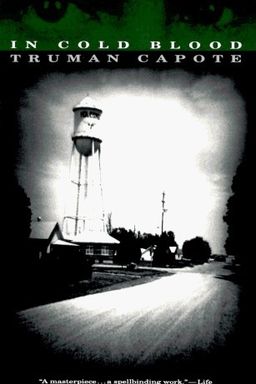
How can a seemingly ordinary family’s murder reveal the hidden fractures of American life? In In Cold Blood, Truman Capote reconstructs the 1959 killing of the Clutter family in Holcomb, Kansas, and transforms a true-crime story into a meditation on moral order, psychology, and community. The book blends journalistic precision with novelistic depth to show that violence does not arise from nowhere; it grows out of human suffering, delusion, and social fault lines. You follow how one event unfolds—from peaceful routine to horror—and what that rupture tells you about America’s values, fears, and conscience.
A portrait of normality unsettled
Capote begins with atmosphere—distant wheat plains, hard blue skies, modest buildings, and a community that defines itself by predictability. The Clutters thrive at River Valley Farm, embodying postwar ideals: faith, hard work, and decency. This setting of order and decency becomes Capote’s baseline, the moral geography that will later be violated. By amplifying the town’s ordinariness, Capote ensures the crime feels not only tragic but symbolically invasive—a disruption of America’s own self-image.
The crime that redefined innocence
The story pivots on four murders committed by two drifters, Perry Smith and Richard Hickock, who expected to rob a wealthy farmer of a nonexistent safe. The brutal killings—planned with cold logic, executed with erratic emotion—illustrate randomness meeting delusion. Capote documents them not to sensationalize, but to explore what happens when fantasies and wounds find lethal expression. Their act ripples beyond the Clutter home, shaking Holcomb’s faith in its own safety and making every locked door a statement of lost trust.
Humanizing killers without excusing them
You see Perry Smith and Dick Hickock not as abstractions but as fragments of human failure. Perry, an intelligent, tormented dreamer scarred by childhood neglect, becomes the emotional core of the book. Dick, a cunning yet shallow manipulator, mirrors a pragmatic cruelty. Capote’s psychological portraits push you to question how much of a crime belongs to will, to trauma, or to circumstance. (Note: Capote pioneered what he called the “nonfiction novel,” combining empathetic insight and journalistic investigation to make readers dwell inside both the victims’ and perpetrators’ minds.)
Community, fear, and the fragility of order
After the murders, Holcomb turns from pastoral calm to collective panic. Neighbors burn the Clutters’ belongings, doors are bolted, and rumor corrodes trust. Capote turns this reaction into allegory: a nation once confident in moral geography now sees that evil can emerge from within. The narrative captures grief not as isolated sorrow but as communal confusion, where gossip acts as therapy and fear becomes civic glue.
Justice, law, and moral ambiguity
Following the Kansas Bureau of Investigation and agent Alvin Dewey, you witness justice unfolding as meticulous work—matching footprints, tracing pawn tickets, and decoding human behavior. Yet Capote shifts the question from who did it to what justice means. From interrogation to trial and finally to execution, the process exposes a society both orderly and vengeful. Legal proceedings reaffirm the rule of law even as death-row scenes humanize its objects. The long appeals that end on the gallows underscore Capote’s haunting point: understanding does not always yield mercy.
The book’s essence
Through exhaustive research and novelistic empathy, Capote constructs an anatomy of violence that is psychological, social, and existential. You come away understanding that In Cold Blood is not only about a murder but about the limits of explanation itself. The Midwest’s orderly surface, the killers’ inner distortion, and the nation’s demand for justice combine to reveal a deeper American paradox: the desire to believe in moral certainty while confronting evidence that human behavior defies such neat boundaries.