
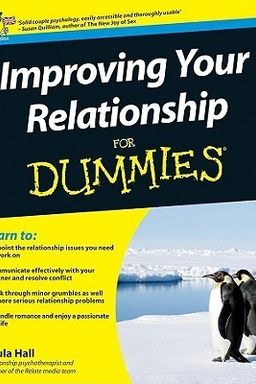
Improving Your Relationship For Dummies cover

Improving Your Relationship For Dummies

by Paula Hall

Improving Your Relationship For Dummies delivers straightforward strategies for couples seeking to enhance intimacy, communication, and resilience. From new beginnings to rekindling long-term bonds, discover practical advice for navigating challenges and fostering a thriving partnership.

Building and Sustaining Love’s Economy

Why do some couples thrive while others slowly run out of emotional credit? Paula Hall answers this through a powerful guiding metaphor — the relationship bank account. Every interaction is either a deposit that builds emotional wealth or a withdrawal that depletes it. The book you’re working through doesn’t just diagnose problems; it teaches a structured, practical way to invest wisely in love, intimacy, communication and shared life, while recognizing when repair or ending is the healthier road.

Love as emotional economics

Hall begins by reframing relationships as joint accounts that need regular deposits — attention, empathy, affection, honesty, time, playfulness — and careful avoidance of withdrawals — neglect, sarcasm, secrecy and betrayal. Couples like Tom and Rose learned that small daily gestures (‘I love you’, making tea, listening attentively) had the same compound effect as interest on a savings account. When crises hit, high balances create resilience; low ones lead to collapse. Massive withdrawals (abuse, betrayal, dishonesty or indifference) can bankrupt love entirely.

Hall’s repair formula — apology, repentance and forgiveness — sets the tone for the book’s practical style: relationship problems are solvable with clear structure and genuine emotional work. (Note: This premise echoes John Gottman’s “emotional bank account,” yet Hall’s version expands into moral and biochemical layers.)

Know where you stand

Before you fix anything, Hall insists you audit your relationship. Use her Relationship Inventory: compatibility (values and goals), intimacy (emotional, physical, spiritual closeness), practical living, and communication. You score satisfaction, compare with your partner, and prioritize fixes. Jenny and Mark found hidden discontent when they scored differently — a sign that silent issues need attention. Strengths become leverage; if you already share great teamwork on chores, you can translate that skill into emotional problem-solving.

Ground rules for self and couple

Love demands personal growth and mutual respect. Hall reminds you: a relationship can’t be stronger than the people in it. You must love yourself to love your partner healthily. Poor self-esteem breeds jealousy, anxiety and resentment, as Kam and Sara discovered. The cure: self-compassion, reframing old labels, and fostering curiosity about differences rather than condemnation. Friendship underpins longevity — liking your partner as much as loving them creates durability. Couples like Fran and Bo showed how openness and adaptive discussion avert crises when life goals shift.

Time, play and chemistry

Part II moves from philosophy to logistics. Relationships don’t run on autopilot; they require scheduled quality time. Hall rejects the myth that romance is spontaneous magic. She defines urgent vs important — emails can wait, your marriage can’t. Routine couple time (daily talk, weekly date, monthly outing) sustains connection. Play sharpens joy and rejuvenates intimacy; laughter does biochemical work lowering stress and raising oxytocin.

Romance itself is explained through three chemical phases: lust, attraction and attachment. Recognizing natural brain changes prevents misinterpreting biological calm as emotional failure. You can reinvigorate attachment deliberately — touch (“Vitamin T”), novelty, reminiscence, and sensual rituals (as Sue and Jerry learned while rekindling love decades in). The book’s science serves empathy: feelings change because chemicals change, yet behavior can recreate the chemistry.

Sex, communication and conflict

Healthy sex builds biochemical and emotional bonds. Hall’s sexual growth plan invites couples to discuss nine domains — affection, sensuality, playfulness, adventure, eroticism and more. Myths are dismantled: sex isn’t only intercourse nor performance perfection. With frank advice on common dysfunctions and compassionate realism, Hall shows that co-created sex plans and physical routines like pelvic-floor training can restore confidence.

Communication occupies the book’s backbone. You learn to speak clearly (“I” statements, describe feelings, request action) and to listen with empathy. Argument management evolves through identifying destructive styles — attacker, shock absorber, subversive or peace-seeker — and transitioning toward the negotiator. Awareness, naming, and neutral language transform rows. AID (Acknowledge, Identify, Decide), diversion, postponing and ventilation provide instant tools for prevention or de-escalation.

Healing deeper wounds

Recurring conflict means underlying triggers and cognitive distortions. Hall gives psychological clarity: exaggeration, mind-reading and polarization distort perception. Naming these heals perspective. Post-argument rituals — responsibility, apology, forgiveness, acceptance and reconnection — turn cyclical fighting into growth. When jealousy, mental illness or anger enter the picture, safety comes first; practical psychology follows. The firework model for anger (trigger, fuse, barrel) shows how catching thoughts early prevents explosions.

Repair and renewal — or respectful closure

Affairs test every concept in the book. They require transparency, accountability and structured forgiveness. Hall identifies five affair types (thrill, exit, revenge, safety, online) and provides guided recovery sequences. Karen and Tim’s scoring exercise illustrates rebuilding via concrete trust metrics. If repair proves impossible, Hall’s final chapters treat separation as an act of compassion, not failure. You learn to decide consciously, protect children, manage grief, and rebuild purpose.

Core takeaway

Love is practical economics guided by emotional intelligence. Daily deposits, respectful communication, play and repair rituals keep your account solvent. The book’s wisdom lies in its blend of compassion and actionable technique: relationships thrive not through luck but meticulous emotional management.


Audit and Align Your Relationship

You can’t fix what you don’t measure. Hall’s Relationship Inventory helps you turn vague unease into structured data. Couples assess four domains — compatibility, intimacy, practical living, communication — scoring satisfaction separately to reveal blind spots. This exercise transforms overwhelm into actionable focus.

Compatibility and values

Compatibility means shared life direction: about children, career, religion, fidelity or lifestyle. Red conflicts (irreconcilable values) threaten long-term success; smaller gaps allow negotiation. If one wants kids and the other doesn’t, Hall labels it a “core incompatibility” requiring professional help or conscious dissolution.

Intimacy and communication

Assess different intimacy types — emotional closeness, physical affection, recreational friendship, and spiritual connection. Relationship satisfaction rarely depends on one domain; you can compensate or cross-train between strengths. For example, Colin and Terry converted their teamwork on chores into emotional collaboration.

Prioritization and professional help

Once you identify strengths and weaknesses, build a ‘to-fix’ list. Begin with achievable wins (easy fixes that raise morale) before tackling red-zone problems. Success breeds motivation. When persistent differences appear, therapist-guided negotiation accelerates healing. Like Jenny and Mark, couples often uncover buried problems best explored with neutral guidance.

Insight

Self-awareness precedes change. The inventory shifts relational thinking from blame to system improvement — a foundation for every other technique in Hall’s program.


Invest Daily and Play Often

Love runs on time, attention and fun. Hall argues that couples underestimate how scheduling and playfulness serve intimacy. Urgent but trivial demands (emails, chores) crowd out what’s truly important — each other. Learning to manage time for love creates an upward spiral of connection.

Quality over quantity

Start small but consistent: 15 minutes of phone-free talk, weekly dates, monthly getaways. Ron and Moira began this ritual after a health scare and rebuilt warmth. These routines invest emotional interest; neglect acts like hidden withdrawals. The rule of thumb: five small deposits daily keep the emotional climate rich.

Play and companionship

Play is not optional; it’s neurochemical bonding. Shared laughter releases dopamine and oxytocin, lowering stress. Hall’s examples include hobby-sharing, group activities or creative projects — painting, dancing, volunteering — anything that replaces monotony with positive novelty. When drift symptoms arise (less touching, less talking), prioritize play immediately to prevent emotional distance becoming habitual.

Key idea

Intentional time and shared fun rebuild emotional capital faster than any grand gesture. Treat joy as maintenance, not luxury.


Romance, Chemistry and Sexual Connection

Romance sustains love long after passion's first flames fade. Hall transforms romantic cliché into biochemical realism: love follows predictable chemical phases—lust, attraction, attachment—but deliberate behaviors can reignite chemistry. Touch, novelty and ritual modulate hormone systems, keeping long-term bonds vibrant.

Understanding the three phases

Lust (testosterone, oestrogen) drives initial desire. Attraction (dopamine, serotonin, PEA) brings the ‘in-love’ high. After about two years, attachment (oxytocin, vasopressin) dominates, creating security and deep affection. Recognizing these transitions prevents panic when butterflies fade — it’s natural biology, not relationship decay.

Reviving attachment intentionally

Hall’s formula is practical: increase novelty (new activities), use Vitamin T (five daily touches) and celebrate memories through a Love Record or ‘I loved you because...’ list. Sue and Jerry revived affection after decades by cataloging reasons they first loved each other.

Sexual growth plans

Sex functions as emotional glue. You build a tailored growth plan covering affection, sensuality, playfulness, erotic exploration and adventure. Craig and Beth’s case shows that broadening sex’s definition restored intimacy after years of struggle. Avoid myths: perfection every time is unrealistic, and desire varies with life stage. Hall’s exercises—environment design, playful initiation and fantasies—use structure to liberate spontaneity. Scheduled sex or flirtation rituals don't kill romance; they create reliability for pleasure.

Essential takeaway

You can fall in love again by choice. Stimulate touch, novelty and positive memory — chemistry follows consistent care rather than fate.


Master Communication and Conflict

Communication determines whether love flourishes or fractures. Hall turns talk into a discipline. She teaches how family origins shape style, how listening errors sabotage connection, and how clear techniques prevent escalation. Effective communication builds the emotional infrastructure for intimacy and repair.

Speaking and listening

Speak with ‘I’ statements, give context, express feelings and request specific changes. Listen actively: restate, clarify, empathize. Simon and Nicole’s mismatch (silent vs emotional talker) resolved when they traced styles to family modeling. Awareness dissolves misinterpretation.

Argument styles

Hall identifies archetypes—the subtle subversive, high-level attacker, pre-emptive striker, shock absorber, and peace-seeking missile. Each learned from past survival habits. Moving to the negotiator style requires naming patterns aloud, cooling down, and using collaborative phrasing (“How can we solve this together?”). Don and Jo mastered time-outs and conscious labeling to break reactivity.

Stopping fights early

Hall’s AID method (Acknowledge, Identify, Decide) and three Rs (Relax, Reassure, Reconnect) stop storms from brewing. When conflict rises, you can divert with humor, postpone with intent, or ventilate briefly before review. Prevention beats recovery. Naming emotions and scheduling deliberate restoration time collapses most rows before damage occurs.

Negotiation and repair

Structured negotiation steps—identify real issue, agree shared goal, brainstorm options, test and review—turn perpetual fights into creative solutions. Maggie and Tim turned their “TV vs talk” battle into a mutual relaxation plan. Post-row rituals (acknowledge, apologize, forgive, accept forgiveness, reconnect) complete repair. Patricia and Ray’s trigger mapping taught them self-knowledge that halted repeated misreadings.

Practical truth

Conflict isn’t proof of failure; unmanaged conflict is. Structured, negotiated dialogue converts friction into intimacy.


Handling Practicalities and Healing Crises

Love lives in the mundane: chores, money, parenting. Hall teaches how to manage these logistical sources of emotional tension and how to confront deeper crises—jealousy, mental health and betrayal—without losing compassion or safety. Doing life together fairly prevents resentment’s buildup.

Housework, money and children

Housework often masks feelings of disrespect. The cure: create equitable rotas, rotate disliked tasks, and define fairness by context (different work hours mean different contributions). Money rows carry symbolic power issues. List income, expenses, and luxuries; agree budgets and transparency to remove suspicion. Parenting harmony requires shared rules and united presentation. Step-parenting demands patience—don’t discipline until trust forms.

Jealousy and mental health

Jealousy can be normal but turns toxic when driven by insecurity. Hall’s five-step remedy (avoid triggers, reality check, positive self-talk, admit feelings, seek reassurance) retrains thought loops. Partners of jealous individuals must blend empathy with firm boundaries. When depression or anxiety intrude, emphasize personhood beyond illness, seek professional help and pace progress. Compassion, not fixing, stabilizes connection.

Anger and affairs

The firework model turns anger management into clear layers: trigger, fuse, barrel. You defuse by interrupting fuse thoughts with calm self-talk and choosing assertive—not aggressive—expression. Rage and violence require immediate safety measures. With affairs, Hall’s framework of honesty, accountability and gradual trust rebuilding allows healing or dignified closure. Forgiveness is slow work, not surrender.

When it’s over

Sometimes, repair isn’t enough. Hall gives a humane exit map: weigh reasons to stay or leave, plan separation thoughtfully, protect children from adult conflict, and attend to emotional recovery. Separation becomes an act of maturity, not collapse. Reconnection with self through hobbies and friendships marks the beginning of post-relationship renewal.

Final reflection

Healthy love involves practical systems as much as romantic chemistry. Managing daily life and crises with fairness, curiosity and safety safeguards the emotional wealth you’ve built.

Dig Deeper

Get personalized prompts to apply these lessons to your life and deepen your understanding.

Go Deeper

Get the Full Experience

Download Insight Books for AI-powered reflections, quizzes, and more.