
Idea 1
The Impact Player Mindset
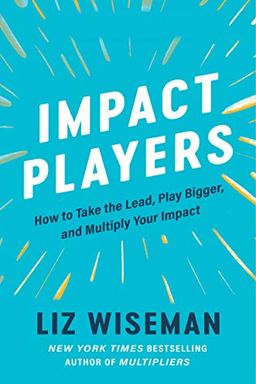
Why do some professionals consistently deliver extraordinary value while others, equally talented, plateau? In Impact Players, Liz Wiseman argues that standout contributors differentiate themselves not through superior competence alone but through a distinct way of seeing and responding to work. These individuals wear what she calls opportunity goggles—a lens that interprets ambiguity, gaps, and challenges as invitations to contribute rather than reasons to withdraw.
Wiseman’s research—spanning companies like Google, Target, Oracle, Adobe, NASA, and Unilever—shows that Impact Players expand value precisely where others stop. They do it through five repeatable behaviors: they do the job that’s needed, step up and step back, finish stronger, ask and adjust, and make work light. Together these habits transform ordinary contributors into indispensable problem solvers whom leaders instinctively trust with the messy, unplanned, and mission-critical work.
Seeing Opportunity Instead of Ambiguity
At the core of this philosophy is a cognitive shift. Most people freeze or seek clarity when confronted with incomplete information. Impact Players instead lean in. They view ambiguity as permission to exercise judgment, curiosity, and initiative. It’s not naive optimism but a pragmatic form of agency that converts uncertainty into motion. For example, Liz’s early experience at Oracle taught her to interpret unclear mandates as playgrounds for invention. Similarly, Maninder Sawhney at Adobe translated an executive’s vague emphasis on customer focus into a tangible metrics project that redefined how the company measured attrition—and in doing so, vaulted into a leadership role.
Behavioral Foundations of Impact
Wiseman found that top performers don’t hide behind their role description. They fill gaps, lead temporarily when leadership is absent, and deliver beyond expectations. They act like entrepreneurs inside their organizations, demonstrating ownership without waiting for perfect authority. Where others rely on reassurance, they generate their own clarity by asking better questions: “What’s Important Now?” (the W.I.N.) or “Where could my effort remove friction for others?”
That behavioral pattern compounds into visibility and trust. Managers estimate these Impact Players contribute roughly three to ten times the value of their peers, not because they work longer hours but because their efforts directly relieve managerial overload. (Note: This aligns with Ron Heifetz’s idea of adaptive leadership—mobilizing people to address challenges that require learning rather than just execution.)
Culture and Multipliers of Trust
Leaders reciprocate when they encounter these contributors. Trust becomes a deposit account: each time you deliver complete, low-drama results in the midst of uncertainty, managers invest more—time, access, assignments, and sponsorship. Over time this creates what Wiseman calls a value loop: your reliability attracts investment, and each investment gives you leverage to create bigger wins. Maninder’s story at Adobe and Sabine Khairallah’s launch at Unilever exemplify this compounding trust cycle.
Beyond Skill: Building a Learning Reputation
Importantly, Impact is not static achievement—it’s adaptive momentum. The best contributors learn faster than the game changes. They seek guidance instead of validation, turn feedback into immediate adjustment, and publicly close the loop by showing how they applied advice. This visible learning builds a reputation of coachability, one of the strongest currencies in performance cultures like Google or Salesforce. (Parenthetical: Amy Edmondson’s research on psychological safety echoes this principle—learning requires exposure and follow-through.)
Making Work Lighter for Others
Finally, Impact Players create lift around them. They simplify complex tasks, reduce noise, ease emotional strain, and amplify others’ strengths. They act as organizational lubricants rather than friction points. Managers and peers describe them as the people who “make work light.” Their composure in chaos—like Genie Chance during the Anchorage earthquake—signals reliability and calm under pressure. This emotional steadiness enhances collective performance.
The overall argument of Impact Players is that excellence is teachable if you change your lens. By choosing agency over assignment, curiosity over compliance, and contribution over comfort, you shift from being busy to being essential. Wiseman shows through vivid stories and research-backed habits that your greatest leverage lies not in doing more work, but in doing the work that matters most—especially when no one has told you exactly what to do.