
Idea 1
Facing Death and the Human Drive for Immortality
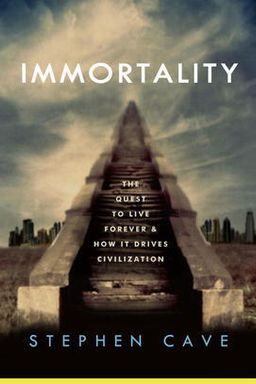
Why do humans build cities, compose songs, or dream of digital afterlives? Stephen Cave’s Immortality argues that nearly every human endeavor stems from one overwhelming fact: you know you’re mortal, yet you cannot mentally grasp not existing. This tension—what he calls the Mortality Paradox—drives civilizations to invent stories and technologies that promise survival beyond death’s horizon.
The Four Routes Up the 'Mount of Immortals'
Cave organizes the human struggle against mortality into four narrative paths: Staying Alive, Resurrection, Soul, and Legacy. Each represents a distinct but overlapping strategy for outwitting death. The Staying Alive path stretches from ancient hygiene and mummification to modern medicine and transhumanist engineering, binding the survival instinct to technological progress. The Resurrection narrative promises a comeback—through religious faith, cryonics, or digital restoration. The Soul path moves beyond matter: your true essence is immaterial and endless. Lastly, the Legacy path trades personal survival for continuity through offspring, culture, and memory.
These four routes are not mere categories; they explain why civilizations shape religions, empires, and knowledge systems around them. Ancient Egypt mingled all four: mummification (Staying Alive), Osiris resurrection rites, belief in an eternal ka (Soul), and monumental inscriptions ensuring remembrance (Legacy).
The Cognitive Engine Behind Immortality Stories
Cave shows that your brain’s unique capacity for self-awareness creates a paradox. You can imagine the future—including the fact of dying—but you cannot imagine subjective nonexistence. Freud and cognitive scientists like Jesse Bering confirm that mental simulations of death always include a witnessing “you.” This cognitive blind spot makes immortality narratives feel intuitively true, even when evidence contradicts them. In response, cultures invent symbolic “buffers”—religious, national, or moral systems—that manage death anxiety.
Social psychologists call this Terror Management Theory: when reminded of mortality, you cling more tightly to cultural worldviews, defend them, and attack dissenters. Cave uses examples from Egyptian icon erasures to modern ideological purges to show how defending an immortality narrative can fuel fanaticism as easily as inspire creativity.
The Arc from Myth to Science
From the Epic of Gilgamesh to transhumanist labs, the same longing repeats: deny death, affirm continuity. Cave travels through myths and historical figures—Qin Shi Huang’s elixir hunts, Paul’s transformative resurrection doctrine, Augustine’s immortal soul, and modern biologists rewriting genes—to track how ancient quests turned into modern research. Each step reengineered hope: mystic potions became biochemistry, heaven morphed into uploaded consciousness.
Yet through every transformation, he insists on one truth: each story copes with, not solves, the Mortality Paradox. You cannot escape mortality by shifting metaphors—from gods to machines—because identity itself defies uninterrupted preservation.
Toward a Mature Response
After surveying humanity’s four immortality strategies and their modern reboots, Cave proposes a fifth path—the Wisdom Narrative—which accepts death instead of denying it. Inspired by Gilgamesh’s final acceptance and Stoic philosophy, this perspective trades immortality promises for practical virtues: compassion, presence, and gratitude. Rather than erecting pyramids or uploading your mind, the wisdom approach asks you to live fully within mortality’s frame.
Across cultures and centuries, Cave’s synthesis shows you that civilization is a collective defense against extinction. Medicine, religion, art, and technology each evolve from the same root fear—and each masks, in different language, your attempt to imagine living forever. His final insight is sobering but liberating: by recognizing death as unavoidable, you gain freedom to engage life without illusion, to create meaning here, rather than chase eternity there.