
Idea 1
From Taboo to Policy: The UAP Reckoning
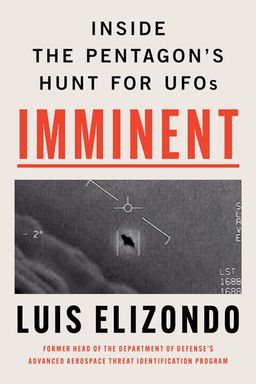
How do you turn a ridiculed topic into accountable national-security policy? In this book, Luis “Lue” Elizondo argues that you do it the hard way: build a quiet program with credible people, gather sensor-backed cases, distill common performance traits, propose testable physics, and then force transparency when bureaucracy resists. He contends the Unidentified Anomalous Phenomena (UAP) issue moved from taboo to taskers because political will met disciplined analysis at the right moment—and because a handful of insiders refused to let stigma dictate safety.
You start with an unlikely coalition. Senators Harry Reid, Ted Stevens, and Daniel Inouye seed funding for AAWSAP inside the Defense Intelligence Agency (DIA); Bob Bigelow’s BAASS stands up research and field investigations; scientists like Dr. Hal Puthoff and intelligence officers like Dr. James (Jim) Lacatski and Jay Stratton give it backbone. When leadership changes and the program faces pushback, elements migrate into the Office of the Secretary of Defense (OSD) as AATIP, where Elizondo applies counterintelligence tradecraft to a problem most colleagues still mock. This is the institutional story: how a contested program survives long enough to produce a framework others can use.
From cases to categories
To make sense of disparate encounters, the team formalizes recurring performance traits—the Five (later Six) Observables: hypersonic velocity, instantaneous acceleration, low observability, transmedium travel, apparent antigravity/exotic lift, and biological effects. You see why this matters in the “gold standard” incidents: the 2004 USS Nimitz Tic Tac (radar, ATFLIR, and pilot testimony from Commander Dave Fravor and Lt. Alex Dietrich), the 2015 Roosevelt encounters (GIMBAL and GoFast videos), and the DHS Aguadilla footage showing an object entering and exiting the ocean without a splash. When trained aviators, SPY‑1 radar operators on the USS Princeton, and ATFLIR pods all converge on anomalies, the question stops being “Are pilots mistaken?” and becomes “What can do this near our carriers?”
Toward a unifying physics
Dr. Puthoff proposes a localized space‑time manipulation—a warp “bubble”—as a unifying mechanism. The bubble insulates a craft from drag and inertia, alters EM interactions (explaining low observability), enables transmedium moves, and concentrates energy at a boundary that could explain radiation‑like injuries. You treat UAP not as magic, but as a systems problem with measurable signatures and energy requirements (note: this echoes, but does not copy, the Alcubierre metric—here the emphasis stays on empirical fit to observed behaviors).
When phenomena hurt people
The Colares, Brazil events (1977–78) add a public‑health dimension. Luminous orbs (“chupa‑chupa”) chase residents, cause burns and punctures, and leave victims with low hemoglobin. Dr. Wellaide Cecim Carvalho treats dozens; Lt. Col. Uyrange Hollanda leads an Air Force inquiry; researchers like Robert Pratt and Jacques Vallée catalog effects and animal deaths. Stateside, Skinwalker Ranch and field teams report blue orbs with harmful outcomes, and even Elizondo’s family witnesses green spheres in their home. UAP thus become not just an intelligence problem, but a clinical one—demanding medical protocols and exposure tracking.
Materials, legacy programs, and oversight gaps
The book describes “Legacy Program” patterns: contractors and federal elements allegedly hold recovered materials—and possibly biosamples—under special handling that frustrates oversight. The Wilson/Davis memo (Eric Davis recounting a conversation with Vice Adm. Thomas Wilson) suggests a contractor asserted control so strong it could sideline even senior Pentagon inquiry. Samples like bismuth/magnesium laminates, “angel hair,” and multicolored metallurgical remnants circulate with poor chain of custody. Scientists (Puthoff, Garry Nolan) try to push toward peer review, but contractor secrecy and USAF permissions often stall analysis. You’re left with a governance puzzle: evidence without access is as paralyzing as ignorance.
People, culture, and the disclosure fight
Inside the Pentagon, culture shapes outcomes. Stigma keeps pilots quiet and analysts isolated. Religious resistance (the “Collins Elite,” figures like Devon Woods) frames UAP as demonic, pushing decision‑makers to block inquiry on theological grounds. After internal obstruction (including from OUSD(I) official Garry Reid), Elizondo resigns, coordinates with allies (Christopher Mellon, Jim Semivan, Tom DeLonge), and works with journalists (Leslie Kean, Ralph Blumenthal) to drive public reporting. The result: a DNI preliminary assessment, a UAP Task Force (later AOIMSG and AARO), NDAA reporting mandates, and whistleblower protections. Disclosure, in this telling, is not a press stunt; it’s a policy lever when stovepipes won’t yield.
Key Idea
Legitimacy arrives when credible witnesses, hard sensors, and a coherent analytic frame meet political courage—then hold the line against secrecy, stigma, and sectarian vetoes.
In short, you get a roadmap and a warning. Roadmap: use the observables, instrument the ranges, protect witnesses, and route research through accountable channels. Warning: privatized custody, culture wars, and bureaucratic rivalries can nullify even excellent data. If you work in policy, science, or defense, the book hands you both a diagnostic toolkit and a civic responsibility.