
Idea 1
The Global Logic of Migration
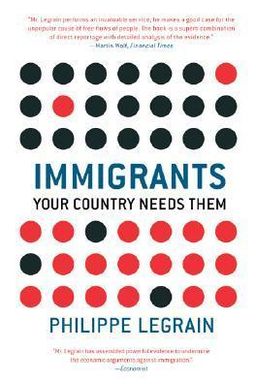
Migration is one of humanity’s oldest and most transformative actions—what J.K. Galbraith called “the oldest action against poverty.” Philippe Legrain argues that in the modern era, it remains a powerful engine of prosperity, creativity, and social renewal. His central claim is that open, well‑regulated migration benefits both movers and stayers: migrants lift themselves from poverty, enrich host societies, and revitalize economies, while restrictive border regimes produce waste, death, and fear. To understand this argument, you must distinguish rhetoric from evidence—the recurring theme of the book.
Why the debate is so polarized
You live in a world where immigration dominates headlines. Fears of job loss, welfare strain, and identity erosion drive emotional reactions—from border vigilantes in Arizona to tabloid outrage in London. Legrain begins by diagnosing this feverish tone and urging an evidence‑based conversation. He shows that alarmist bestsellers predicting national collapse (Pat Buchanan, Peter Brimelow) often suppress basic economic facts: migrants expand demand, pay taxes, and tend to complement rather than displace native workers.
A global frame of reference
Migration isn’t only an American story. One in five Canadians is foreign‑born, nearly one in four Australians, and one in ten Europeans. London speaks more than 300 languages and Sydney’s population is almost a quarter foreign‑born. These figures make migration a structural feature of globalization, not an anomaly. From 19th‑century transatlantic flows to postwar guest‑worker programmes and today’s mobility from South to North, Legrain traces path‑dependent patterns shaped by colonial ties, language, and labour demand. Migration evolves with technology and opportunity—steamships once enabled millions of Europeans to move, while modern education markets push skilled people to cosmopolitan hubs.
The moral and economic case
At its heart, migration is both a moral and economic question. Morally, restricting movement traps people in poverty based on birthplace. Economically, allowing workers from poor countries to use rich‑country capital multiplies global output. Studies cited by Legrain (Bob Hamilton, John Whalley, Jonathon Moses, Bjørn Letnes) show potential gains that dwarf trade liberalization. Dani Rodrik even estimates that a 3 percent increase in rich‑country labour inflow could generate over $200 billion annually for poor workers. These numbers anchor the book’s call for openness not as utopian idealism but as pragmatic common sense.
Borders and their human costs
You might assume walls work; Legrain proves otherwise. Border fortifications from Spain’s Ceuta fences to America’s Operation Hold the Line displace crossings rather than stop them, enriching smugglers and raising death tolls. When enforcement fails, migrants risk deserts and seas; when it succeeds, they face exploitation in illegal labor markets. As Nigel Harris notes, “The slaughter of some and the disablement of others is not an act of nature—it is a regime constructed by governments.” Legrain uses such evidence to argue that humane, legal channels outperform repression, both morally and practically.
Rethinking nationhood and cohesion
Fears of identity loss rest on myths of ethnic purity. Nations like Britain and France are mixtures; authenticity itself is plural. Legrain distinguishes civic from ethnic conceptions of nationhood—the first rooted in shared institutions and rights, the second in ancestry. Civic nations can absorb diversity without breaking apart. Canada’s multiculturalism and Toronto’s motto “Diversity Our Strength” embody this inclusive model. In contrast, ethnic definitions invite exclusion and resentment, fueling Huntington‑style anxieties about “two nations” within the U.S., which data prove unfounded.
What diversity delivers
When cultures meet, creativity blooms. Research by Ottaviano & Peri finds higher productivity and wages in diverse U.S. cities. Legrain extends this to innovation—Silicon Valley thrives because global talent converges: Sergey Brin, Andy Grove, Jerry Yang, and immigrant‑founded networks like TiE and Digital Diaspora. Diversity, he explains, expands the pool of ideas and heuristics; it’s the intellectual equivalent of genetic recombination. Cities benefit not just economically but culturally—ethnic restaurants, music scenes, and cosmopolitan energy increase the “buzz” that attracts talent.
Building workable policies
Legrain does not call for chaos. He advocates regulated openness: legal pathways, temporary‑worker schemes, and integration supports. Canada’s seasonal programme and proposed U.S. temporary‑visa system show that cooperation between sending and receiving countries makes mobility humane and orderly. Employer levies and refundable contributions can discourage overstays. Temporary migration, properly designed, lets rich societies fill labour gaps while sending countries gain remittances and skills.
The larger vision
Ultimately, migration forces you to decide what kind of global community you want. You can choose fear, walls, and wasted lives—or openness, evidence, and shared progress. Legrain’s message is that mobility, like trade, is an economic multiplier and moral necessity. Managed well, it renews societies, sustains welfare systems, and generates cultural richness. The challenge is not whether to open borders but how to do so intelligently. If humanity’s oldest action against poverty still works, our century’s task is to make it fair and functional for all.