
Idea 1
Breaking Free from Enmeshment and Performance
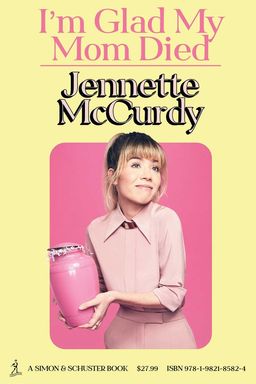
Have you ever caught yourself living for someone else’s approval—shaping how you eat, work, dress, or speak to keep the peace? In I’m Glad My Mom Died, Jennette McCurdy argues that what many of us mistake for love can be enmeshment—an arrangement in which your sense of self is fused to another person’s needs. McCurdy contends that breaking free from this fusion demands unflinching truth-telling about family myths, the courage to set boundaries that will be misread as betrayal, and a reconstruction of identity from the inside out.
At the book’s core is a paradox: Jennette devoted her childhood and adolescence to pleasing her mother—becoming a professional child actor; keeping her body small through extreme calorie restriction; allowing invasive “exams”; tolerating chaos, hoarding, and volatility—only to discover, after her mother’s death, that her freedom required grieving not just the loss of a parent but the loss of the story she’d built about who that parent was. The memoir is scathingly funny and deeply compassionate, and its argument is practical: your life is yours to narrate, not to outsource to the loudest voice you grew up with.
What the book covers
You’ll watch McCurdy’s journey from a six-year-old “best friend” to Mom—an identity that masked control and dependency—into a teen star on Nickelodeon who becomes an industry workhorse valued for a “special skill” (crying on cue) and obedience. You’ll see how Hollywood amplified, rather than created, the family dynamics: it rewarded her self-erasure, monetized her compliance, and normalized mistreatment (most chillingly embodied by “The Creator,” an all-powerful showrunner who offers booze, boundary violations, and later hush money). You’ll also track the development of her eating disorders (anorexia, binge eating, bulimia), OCD rituals, and alcohol use—symptoms that made unbearable contradictions survivable until they didn’t.
Midway, the narrative pivots from survival to reconstruction. Therapy (with “Laura,” then “Jeff”) becomes a crucible for deprogramming: naming abuse without euphemism; replacing shame spirals with “slip, not slide” thinking; eating three meals; throwing away the scale; and risking honesty with people who may leave. McCurdy quits acting (and later refuses the lucrative iCarly reboot), ends relationships organized around fixing or being fixed (Joe; then Steven, who develops schizophrenia), and tests the hard practice of boundaries—with her grandmother, with Hollywood, with the cultural script that says mothers are angels beyond question.
Why this matters
If you’ve ever confused self-neglect for devotion, the book offers a mirror and a map. McCurdy gives you a vocabulary for recognizing enmeshment (“best friends” with a parent; invasive body policing; guilt that polices dissent), and she models the slow work of reparenting yourself with structure, compassion, and precision. The memoir’s sting comes from its refusal to romanticize what harms us—whether the glamour of child stardom or the halo we place on parenthood. Its warmth comes from the fact that McCurdy still finds gratitude where she can: for humor; for friendship (especially with co-star Miranda Cosgrove); for therapy; and for the creativity that blooms when your value isn’t a role you play.
What you’ll take away in this summary
We’ll unpack the mechanics of enmeshment and how to name it; the hidden costs of child celebrity and “good-girl” professionalism; the progression from calorie restriction to bulimia and what recovery work actually looks like; the ethics of grief when the person you lost also harmed you; and how McCurdy rebuilds a self—declining hush money, leaving acting, and learning to eat, love, and work on her own terms. Along the way we’ll compare other leaving-and-becoming memoirs (Tara Westover’s Educated, Jeannette Walls’s The Glass Castle, André Agassi’s Open) to show how truth-telling breaks intergenerational spells.
Big idea
Love without boundaries isn’t devotion—it’s disappearance. McCurdy’s life flips when she learns that protecting herself is not betrayal but the beginning of love.
By the end, “I’m glad my mom died” reads not as cruelty but as shorthand for an unspeakable truth: sometimes the death of an oppressive center is the only way a new center—your own—can form. You don’t need a parent to die for this to be true; you need the courage to let the story that kept you small finally end.