
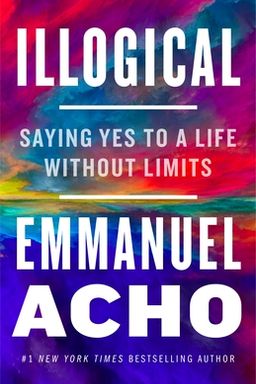
Illogical cover

Illogical

by Emmanuel Acho

Illogical by Emmanuel Acho invites readers to defy societal norms and embrace unconventional paths. Through captivating stories, Acho illustrates how taking risks and rejecting conventional wisdom can lead to unexpected success and personal fulfillment. This book is a call to action for anyone ready to think differently and achieve beyond what seems possible.

Living an Illogical Life: Redefining Success Beyond Limits

Have you ever felt confined by the rules everyone else seems to live by—the ones that tell you what’s possible, reasonable, or "realistic"? Emmanuel Acho’s Illogical: Saying Yes to a Life Without Limits begins with a daring proposal: what if logic itself is the enemy of greatness? A former NFL linebacker turned Emmy award–winning TV host, Acho argues that conventional wisdom may keep us safe, but it also keeps us small. To truly live, he says, we have to stop letting logic define our dreams and start believing in things that don’t yet make sense.

Acho defines logic as society’s collective agreement on what’s sensible or achievable. But “sensible,” he notes, is a moving target—beauty standards change, success metrics shift, and even definitions of greatness evolve. That’s why he tells us to get off the hamster wheel of convention and reclaim the power to decide what success and purpose mean for ourselves. The life you’re meant to live won’t fit anyone else’s blueprint; it demands a willingness to be illogical.

Logic Limits, Faith Frees

Acho’s fundamental premise is that logic keeps you operating within predictable boundaries—grades, rankings, promotions, likes, and metrics—but freedom begins only when you step outside them. "Logic limits," he writes, "and you were meant to fly." From athletes to entrepreneurs, every innovator who’s changed history has first been called irrational. Just as the Wright brothers defied gravity and Steve Jobs reimagined technology, you too must take leaps that others dismiss as impossible.

Acho’s own transformation—from being cut repeatedly in the NFL to becoming a bestselling author and national voice on race and courage—epitomizes what happens when belief outpaces reason. When he left football to pursue broadcasting without experience or credentials, everyone called it a bad idea. But that decision unlocked his life’s purpose. He reminds readers that you qualify by following your calling, not before.

Faith Over Fear: The Childlike Superpower

A recurring motif is childlike faith—that unfiltered belief kids have before fear and logic interfere. As illustrated through the story of a little girl sprinting toward her destination before her father’s cautious warnings, Acho shows how adults lose the spontaneity and freedom that once powered our dreams. Children don’t calculate failure probabilities; they just run. Adults, however, engage in what Ache calls “paralysis by analysis.” His challenge to us: trade fear for faith. You already possess the talent, intellect, and capacity you need—you just need courage to leap before you’re ready.

He likens faith to a muscle: it strengthens each time we act against fear. When we dare to follow what logic says is futile—launching a new venture, leaving a toxic job, or pursuing love after pain—we expand that musculature. “Everything you need,” Acho insists, “you already have.”

Why Being ‘Illogical’ Isn’t Reckless

Critics might equate illogic with irresponsibility, but Acho draws a rich distinction. Illogical living isn’t about ignoring facts; it’s about refusing to let fear masquerade as reason. Logic says wait until conditions are perfect; faith says move even when they’re not. “Scared money don’t make no money,” Acho writes, echoing the casino insight from his chapter “Before the Cards Are Flipped.” Life’s biggest wins come from bold bets—moments when, like the gambler who doubled down with a seven percent chance of success, you risk failure for the chance to live fully.

Acho builds the argument through parables drawn from scripture, sports, and his own improbable career milestones. David’s decision to run toward Goliath, Ruby Bridges’ lonely walk into an all-white school, and even Oprah’s rise in a hostile industry all showcase one truth: courage beats certainty. Rather than wait for validation, the illogical build conviction by acting.

Beyond Logic: A New Measure of Success

What happens when logic is no longer your life’s compass? You stop chasing someone else’s approval and start playing by your own rules. Acho invites readers to redefine success not by goals—because goals, he argues later, are “dumb”—but by objectives without limitation. A goal is a finish line, a ceiling; an objective is a direction of growth that never ends. This shift from goal-chasing to purpose-living transforms how you approach ambition, failure, and fulfillment.

Ultimately, Illogical is a manifesto for modern dreamers: those tired of comparison, competition, and constraint. Through heartfelt reflection and fiery storytelling, Acho gives us a playbook for breaking through fear, ignoring naysayers, and living from faith rather than formula. The question he leaves you with is both simple and haunting: will you wait until the cards are flipped to believe you can win, or will you bet on yourself before you see the outcome?

“You don’t follow your calling because you’re qualified; you qualify by following your calling.”

That is Acho’s creed and his challenge. Illogical living is not about abandoning reason—it’s about reclaiming imagination, courage, and divine audacity in a world that trains it out of you. In the pages that follow, you’ll discover how to build your own faith muscle, silence the noise, break the dams that hold you back, and use your unique “it” to impact the world.


Before the Cards Are Flipped: Betting on Yourself

Acho’s journey toward breaking free from logic begins with a gambler’s tale. Sitting in a casino watching a man nicknamed “The Kid” double down on an impossible blackjack hand, Acho learns a timeless truth: the most stressful part of life occurs before the outcome is revealed. The Kid, holding a low hand with poor odds, bets everything—and wins. Later, Acho realizes what separates winners from worriers: confidence despite uncertainty.

Trusting Possibility Over Probability

In that scene, logic said the odds were seven percent; courage said, take the chance anyway. This becomes Acho’s metaphor for life transitions. When he retired from the NFL at just twenty-five to pursue a media career, logic told him he was unprepared. Yet by betting on potential instead of probability, he found a new calling that would eclipse his first. Like The Kid, Acho doubles down not on what he sees, but on what he believes is possible.

His decision to leave football for broadcasting mirrors anyone’s midlife pivot or creative risk. It’s terrifying to walk away from success toward uncertainty, but Acho insists your greatest opportunities exist “before the cards are flipped.” The test is not whether the odds favor you—it’s whether you’ll play the hand at all.

From Fear of Failure to Freedom to Fail

Acho teaches that failure isn’t something to fear; it’s feedback that guides you toward better experiments. In his first attempt at TV, he sat beside Heisman winners wondering if he belonged. Instead of overanalyzing, he studied, practiced, and improved one rep at a time. His mantra—“failure is simply an opportunity to try something new”—helps dismantle our cultural obsession with perfection.

By the time he reached ESPN, he understood that courage and craft grow from mistakes, not avoidance. In psychological terms (as Carol Dweck would argue), he switched from a fixed to a growth mindset—trading comparison for curiosity. Once you replace control with creation, uncertainty feels like adventure instead of anxiety.

Learning from the Masters of “Illogical Thinking”

Throughout the story, Acho frames his own illogical moves alongside iconic disruptors. The Wright brothers, Steve Jobs, and Martin Luther King Jr. all refused to let logic limit vision. Logic said flying heavier-than-air craft was impossible, or that racial equality was unrealistic—but they acted on faith in unseen outcomes. The author brings these examples together to show that belief precedes brilliance.

“Scared money don’t make no money. If you want to win big, you have to bet big.”

Acho’s twist on that gambling adage is clear: risk and reward are spiritual twins. If you never allow yourself to risk embarrassment or rejection, you’ll never experience genuine joy or mastery. The question is not how to minimize losses, but how to maximize creation. The author’s story of leaving the NFL before being forced out becomes an empowering model for anyone tired of waiting for permission. Sometimes walking away early is the greatest wager of faith you’ll ever make.


Childlike Faith and the Courage to Leap

In perhaps the book’s most memorable chapter, Acho explores what he calls “childlike faith”—the pure, irrational belief children embody before fear and logic distort it. He illustrates this idea through vivid personal stories: a five-year-old girl running toward her father’s gym, kids daring him to do a backflip at a trampoline park, and his paralyzing hesitation despite physical strength and skill. Fear, he realizes, isn’t a lack of ability—it’s the loss of belief.

When Fear Masquerades as Logic

Adults rationalize their fears, calling them “prudence” or “responsibility.” Acho notes that as we age, each disappointment teaches us to distrust ourselves and the world’s possibilities. We learn to see the reasons something won’t work instead of the reasons it might. “Paralysis by analysis,” his coach used to say, kills more dreams than incapacity ever will.

At the trampoline park, surrounded by fearless kids, Acho’s internal monologue mirrors every adult’s inner critic: what if I fail, look foolish, or get hurt? Ultimately, he finds the fear itself—more than the act—is the wedge between logic and faith. The takeaway: be bold enough to believe before you’re ready.

Faith as a Muscle

Acho likens faith to physical training: it grows through resistance. Each time you take an illogical step—a backflip, a career change, confessing love—you strengthen your belief capacity. Faith doesn’t replace fear; it moves in spite of it. Sharing fears aloud, whether with friends, partners, or God, keeps them from metastasizing into paralysis. This mirrors Brené Brown’s insight that vulnerability doesn’t weaken courage—it creates it.

By the end of the chapter, Acho returns alone to that trampoline park and finally flips. It’s awkward but successful. His victory isn’t acrobatic—it’s spiritual. What never happened, he realizes, was what he feared most. Courage didn’t erase risk; it revealed confidence beneath it.

“Childlike faith doesn’t mean you have no fears—it means you choose not to let your fears stop you from taking a leap.”

For readers, the application is clear: identify where logic is disguising fear in your own life. Then, like the kids counting down for Acho’s backflip, start your own countdown—and jump whether or not you feel ready. You already have all the ability you need. You’re just waiting on courage to catch up.


Don’t Forget Your Earmuffs: Silencing the Noise

If childlike faith connects you to your own intuition, earmuffs protect it from the world’s noise. During a concert with blaring speakers, Acho noticed a child sleeping peacefully in her mother’s arms, protected by large black earmuffs. That image stayed with him. Amid chaos, the child could rest because she was shielded from the noise—not disconnected, but secure within it. Acho realized we all need metaphorical earmuffs: boundaries that allow us to tune out doubt and tune in purpose.

Knowing When to Block, When to Listen

Acho’s story of filming his viral series Uncomfortable Conversations with a Black Man shows how critical this skill is. Minutes before recording, a well-intentioned friend urged him to stop, warning the idea might backfire. The noise was deafening—fear disguised as advice. Had he listened, he might never have reached the millions who found hope in that video. Instead, he mentally “put on earmuffs” and proceeded. The result: eighty million views and a bestseller that reshaped national conversations on race.

The Transparency Function

Not all opposition is harmful, Acho cautions. Drawing from Apple’s AirPods, he compares how sometimes you must block out everything (noise cancellation), and other times you switch to transparency mode, letting productive critique in. Navigating feedback means discerning between destructive doubt and constructive refinement. As leadership coach Simon Sinek points out, great visionaries listen generously but decide independently; earmuffs help you do both.

Acho illustrates this with humility when an online backlash over his marijuana commentary forced him to learn about the racist origins of anti-cannabis laws. In that case, keeping ears open transformed criticism into education. Earmuffs aren’t for isolation—they’re instruments of focus and growth.

Evicting the Internal Critics

Eventually, you must confront not just external noise but the voices inside. The fears, doubts, and limiting beliefs living “rent-free” in your mind need eviction. Acho’s metaphor fits cognitive behavioral wisdom: you can’t control the thoughts that knock, but you decide which ones you let stay. Evicting self-doubt clears the space for faith. Your calling, he reminds us, is not a conference call—it’s yours alone.

“Your calling is your calling. It’s not a conference call.”

The earmuffs lesson is simple yet profound: in order to find your truth, you must quiet the world long enough to hear it. Whether creating art, launching a business, or speaking truth to power, mastery requires both confidence and quiet. Without reflection, the noise wins. With earmuffs, you last long enough for destiny to speak clearly.


Keep on Dreaming: From Doubt to Destiny

Dreams often invite doubt from others and discouragement from within. In retelling the biblical story of Joseph—the dreamer sold into slavery who rose to rule Egypt—Acho explores how believing despite betrayal leads to breakthrough. Joseph’s dreams of greatness made his brothers resent him, yet those same dreams later saved them from famine. The moral: what others despise in you today may define your destiny tomorrow.

When Belief Outpaces Validation

Acho parallels Joseph’s endurance to his own creative persistence. Publishers doubted his idea for Uncomfortable Conversations, calling the market oversaturated. But belief became his compass. Once released, the book transformed lives and careers, proving that logic’s rejection can be faith’s confirmation. His mantra: “Where you’re going is greater than where you’ve been.”

Forgiveness and Freedom from Bitterness

A powerful thread in this chapter is forgiveness. Just as Joseph eventually blessed the brothers who betrayed him, Acho chose compassion for those who doubted him—a teacher who said he couldn't survive at the University of Texas, industry executives who dismissed him. Harboring anger only prolonged pain. “Hate cannot drive out hate; only love can do that,” he quotes Martin Luther King Jr. Forgiveness, paradoxically, keeps the dream alive by freeing the dreamer.

He reminds readers that resentment corrodes the soul. Instead of saying “I told you so,” respond with “thank you for the discomfort—it pushed me.” Each rejection was a redirection toward your real assignment.

Dream Logic Reversal

The most illogical lesson? Circumstances that delay you may actually prepare you. Joseph’s time in prison trained him for palace leadership. Similarly, Acho’s detours from the NFL led him to storytelling, creating social impact far greater than trophies could. The call isn’t to dream naïvely but relentlessly—seeing setbacks as scaffolding for success. Keep your earmuffs on, he insists, and keep on dreaming. Even envy or exclusion can become evidence that you’re dreaming bigger than others dare.

“Your gifts will eventually make room for you.”

“Keep on dreaming,” then, becomes an invitation to reimagine obstacles as origin stories. If someone else can’t see your vision, that’s fine—they’re not supposed to. They might know where you’re from, but they have no idea where you’re going.


Break the Dam: Be the First to Believe

When Emmanuel Acho describes his father’s survival in the Nigerian Biafran War and eventual journey to America, he’s not just telling a family story—he’s defining a generational blueprint. The lesson: someone must break the dam first. Like Roger Bannister’s four-minute mile that redefined human limits, one act of belief can free entire communities to imagine more. Dams, physical or mental, exist to hold back potential. When they break, history shifts.

From Survival to Service

Acho’s father, Onyebuchi Sunday Acho, fought in a war that killed millions. Yet after witnessing horror, he refused despair. He preached from broken buses in Nigeria until American missionaries invited him to teach abroad. That illogical act—accepting an invitation without means or certainty—created an entirely new lineage. His children, including Emmanuel, would grow up not in starvation but service. Every time you take an “impossible” step, he argues, the floodgates of progress open for those who follow.

The Bannister Effect

Acho parallels his father’s courage to Bannister’s defiance of scientific limits. Once one man ran a sub-four-minute mile, ten others did within two years. The dam was always mental—it just took one person to show it could be breached. Similarly, once one believer transcends logic—in race, gender, or class—others can too. This insight aligns with psychologist Albert Bandura’s “collective efficacy”: seeing someone like you succeed increases your belief that you can.

“Be the first to imagine the unimaginable,” Acho writes, urging readers to treat their belief as activism. Each risk is a stone cast that destabilizes walls of fear.

“It’s only impossible until you do it. Within the word ‘impossible’ lies ‘I’m possible.’”

When you run to your own battle line—starting a movement, business, or creative project—you are breaking dams built by fear and conformity. History’s great breakthroughs always began as defiance: one voice refusing silence, one runner refusing to slow down.


You Gotta Have “It”: Using Your Unique Gift

The culmination of Acho’s philosophy arrives in his call to action: find your “it.” Everyone has a distinctive ability or gift, but only those who discover, develop, and deploy it live without limits. For Acho, “it” is communication—the power to translate hard truths into healing conversations. Coach Mack Brown saw it first when he recruited high school–aged Emmanuel to the University of Texas. Years later, Oprah reaffirmed it: “You’ve got the thing.”

Finding and Defining Your ‘It’

Acho defines “it” as a predisposition toward certain excellence—the field where your innate wiring meets purpose. For Noah it was building, for David marksmanship, for the Wright brothers creativity. Finding it requires reflection: What activity feels natural, energizing, and impactful? Your “it” reveals what problems you were born to solve.

Developing and Investing in ‘It’

Once you locate it, the next task is mastery. Steph Curry didn’t become basketball’s best shooter by talent alone—he practiced absurd drills like dribbling three basketballs at a time. Likewise, Acho honed his speaking craft long before fame: upgrading cameras, rehearsing lines, studying great communicators. Investing in it—even when it seems illogical or unprofitable—builds the muscle memory of greatness. As Jamie Foxx’s mentor Ray Charles said, “All the keys are underneath your fingers; just take the time to play the right note.”

Using ‘It’ for Impact

Finally, you must use it. Untapped gifts are like wrapped presents—beautiful but pointless until opened. Using “it” may cost you money, comfort, or approval, but not using it costs purpose itself. Acho’s father modeled this risk, preaching fearlessly despite mockery, and eventually transforming countless lives. Whether your “it” lies in teaching, creating, leading, or serving, the only mistake is withholding it. “Faith without works is dead,” Acho reminds us—so get to work on your gift.

“The key to changing your life is to use your skills, your talents, your gifts. We are all gifted in something.”

Your “it” may seem ordinary to you, but the world is waiting for it. The illogical life isn’t about blind optimism—it’s about faithful execution of your unique genius.

Dig Deeper

Get personalized prompts to apply these lessons to your life and deepen your understanding.

Go Deeper

Get the Full Experience

Download Insight Books for AI-powered reflections, quizzes, and more.