
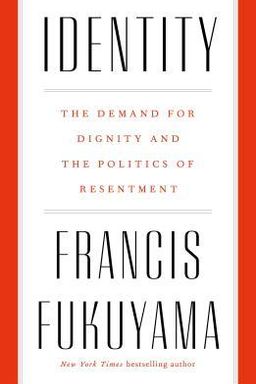
Identity cover

Identity

by Francis Fukuyama

In ''Identity,'' Francis Fukuyama explores the complexities of identity politics, revealing how it can both unite and divide societies. By tracing its historical roots and providing actionable solutions, Fukuyama offers a roadmap to creating more inclusive communities, essential for the health of modern democracies.

The Modern Struggle for Recognition

What drives people to protests, revolutions, and even civil wars in a time when material prosperity and technological progress have spread further than ever before? Francis Fukuyama’s Identity: The Demand for Dignity and the Politics of Resentment argues that beneath today’s political unrest lies a timeless human need: the craving for recognition of one’s dignity. This struggle, he contends, is not primarily about economics, but about being seen, valued, and respected. That simple desire—to have your inner self acknowledged by others—has become the moral core of politics in the 21st century.

Fukuyama’s argument is deceptively simple: every human being possesses what the philosopher Plato called thymos—the part of the soul that hungers for recognition. In ancient societies, this recognition was granted only to warriors, kings, or priests deemed superior to others. But in modern democratic societies, it expanded to include every person as inherently worthy of dignity. Yet even as liberal democracy promised equality, many groups have continued to experience disrespect or invisibility, and now seek to reclaim their dignity. That search, Fukuyama suggests, is what energizes today’s political movements from both left and right.

The Roots of the Crisis

The book opens with a panoramic view of recent history: the financial crises of 2008, the Arab Spring, Brexit, the rise of populist nationalism in Europe, and the election of Donald Trump. Each of these, Fukuyama argues, reflects the failure of liberal democracies to meet people’s deeper emotional and psychological needs. Globalization raised living standards overall, but it also dislocated communities. Job losses, immigration surges, and widening inequality eroded traditional statuses. The result was not only anger at elites, but also the feeling among many that their identities—national, cultural, or gendered—were being ignored or insulted.

In this sense, identity politics became the political language of our time. On the left, it took the form of movements for racial, gender, and sexual equality, emphasizing the dignity of marginalized groups. On the right, it reemerged as nationalism, religious conservatism, and resistance to multiculturalism, all driven by nostalgia for a perceived loss of status. In both cases, the same moral impulse—the desire for recognition—was at work. Fukuyama’s insight is that these opposing sides recognize one another in their shared resentment.

From Self to Society

Fukuyama traces this phenomenon to philosophical roots reaching back to Plato, Luther, Rousseau, and Hegel. Plato’s thymos explains why people care not just about wealth but about honor. Luther’s Reformation sparked an inward turn, introducing the modern distinction between the inner self and the outer world. Rousseau secularized this introspection, teaching that the inner self was good and society was corrupting. And Hegel elevated the quest for recognition into a motor of history. These thinkers, together, gave birth to our modern concept of identity—a sense of an authentic inner self that demands acknowledgement from the social world.

The power of identity, however, lies in its dual nature. When focused on universal dignity, it produces liberal democracy and civil rights. When rooted in narrower collectives—nation, religion, ethnicity—it produces coercion, authoritarianism, or conflict. That tension defines the modern world, as liberal states struggle to balance the individual’s right to self-expression with the need for common identity and cohesion.

Why Identity Became Political

Fukuyama argues that the core failure of liberal democracy is not institutional but psychological. Modern politics, he writes, “has become the struggle for recognition of dignity”—from the street vendor in Tunisia setting himself ablaze in protest of humiliation, to movements like Black Lives Matter demanding that the world see and value the lives of the marginalized. Even populists like Trump and Orbán thrive on recognition politics: giving their followers back a sense of pride and voice in a world where they feel disrespected by distant elites.

In other words, today’s polarization is a moral conflict rooted in competing understandings of dignity. Both sides see themselves as victims of disrespect, both channel resentment into political identity, and both claim to speak for “the people.” This dynamic has raised the emotional stakes of politics, making compromise nearly impossible because identity itself feels nonnegotiable.

The Path Forward

Ultimately, Fukuyama does not call for the abolition of identity but for its expansion. He urges societies to move from narrow, exclusionary identities toward inclusive, civic ones based on shared democratic values. Nationalism, he argues, need not be hateful—it can be redefined around pluralism, constitutionalism, and mutual respect. What liberal democracies require today is a renewed sense of belonging that integrates diversity rather than denying it. Without that, identity will continue to fragment societies into hostile tribes.

“The remedy for identity politics is not to abandon identity, but to define larger and more integrative identities that make democracy work.”

This overarching idea—that dignity, not economics, is the hidden engine of modern politics—makes Identity one of Fukuyama’s most relevant works since The End of History and the Last Man. It reframes populism, nationalism, and polarization not as temporary aberrations, but as symptoms of human nature’s eternal quest to be recognized and respected. For anyone seeking to understand why people cling to grievance, resist globalization, or rage against elites, Fukuyama’s message is clear: until societies satisfy the need for dignity, politics will remain the battlefield of identity.


Thymos: The Politics of Dignity

At the heart of Identity lies a revival of an ancient Greek concept—thymos—which Plato described as the third part of the human soul. In addition to reason (the rational part) and desire (the appetitive part), Plato recognized thymos as the source of pride, anger, and the hunger for respect. Fukuyama builds his entire framework around this idea, arguing that thymos explains much of modern political behavior—including the populism, extremism, and polarization we see today.

The Three Parts of the Soul

Plato’s dialogue in The Republic distinguishes three forces driving humans: appetite seeks material pleasure; reason seeks truth; and thymos seeks recognition of worth. Thymos has both light and dark sides. On one hand is isothymia—the desire to be recognized as equal; on the other, megalothymia—the desire to be acknowledged as superior. Both can motivate people to noble or destructive ends.

Fukuyama shows that liberal democracy arose historically as a system that fulfills isothymia. By recognizing every citizen as equal before the law, democracies broadened dignity beyond aristocrats and warriors to encompass everyone. But megalothymia never disappeared—it reemerged as ambition, leadership, or, in dark times, tyranny. From Alexander the Great to Hitler, exceptional individuals have sought superiority and recognition through domination rather than equality.

Recognition as Political Fuel

Thymos explains why people revolt not only when they are poor, but when they feel disrespected. Fukuyama points out that revolutions are seldom started by the truly destitute, but by those whose rising expectations have been frustrated—people who believe they deserve more honor than they receive. The 2011 Arab Spring, for example, began with a Tunisian street vendor, Mohamed Bouazizi, whose goods were confiscated and who, after being insulted by local officials, set himself on fire. His protest was not about poverty—it was about being treated without dignity. His death ignited a regional cry for recognition, not simply higher wages.

Similarly, movements like Black Lives Matter or the #MeToo campaign express thymotic anger—the demand that others acknowledge previously ignored experiences of injustice. Even populist nationalism, from Putin’s Russia to Trump’s America, is fueled by the sense that one’s group or way of life has been mocked or scorned by elites. Thymos, in other words, is not partisan—it animates both progressives and reactionaries.

From Dignity to Conflict

For much of history, dignity was limited to elites—an aristocrat’s privilege or a warrior’s glory. Christianity transformed it into a universal right: since all souls are equal before God, all deserve respect. Enlightenment philosophy secularized this idea; Kant grounded dignity in moral choice, Hegel in mutual recognition. Yet the same desire that made people demand equality also makes them fight to assert superiority once they believe others undervalue them. That paradox haunts every democracy.

“A humiliated group seeking restitution of its dignity carries far more emotional weight than people simply pursuing economic advantage.”

Seen through thymos, today’s political crises are psychological struggles over recognition. Wars of pride and resentment—between citizens and elites, races, genders, religions, and nations—all stem from this part of the human soul. Only when societies find ways to recognize both equality and excellence, without humiliation or exclusion, can they escape the cycles of anger that thymos inevitably inspires.


The Invention of the Inner Self

Modern identity, Fukuyama explains, begins when people look inward and discover an inner self that feels misjudged by society. This idea—so commonplace today that we take it for granted—emerged only a few centuries ago. Luther, Rousseau, and the thinkers of the Enlightenment transformed the human experience by defining the self as something authentic, inner, and in need of recognition.

From Luther’s Faith to Rousseau’s Feelings

Martin Luther’s Reformation in the sixteenth century began this interior revolution. He taught that salvation came not through external rituals or the Church’s authority, but through faith in one’s heart. By valuing an individual’s inner relationship with God over outward conformity, Luther paved the way for modern personal conscience—and, inadvertently, the idea that institutions could be wrong and the individual right.

Two centuries later, Jean-Jacques Rousseau secularized this drama. He claimed people were born good but corrupted by society. Authenticity, he said, lay in recovering the natural feelings buried beneath social masks. His notion of the “sentiment of existence” turned introspection into a moral ideal: to live authentically, one must express the inner self, even if it defies conventional norms. Rousseau’s legacy shapes modern culture—from the romantic artist to the activist declaring, “This is who I am.”

When the Inner Self Meets Society

This elevation of the inner self created both freedom and conflict. In traditional societies, people’s roles and values were fixed by birth—there was little tension between self and society. But modernization broke those bonds. As people left villages for cities, met strangers, and gained choice over work, belief, and marriage, they began to experience alienation. The question “Who am I?” became both liberating and tormenting. Modern identity, therefore, is less a discovery than a social creation—a byproduct of freedom and diversity.

By tracing this genealogy, Fukuyama connects Luther’s theology and Rousseau’s romanticism to contemporary identity politics. Both celebrate the moral authority of the inner self and view social institutions as oppressive. Whether it’s religious conscience defying authority or sexual and ethnic minorities demanding recognition, the logic is the same: authenticity requires society to change, not the self.

At its best, this inward turn empowered conscience and human rights. At its worst, it feeds narcissism, loneliness, and a politics of resentment. Fukuyama’s message here is a caution: the more we celebrate authenticity without shared moral norms, the more fragmented our societies become—and the harder it becomes to find a common identity.


From Dignity to Democracy

Fukuyama argues that modern democracy emerges from the universalization of dignity. In ancient societies, dignity belonged only to warriors or nobles; Christianity transformed it into a moral right shared by all souls. Enlightenment philosophers like Kant and Hegel turned this spiritual idea into a political one: because all humans are morally free, all deserve equal recognition by the state. That philosophical shift made liberal democracy possible.

From Moral Agency to Political Equality

Kant’s definition of human dignity emphasized the capacity for moral choice. A person was not a means to an end but an end in themselves. Hegel went further, seeing history as a series of struggles for recognition culminating in mutual dignity. For Fukuyama, these ideas explain the enormous emotional power behind revolutions—from the French Revolution’s cry for equal rights to the Arab Spring’s demand for respect.

Revolutions of Dignity

When the Tunisian street vendor Mohamed Bouazizi burned himself alive in 2010, his act captured the heart of Fukuyama’s thesis. He was not pleading for wealth; he was demanding respect from a regime that refused to see him as human. From Eastern Europe’s 1989 uprisings to the fall of apartheid in South Africa, the desire for recognition drives people to risk their lives. These “revolutions of dignity” remind us that freedom without respect is hollow.

The Fragility of Recognition

Yet recognition is fragile. Democracies acknowledge equality in law, but not always in life. Even as citizens gain rights, they may still feel invisible or disrespected. This creates what Fukuyama calls the “politics of resentment.” The challenge for modern states, therefore, is to sustain moral equality not just through constitutions, but through everyday respect and fair treatment. Without that emotional validation, freedom itself breeds frustration.

Viewed this way, democracy is not just a system of rules—it’s a moral project built on mutual recognition. When that recognition breaks down, citizens retreat into identities that promise dignity elsewhere—in religion, nationalism, or populism. This insight gives Fukuyama’s political philosophy both moral depth and profound relevance.


The Rise of Expressive Individualism

After the triumph of liberal democracy in the modern era, the definition of dignity changed again. It shifted from moral autonomy—our capacity to make ethical choices—to expressive individualism—the right to define one’s own truth. Fukuyama calls this the “democratization of dignity”: in liberal societies, everyone’s feelings and experiences now demand equal validation. But what began as liberation from tyranny has evolved into a culture of self-esteem and entitlement.

From Duty to Self-Expression

In the nineteenth century, Western culture praised self-control and moral virtue. By the late twentieth, psychology and therapy replaced religion as guides for personal fulfillment. The California Task Force on Self-Esteem in 1990 famously declared that “every person has unique significance,” echoing Rousseau’s belief in inner goodness. But as Fukuyama notes, this ideal carries contradictions: if everyone’s feelings are equally valid, how do we judge right and wrong?

Sociologists like Philip Rieff warned of “the triumph of the therapeutic,” where psychological well-being replaced moral responsibility. Christopher Lasch later diagnosed its consequence as “the culture of narcissism”—a society where individuals depend on constant affirmation while retreating from shared civic duty. Fukuyama extends this critique, arguing that by elevating emotional validation above objective moral standards, liberal societies have blurred the line between self-respect and self-absorption.

The Politics of Self-Esteem

This cultural shift reshaped politics. As schools, churches, and governments embraced the therapeutic model, politics became less about economic interests and more about emotional recognition. On U.S. campuses, debates over curricula and “safe spaces” mirrored people’s demand to have their identities affirmed. The result was a form of identity politics rooted less in collective justice and more in individual self-worth.

“The rise of the therapeutic midwifed the birth of modern identity politics in advanced liberal democracies.”

When every group and individual demands recognition of their feelings, politics turns into a competition of grievances. Fukuyama doesn’t reject this psychological turn entirely—he acknowledges that self-respect matters. But he warns that without renewed commitment to civic virtue and shared purpose, societies risk fragmenting into self-referential moral enclaves where empathy vanishes and collective identity dissolves.


From Identity to Identities

By the 1960s, identity politics—once a call for universal equality—proliferated into a constellation of group-based movements: civil rights, feminism, gay liberation, environmentalism, and more. Each sought recognition of a marginalized identity, but their success transformed liberal politics itself. Fukuyama shows how the democratization of dignity led to the fragmentation of solidarity.

The Expansion of Lived Experience

Early civil rights leaders like Martin Luther King Jr. appealed to universal moral principles—equal treatment under law. Later movements increasingly emphasized lived experience: the idea that only members of a given group can fully understand its oppression. Feminist scholars such as Simone de Beauvoir and Catharine MacKinnon argued that women’s perspectives were irreducibly distinct from men’s. The concept of intersectionality—coining by Kimberlé Crenshaw—expanded this to overlapping identities of race, gender, and class. While illuminating hidden injustices, this focus on micro-identities weakened shared frameworks of citizenship.

The Left’s Shift from Class to Culture

Fukuyama argues that progressive movements gradually replaced concern for economic inequality with battles over cultural recognition. After the failures of socialism and Marxism, Western liberals turned from redistributing wealth to respecting diversity. In Europe, this produced multiculturalism; in America, a proliferation of identity-based advocacy. Meanwhile, the traditional working class—white, male, rural—felt abandoned.

The right capitalized on this alienation, adopting its own victim identity. Populists reframed political correctness as elite censorship and portrayed themselves as defenders of silenced majorities. Trump’s supporters, or Poland’s and Hungary’s nationalists, likewise used the language of recognition: demanding respect for “real Americans” or “native Europeans.” The left’s focus on narrow identities, Fukuyama warns, fueled an equal and opposite identity backlash on the right.

From here, he calls for a reintegration strategy: rather than rejecting identity altogether, societies must rebuild unifying identities that include diverse experiences. Only a shared civic narrative—rooted not in ethnicity or grievance but in democratic values—can restore the possibility of collective action.


Rebuilding National Identity

If identity politics divides, Fukuyama argues, only a renewed sense of national identity can unify. But nationalism need not be xenophobic—it can express inclusive belonging grounded in shared values. His analysis of Europe’s refugee crisis and America’s immigration debate shows how weak national identity breeds both instability and resentment.

Why Nations Matter

Strong national identity, he observes, underpins physical security, good governance, trust, and social welfare. Countries like Japan, Korea, and China succeeded economically because citizens saw themselves as part of a shared destiny. By contrast, fragile states from Syria to Kenya disintegrated along ethnic lines precisely because loyalty to clan or sect eclipsed loyalty to nation. A cohesive national story gives citizens a reason to sacrifice and cooperate.

Inclusive vs. Exclusive Nationalism

Fukuyama distinguishes between ethnonationalism—based on blood or religion—and civic nationalism—based on principles of equality and citizenship. The former spawns persecution and war; the latter builds solidarity among diverse peoples. The task for liberal democracies is to revive civic nationalism without reverting to chauvinism. France’s commitment to liberty, equality, fraternity or America’s creedal belief in constitutional democracy are examples of inclusive identities that transcend ethnicity.

Immigration and Belonging

Immigration, in Fukuyama’s view, is where identity politics and nationalism collide. Rapid demographic change strains social trust not because of racism alone, but because assimilation fails when shared identity is unclear. Europe’s inability to integrate Muslim immigrants, he notes, has fueled both alienation among minorities and populist backlash among natives. Similarly, in the United States, debates over the border reflect deeper anxiety about who counts as “the people.”

“Democracy means the people are sovereign, but if we cannot define who ‘the people’ are, democracy cannot function.”

Fukuyama’s solution is patriotic pluralism: build national identities anchored in liberal democratic values, civic education, and shared service. Nations should welcome diversity, but require assimilation to constitutional principles. Without such integration, he warns, democracies will crumble into warring tribes united only by resentment.


What Is to Be Done?

In the book’s concluding chapter, Fukuyama turns from diagnosis to prescription. His answer to the identity crisis is both moral and institutional: restore shared national purpose while respecting individual dignity. Societies, he writes, cannot eliminate identity politics, but they can channel it toward inclusion rather than division.

From Fragmentation to Integration

The first step is recognizing that demands for respect are legitimate. Movements against racism, sexism, or police violence expose real failures of dignity. But civic unity requires expanding that moral concern to everyone, not just specific groups. Fukuyama proposes a reinvigorated creedal national identity—rooted in constitutional values, not ethnicity or religion. In the U.S., this means reaffirming the principles of liberty and equality that underpin citizenship; in Europe, reshaping laws and education to integrate immigrants into liberal democracy.

Policies for Assimilation and Belonging

Institutionally, Fukuyama advocates reforms that encourage civic participation. These include stricter but fair citizenship processes, national service programs to foster cross-group solidarity, stronger civics education in schools, and immigration systems focused on integration rather than exclusion. He argues that a sense of belonging comes not from welfare benefits but from shared effort and sacrifice—a modern form of republican virtue.

At the same time, he warns against both extremes: the populist right’s ethnic nationalism and the radical left’s identity tribalism. One denies diversity; the other denies unity. The real challenge is to balance recognition of difference with commitment to common goals. Economic reforms that reduce inequality, combined with civic initiatives that promote empathy, can temper both resentment and entitlement.

Fukuyama ends on a hopeful but sobering note: human beings will always seek recognition, and that search will always shape politics. The task of democracy is not to erase identity but to build a larger one—to turn downward anger into horizontal solidarity. Only by redefining dignity as something shared, not scarce, can nations escape the cycle of resentment that threatens them from within.

Dig Deeper

Get personalized prompts to apply these lessons to your life and deepen your understanding.

Go Deeper

Get the Full Experience

Download Insight Books for AI-powered reflections, quizzes, and more.