
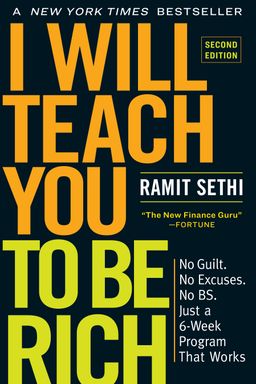
I Will Teach You To Be Rich cover

I Will Teach You To Be Rich

by Ramit Sethi

I Will Teach You To Be Rich offers a straightforward, humorous guide to financial success. Learn to automate savings, invest smartly, and spend consciously without being an expert. Discover how to maximize your wealth effortlessly while enjoying life''s pleasures.

Design Your Rich Life

What if money could become a tool for joy rather than anxiety? In I Will Teach You To Be Rich, Ramit Sethi argues that personal finance isn’t about deprivation or chasing perfect optimization—it’s about setting up systems that let you live a “Rich Life,” whatever that means to you. His message: focus on doing the right things automatically, not everything perfectly.

Sethi builds his program on behavioral realities. Most people know they should save and invest, but they get paralyzed by choice, perfectionism, or guilt. His antidote is a step-by-step framework that automates good decisions so you can spend guilt-free on what you love. The book walks you through credit mastery, no-fee banking, debt elimination, smart investing, mindful spending, and long-term maintenance—all driven by one meta-principle: action trumps analysis.

The 85 Percent Solution

Sethi’s 85 Percent Solution tells you to stop waiting for perfect knowledge. You only need to get it “mostly right” and start, because the real accelerator is time and consistent effort. The example of “Smart Sally” vs. “Dumb Dan”—where Sally starts investing earlier and wins decisively—shows how compounding amplifies early, imperfect action. Financial literacy isn’t about IQ; it’s about execution.

(Note: This reflects ideas from behavioral finance research on bounded rationality—Herbert Simon’s notion that “good enough” often beats perfect-but-late.)

Focus on Big Wins, Not Pennies

Sethi reframes money management around “Big Wins”—high-leverage moves like automating investing, negotiating a raise, paying off high-interest debt, and capturing your 401(k) match. These actions yield outsized results compared to minor lifestyle trimmings. Instead of clipping coupons, you design systems that work while you sleep.

This mindset frees you from the victim narrative that everything is stacked against you. You may not control markets or policy, but you do control your habits and priorities. The 85 Percent mindset helps reclaim that agency.

Automation and Conscious Spending

Automation is the book’s unifying engine. Once paychecks, savings, and investment contributions run automatically, you’ve locked in progress. This foundation supports the next layer: the Conscious Spending Plan (CSP). Unlike rigid budgets, CSPs allocate money intentionally into four buckets—fixed costs, investing, savings goals, and guilt-free spending. By automating the first three, you can splurge joyfully on the last, confident you’re hitting your targets.

This is a psychological breakthrough. Instead of endless willpower battles, Sethi uses defaults and inertia—the same forces marketers exploit—to your advantage. You’ll review and adjust your system a few times a year, but daily stress disappears.

A Rich Life with Systems, Not Scrutiny

Each topic—credit cards, banking, debt, investing, or income—is linked by one philosophy: build self-running systems and stop micromanaging. Whether you’re fighting late fees, choosing funds, or freelancing with irregular income, Sethi’s playbook is designed for real human behavior. You’ll learn to use automation, negotiation, and psychology strategically rather than chase financial trivia.

Ultimately, I Will Teach You To Be Rich isn’t about being a millionaire or living ascetically—it’s about designing a money system that supports your own version of a meaningful life. When your accounts, habits, and values align, you stop worrying about money—and start living.


Play Offense With Credit

Sethi reframes credit cards as tools of empowerment rather than traps. Used properly, they build your credit score, protect your purchases, and earn valuable rewards. The key is to play offense: use the system intentionally instead of avoiding it out of fear.

Master the Rules

His Six Commandments are practical: pay balances in full, get fees waived, negotiate APRs, maintain long-term accounts, increase limits when debt-free, and reclaim hidden perks such as warranty coverage and travel insurance. Even small negotiations can save hundreds annually—Ramit includes scripts for painless phone calls and “Pocket Tracker” tips for documenting outcomes.

These habits contribute directly to your FICO score, reduce friction, and unlock rewards. Applied consistently, they turn an instrument of debt into an engine for benefit accumulation.

Avoid Traps and Tactics

The dark side of credit—the minimum payment illusion and balance transfer maze—destroys wealth. Ramit quantifies how a $10,000 balance can linger for decades if you pay only minimums. His fix is automation again: set full-balance auto-pay, increase payments gradually, and avoid gimmicks that distract from real progress.

The broader lesson: responsibility beats avoidance. The goal is not fear-driven abstinence but strategic control—and maybe a free Dubai resort suite earned from points along the way.


Beat the Banks

Banks profit from your inertia and inattention. Their quiet extraction—fees, overdrafts, low yields—is one of the most preventable leaks in personal finance. Sethi’s approach is to fight back with research, negotiation, and structural optimization.

Choose Good Institutions

His “30-second test” reveals that responsiveness reflects ethics; he warns against institutions with histories of abuse (like fake accounts scandals). Use high-reputation, no-fee banks such as Schwab or Capital One 360. Pair a checking account for transactions with an online savings account for goals—you reduce temptation and improve returns.

Negotiate Fees and Overdrafts

Almost every bank fee can be waived with a confident phone call. Tell them competitors offer no-fee accounts and ask for the same. Keep logs of calls. If they refuse, escalate. Ramit’s readers routinely report hundreds refunded. Overdraft fees, in particular, are “interest rate poison.” Add $100–500 buffers and instruct the bank to decline overdrafts to protect yourself.

Once you make the one-time switch, your system can run smoothly for years. You’ve transformed a product designed to exploit your inertia into one that works effortlessly for you.


From Debt to Freedom

Debt isn’t a moral failure; it’s a math and behavior puzzle. Sethi treats it as a tractable, short-term project rather than a permanent burden. His five-step method combines psychology, math, and habit design to free up cash for real goals.

Triage and Attack

First, inventory every balance—APR, amount, and minimum. Then choose your strategy: the Avalanche method (highest rate first) minimizes cost; the Snowball method (smallest balance first) builds confidence. There’s no one right answer—the winner is whichever system you’ll stick with.

Negotiate and Reallocate

Call lenders and ask for lower rates—scripts save thousands. Reallocate “Big Win” savings from expenses toward aggressive monthly overpayments. Automation ensures you never regress. This system flips you from debtor to wealth-builder faster than you expect.

For student loans, evaluate rate versus emotional relief. If they’re low interest, invest concurrently. For anxiety-driven borrowers, paying off early is worth it emotionally. Either way, early action compounds confidence.

The real payoff of becoming debt-free is psychological: you regain agency and reprioritize energy from survival to growth.


Automate and Prosper

Automation is Sethi’s signature move—the ultimate psychological hack. Humans procrastinate, rationalize, and forget. Systems do not. By creating an Automatic Money Flow, you make financial success default behavior.

How the Flow Works

Your paycheck lands in checking (“the hub”). From there, scheduled transfers allocate money: investments, savings sub-accounts, bill payments, and credit card auto-pay. Everything aligns with your Conscious Spending Plan percentages. Over time, this architecture ensures every dollar has a role—without daily chores.

Freelancers adapt by building three to six months of bare-bones expenses in a buffer, then automating. The buffer removes the panic from irregular income and keeps investments consistent. (Ramit notes Solo 401(k)s or SEP-IRAs as excellent self-employed options.)

Why It Works

Automation exploits inertia. You make hard decisions once and benefit forever. Even automating a modest $50–$100/month creates positive feedback—you start identifying as someone who “already invests.” Periodic reviews replace daily stress. Psychologically, this liberates cognitive energy for life’s bigger design questions.

When money management happens by default, you literally “sleep well”—your system acts while you rest.


Invest Simply and Smartly

Sethi’s investment philosophy is refreshingly simple: use low-cost, broadly diversified funds and automate contributions. The core challenge isn’t intelligence—it’s consistency. He dismantles the myths that you must outsmart the market or hire a genius to win.

Climb the Ladder

Start by following his Ladder of Personal Finance: get your company 401(k) match, pay off high-interest debt, open a Roth IRA, then expand contributions and add HSAs or taxable accounts. Each rung builds on stability from the last. This order maximizes tax benefits and peace of mind.

Debunking the Expert Myth

The data is brutal: most professionals underperform index benchmarks after fees. Market timing is futile—you might miss the ten best days and cut returns dramatically. Fees silently erode wealth; a 2% annual drag can confiscate more than half your lifetime gains. Sethi positions index and target-date funds as the antidote: simple, cheap, proven.

Build a Balanced Portfolio

Asset allocation—how you divide between stocks, bonds, and cash—drives returns more than stock-picking. Younger investors usually hold more equities; older ones shift gradually to bonds. Index funds and target-date options automatically maintain this balance. For DIY investors, a “three-to-seven fund” portfolio covering total U.S., international, and bond markets is plenty.

Process Over Prediction

The secret weapon is time in the market, not timing it. Automate monthly contributions (dollar-cost averaging) and rebalance annually. Your emotions—not economics—are the real battleground, and automation wins that war.


Spend Consciously, Live Freely

Traditional budgets fail because they feel punitive. The Conscious Spending Plan transforms budgeting into liberation by deciding upfront what you want, automating it, and enjoying guilt-free the rest. You replace moralism with intentional design.

Your Four Buckets

Allocate income roughly as: 50–60% fixed costs, 10% investments, 5–10% savings goals, and 20–35% guilt-free spending. These aren’t commandments but clarity tools. You ask, “Where will the next $100 go?” and route accordingly. This transcends budgeting; it defines your values in percentages.

Guilt-Free Indulgence

Sethi fights the cultural shame of spending. If designer shoes or lavish dining-out make you happy, do it—once essentials and investments are automated. Lisa’s $5,000 fashion habit and John’s $21,000 restaurant budget are fine, because their systems already handle saving and investing goals.

Iterate and Earn More

Refine gradually: cut one big area by $50/month, experiment, review yearly. And if your expenses feel too tight, focus on earning more—negotiating raises or freelancing. There’s a limit to cutting but none to income growth. Conscious spending and conscious earning together unlock freedom.


Maintain and Optimize

Once your automation and investing are humming, maintenance is surprisingly light. Set a yearly check-up to rebalance, evaluate goals, and plan major expenses. This final step turns systems into lifelong stability.

Annual Tune-Up

Revisit your Conscious Spending Plan, confirm contributions, and renegotiate bills. Use fresh contributions (not sales) to rebalance allocations closer to your targets. This prevents emotional tinkering and tax hits. Check credit reports and verify that cash reserves remain healthy.

Plan Big Purchases Strategically

Weddings, cars, homes—these are your next “projects.” Save monthly for them years ahead. Study total cost of ownership, negotiate with data, and time purchases based on life plans. By planning early, these major events blend seamlessly into your system instead of disrupting it.

Grow Income as a Superpower

Finally, treat salary negotiation and career progression as key financial levers. A raise compounds like investment returns: each new dollar flows automatically through your system. The richest outcome of all isn’t just wealth but confidence—knowing your money supports your chosen life, not the other way around.

Dig Deeper

Get personalized prompts to apply these lessons to your life and deepen your understanding.

Go Deeper

Get the Full Experience

Download Insight Books for AI-powered reflections, quizzes, and more.