
Idea 1
Why We Need Villains to Understand Ourselves
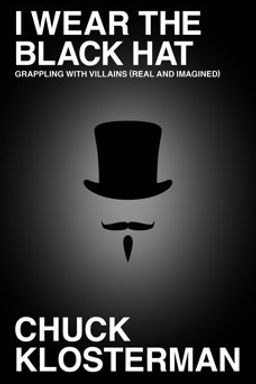
What makes someone a villain, and why do we need them? In I Wear the Black Hat: Grappling with Villains (Real and Imagined), Chuck Klosterman invites you to rethink everything you believe about morality, evil, and the dark side of human nature. Through a blend of cultural criticism, memoir, and philosophical musing, Klosterman argues that understanding villains—real and fictional—reveals more about who we are than who they are. He contends that the definition of villainy isn’t fixed: it’s fluid, contextual, and often has more to do with how much someone cares or knows about their actions than whether those actions are objectively evil.
From Darth Vader to O.J. Simpson, Machiavelli to the Eagles, Klosterman explores how society creates, loves, and destroys its villains. He opens by asking a surprisingly personal question: why do some people, even at their worst, fascinate us? Why do we sometimes root for the “bad guy,” or at least understand him? In wrestling with that tension, he proposes that the villain is not necessarily the one who commits the worst acts—but the one who knows the most and cares the least.
The Philosophy of the Black Hat
Klosterman uses the image of wearing a black hat—the old Western symbol for the bad guy—to frame his philosophical question. What if villainy is not a moral failure but a matter of perspective and performance? He opens the book by staring out his window, realizing he doesn’t truly care about strangers passing by. Is he evil for that disconnection, or simply honest about it? This self-doubt sets the tone: we all wear the black hat sometimes; we just rarely admit it. The “evil person” becomes not just an external figure but an internal possibility, a mirror for our unacknowledged thoughts.
Villains as Mirrors of Modern Culture
Across essays that move from sports to politics to pop music, Klosterman shows that villains are cultural mirrors. They expose the contradictions of our values: we demonize Machiavelli for exposing how power works, yet celebrate ruthless ambition in CEOs and politicians. We loathe Joe Paterno for his passivity in the Penn State scandal, not because he did something monstrous, but because he failed to care enough. We turn to Darth Vader and see our adult disillusionment mirrored back at us—no longer seeing Luke the hero, but Vader the broken father.
In this way, Klosterman’s exploration becomes a study of media, morality, and perception. Who we crown as heroes or condemn as villains often says more about ourselves—our cultural needs, our fears, our hypocrisies—than about the people we judge. (He echoes Nietzsche’s idea that beyond good and evil lies understanding.)
The Complexity of Caring and Knowing
The book’s central formula—villains know the most but care the least—becomes both a moral test and a storytelling device. Machiavelli, who explained how political power actually works, is vilified even if he wasn’t endorsing abuse. Joe Paterno, who knew enough to stop something horrendous but didn’t act, became a modern parable of apathy. Politicians like Newt Gingrich or Dick Cheney embody the cold, intellectual ruthlessness that triggers our instinctive mistrust: we fear not ignorance, but calculation.
Personal Confessions, Public Reflections
Klosterman’s voice remains self-aware and confessional. He doesn’t just analyze villains; he questions his own impulses to hate or forgive them. His essays pivot from deep moral inquiry to personal anecdotes—how he learned to stop hating the Eagles, or how his teenage disdain for pop bands masked his own insecurity. The black hat becomes not an accusation but a metaphor for adulthood: to grow up is to realize that everyone, including you, is someone’s villain.
Why This Matters
Ultimately, I Wear the Black Hat argues that our relationship with villains defines our moral imagination. By understanding why we hate (and sometimes love) those who break rules or expose hypocrisy, we confront the uncomfortable truth that morality is mostly performance. In a culture that glorifies authenticity but fears discomfort, Klosterman insists that villains are the only people who stop pretending. They remind you that self-awareness without empathy can be as dangerous as evil itself—and that understanding your own darkness might be the only way to stay human.