
Idea 1
Work, Place, and a Fractured Self
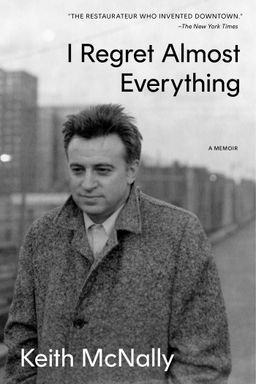
How do you rebuild a life when the tools you use to be yourself suddenly fail? In this memoir of creation and collapse, Keith McNally argues that you remake identity through work, place, and relationship—especially when your body and voice no longer cooperate. A restaurateur known for the Odeon, Balthazar, and Pastis, McNally suffers a devastating stroke at the National Gallery in London while looking at Caravaggio’s The Taking of Christ. Overnight, he loses command of the right side of his body and, cruelly for a public ringmaster, his fluency with language. From there the book traces a double arc: the medical journey of rehabilitation and the creative labor of remaking restaurants, each informing the other.
A self shattered by illness
Catastrophe strikes in an ordinary moment—a tingling that climbs from fingertips to face, an ambulance, then Charing Cross Hospital and a blunt verdict: you’ve had a stroke. Aphasia and dysarthria make words prisoners; speech becomes slurred, sequencing falters, and arithmetic evaporates. McNally, who once built rooms with conversation and authority, wakes to a world where even counting plates is hard. Shame follows—about being seen disabled by his children, about dependence—and despair culminates in a suicide attempt months later with Ambien and Percocet. You watch identity, once propped up by talk and movement, implode in hours.
Rehabilitation as daily labor
Recovery is not cinematic. It is repetitive, relational, and humbling. McNally grinds through physiotherapy and occupational therapy at St. John & St. Elizabeth in London, and later programs at NewYork–Presbyterian. Neuroplasticity repairs, but it does not restore perfectly; the first six months matter most, and repetition is king. A cast of helpers—Freddy the orderly with homespun aphorisms, Abi the nurse whose steadiness keeps morale intact, and Martin Spollen reciting Shakespeare while stretching a calf—reminds you that rehab is as human as it is technical. Milestones arrive late: the first six steps with a cane after weeks of gait training; typing left-handed when the right hand refuses.
Restaurants as identity, risk, and art
For McNally, restaurants are not simply businesses; they are rooms where he performs a self, fuses taste with theater, and gives strangers a script for pleasure. That fusion is power and vulnerability. Without a resilient managerial spine, a personality-driven empire wilts when the personality is compromised. The Pastis lease—with a 1 million dollar personal guarantee—feels safe when healthy but catastrophic after the stroke. Augustine, his most dazzling room, overruns by 3 million dollars and may even contribute to the arterial strain that precedes disaster. You learn that aesthetic success does not equal financial resilience; charisma and improvisation light the match, but process and structure keep the house from burning down.
Design by correction
McNally builds rooms the way painters revise canvases: he starts with a vivid seed and then corrects in situ. Balthazar begins with a fleamarket photo of a zinc bar and caryatids, then becomes a SoHo cathedral in the old Adar Tannery. Two of five enormous windows are walled off and replaced with mirrors to keep the room self-contained. Brandt Junceau sculpts the caryatids; salvaged French luggage racks lose their beloved patina when a dealer polishes them bright—an irreversible mistake that becomes a lesson in protecting character. Lighting, discovered at One Fifth, is the room’s soul: many low-watt sources at the side seduce better than any spotlight. (Note: This echoes Danny Meyer’s hospitality doctrine, but McNally roots it more in room physics than pure service philosophy.)
Operations and culture you can feel
The glamour of dining depends on invisible rituals—hiring sprees, training manuals, phrases that tell staff how to think. Balthazar’s manual says say we have, not I have, repeat orders back, attend to the partner of the famous guest, and anticipate needs without hovering. Friction with chefs (Nasr and Hanson) over volume versus quality teaches a durable truth: throughput and craft must be balanced structurally and socially. Mistakes require moral calculus, as when an 18 dollar pinot is poured for brokers expecting a 2,000 dollar Mouton Rothschild; McNally tells the truth and lets the unknowing couple keep their windfall.
Anchor line
'Work—of any kind—provides the one thing we need to keep going: a sense of purpose.'
Partners, family, and the public square
Capital and property come with human temperaments attached: Dick Robinson’s patient trust contrasts with Richard Caring’s ruthless moves in London; Bill Gottlieb’s eccentric preservation gifts Pastis its home. Meanwhile, class origins in Bethnal Green, mentors like Alan Bennett, and two marriages (Lynn Wagenknecht; Alina) braid ambition with regret. Children—Harry, Sophie, Isabelle, George, and Alice—bear the cost of public triumphs and private failures. In later years, Instagram becomes McNally’s prosthetic voice and peril, with the James Corden episode proving how quickly validation and backlash travel. Covid tests everything—cash flows, solidarity, and the meaning of reopening—turning Balthazar’s 2021 return into a civic ritual.
What you take away
Read this as a manual in remaking a self: accept that disaster can erase your scripts; rebuild through small, repeated work; design rooms that feel inevitable but were born of correction; professionalize what personality once covered; invest in staff rituals and investor diligence; and treat reputation as both ballast and sail. Above all, keep doing the work—because purpose, not miracle medicine, is the scaffold on which the rest of your life will hang. (In When Breath Becomes Air, Paul Kalanithi argues for meaning through vocation; McNally shows how to keep working when the instrument—your brain—misfires.)