
Idea 1
From Heartbreak to the Open Field
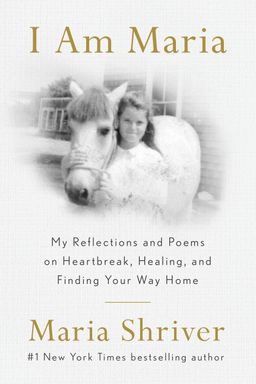
When life unravels—marriage ends, careers pivot, identities crumble—where do you go to put yourself back together? In I Am Maria, Maria Shriver argues that healing your life isn’t about powering through, winning the public square, or finding the perfect external role. It’s about uncovering the truest parts of you, letting yourself feel what you’ve denied, and daring to build a self from the inside out. She contends that poetry—raw, unscripted, and honest—can become a map out of denial and into what she calls the Open Field: a life beyond right/wrong, fear/judgment, where you welcome all parts of yourself and finally feel at home.
Shriver’s central claim is deceptively simple: you already contain what you seek. But to access it, you must stop outsourcing your worth to achievement, applause, or attachment and instead meet the child within, grieve what was lost, tell the truth that breaks you open, and redefine bravery as the courage to be emotionally honest. The book unfolds as a memoir-in-poems—moving from Uncovering to Discovering, Longing to Heartache, Healing to Home—inviting you to take the same inner expedition.
Why this journey matters now
Shriver frames her story against a cultural backdrop you’ll recognize: chronic busyness, performative “having it all,” and public lives judged by headline and highlight reel. She grew up in a storied, mission-driven family where achievement equaled worth. As a child, she learned to disappear behind closed doors and to compensate by doing. As an adult, she built a formidable career in journalism, married a global figure, served as California’s First Lady, and mothered four children—while concealing grief, fear, and loneliness behind competence and speed. Her crisis—parents’ deaths, the end of her marriage, the abrupt halt of her journalism career—didn’t create her pain; it surfaced what had been buried.
I Am Maria argues that this is a universal human pattern. Many of us mistake external “big” for internal wholeness; we run from the child within because we fear her need will sink us. We cling to certainty and perfect pictures until truth knocks us over. Shriver says the way through is a different kind of power: contemplative courage, embodied grief, compassionate self-regard, and spiritual surrender. In practice, that looks like writing what you’ve never allowed yourself to say; beating a pillow with a bat to move rage; sitting alone in a hotel room to meet your grief; learning to name your needs without apology; and saying “no” to shiny gigs to keep your promise to heal (compare to Pema Chödrön’s counsel in When Things Fall Apart to stop abandoning yourself in hard moments).
What you’ll take from this summary
You’ll see how early experiences of invisibility shaped Shriver’s obsession with “big”—and how she disentangled from that spell. You’ll learn how she reevaluated bravery, redefined love, and placed the child-self at the center of repair. You’ll see why she calls poetry a healing technology—how free, unpolished lines bypass your internal censor and expose truths prose can’t reach (a kinship with Mary Oliver’s gentle permission and Rumi’s invitation “out beyond” right and wrong). You’ll explore her spiritual practices—retreats at a Benedictine abbey, conversations with nuns and shamans, whispered prayers in chapels and on porches—that anchored her through loss.
Along the way, we’ll track key moments: a little girl knocking on padded doors; a teenager electrified by reporters in the back of a campaign plane; a young anchor beaming on morning TV and puking between segments; a wife thrust into politics she feared; a mother saying goodbye to parents in ICU rooms; a woman on a bench by the ocean realizing she can hold her own hand. We’ll connect those scenes to actionable moves you can make: writing your own “reporter poetry,” making space for grief, renegotiating boundaries, and choosing a grounded faith that “sees best in the dark.”
The promise of the Open Field
Why call the destination an Open Field? Because, Shriver says, true freedom isn’t a role you nail, a title you win, or a partner who guarantees safety. It’s the inner spaciousness that appears when you stop living as a reaction to someone else’s story and begin living as a response to your own soul. In the Open Field, paradoxes coexist—strong and soft, brave and trembling, feminine and masculine—and you’re not forced to choose. You set down the cross of chronic caretaking, forgive what you can, and learn to love without losing yourself (echoes of bell hooks’ vision of love as an ethic, not a fusion).
Essential message
You can survive the truths that undo you—and you can let them remake you. The path isn’t linear, quick, or tidy. It is, however, sacred, human, and available. Poetry is the permission slip. Compassion is the method. Wholeness is the homecoming.