
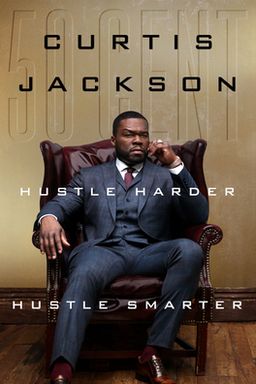
Hustle Harder, Hustle Smarter cover

Hustle Harder, Hustle Smarter

by Curtis 50 Cent Jackson

In Hustle Harder, Hustle Smarter, Curtis ''50 Cent'' Jackson shares invaluable life lessons drawn from his journey from the streets to the top of the entertainment industry. Discover how confronting and overcoming fear can transform your ambitions into reality.

Hustle Harder, Hustle Smarter: Building Fearless Success

Have you ever wondered why some people keep winning—no matter how many times life knocks them down—while others fold at the first challenge? In Hustle Harder, Hustle Smarter, Curtis "50 Cent" Jackson argues that the answer has little to do with luck or talent and everything to do with mental transformation. Success, he insists, isn’t just about hustling harder—it’s about thinking smarter, evolving relentlessly, and cultivating a fearless mindset that turns obstacles into fuel.

50 Cent’s story offers the kind of gritty inspiration that feels both personal and universal. From losing his mother at eight years old and selling drugs at twelve to surviving nine gunshots and becoming a multimillionaire, Jackson’s journey moves from the streets of South Jamaica, Queens, to boardrooms and television sets across America. His core argument is simple but powerful: if you can master fear, develop the heart of a hustler, and never let complacency infect your drive, you can succeed more than once—even after losing it all.

From Streets to Strategy

Jackson’s life embodies duality. There’s 50 Cent, the indestructible persona who thrived in chaos and violence, and Curtis Jackson, the strategist who outmaneuvered corporations and created TV empires. The book explores how he learned to merge those identities. He shows that the principles that kept him alive on the streets—discipline, perception, and adaptability—are the same that turned him into an entertainment mogul. Like Robert Greene’s The 48 Laws of Power (which Jackson co-wrote a companion to), this book fuses street wisdom with corporate strategy in language anyone can connect with.

Fearless Hustle

Early in the book, Jackson describes climbing a water tower in Times Square, forty stories high, to confront fear literally. For him, fear is not the enemy; comfort is. “Comfort is a dream killer,” he writes. Fear should spark awareness, not paralysis. Whether fighting back in the boxing ring at twelve, returning to his grandmother’s neighborhood after being shot, or standing before wary white executives in business meetings, his mantra is consistent: run toward what scares you. Developing this muscle—what he calls finding fearlessness—is foundational to lasting success.

The Mind of a Hustler

Being a hustler, in Jackson’s eyes, isn’t about selling drugs—it’s a behavior rooted in adaptability, focus, and passion. A hustler never stops seeking new opportunities, never outsources ambition, and never blames others for setbacks. This type of energy propelled icons from Steve Jobs to Jay-Z, and it’s how Jackson pivoted from a fading rap career to television stardom. He uses stories like the rise of Brazilian CEO Graças Foster and the resilience of wrongfully imprisoned lawyer Isaac Wright Jr. to prove that consistent work, clean living, and focus yield freedom—the ultimate prize of hustling smart.

Why This Book Matters

In a world obsessed with short-term wins and social media perfection, Hustle Harder, Hustle Smarter brings readers back to fundamentals: discipline, strategy, personal value, and continuous evolution. Jackson strips success of its glamour and reframes it as a deliberate process that anyone can master. He reminds readers that losing is inevitable—but staying down is optional. Each chapter builds on this ethos, from learning fearlessness and constructing a strong team to controlling perception, embracing competition, and rejecting entitlement. The message echoes thinkers like Carol Dweck (Mindset) and Ryan Holiday (The Obstacle Is the Way): growth requires resilience, and success demands humility before the lessons of failure.

Ultimately, Jackson’s book is more than motivational—it’s operational. His hard truths and street-derived strategies double as a blueprint for personal transformation in any career. Whether you’re an aspiring artist, entrepreneur, or executive, Jackson’s central insight hits home: no one is coming to save you. The power is already in your hands, but you’ll only unlock it when you hustle harder—and smarter.


Finding Fearlessness

Fear is inevitable, but comfort is deadly. This is Curtis Jackson’s credo in learning what he calls “fearlessness.” From hanging off a water tower to returning to the same street where he was nearly killed, Jackson shows that fear itself isn’t the problem—it’s our relationship with it. “Everything I was afraid of already happened to me,” he writes, meaning fear loses its power once faced head-on.

Turning Fear into Fuel

Jackson recounts how losing his mother and being shot nine times gave him what he calls an immunity to fear. But what’s striking is that he doesn’t glamorize trauma. He emphasizes intentional exposure: do scary things on purpose to train your courage like a muscle. When he boxed as a boy, his coaches refused to coddle him after a punch. That discipline—learning to take hits and keep moving—became the foundation for his mental toughness. It’s a universal lesson: true confidence isn’t about avoiding pain, but surviving it.

Facing Emotional Fear

Not all fear is physical. Jackson vulnerably admits his greatest fear isn’t death—it’s family. Growing up fatherless and losing his mother made intimacy feel unsafe. In adulthood, this fear reappeared through strained relationships, particularly with his older son, Marquise. By confronting this emotional fear, he reminds readers that growth also means healing the parts of ourselves we avoid. His honesty reframes courage—not as bravado, but as emotional transparency.

Raise Your Hand

One of Jackson’s simplest yet most powerful rules is “raise your hand.” Don’t let fear stop you from showing your value. He tells the story of a music industry colleague who always stayed silent in meetings—which cost him influence and eventually his job. The lesson: effort is invisible unless you display it. Fearless professionals project confidence even before they’re validated. (As Sheryl Sandberg writes in Lean In, perception often precedes opportunity.)

When fear dictates your choices, your life shrinks to fit it. When you confront it, Jackson argues, every door opens. Courage isn’t absence of fear—it’s mastery over its influence. The goal isn’t to be unafraid, but unshaken.


Heart of a Hustler

Hustling is more than work; it’s an identity. Jackson insists that success doesn’t come from fleeting sprints—it comes from maintaining a motor that never stops. A true hustler’s engine runs on passion, not desperation. Drawing parallels between street hustle and Silicon Valley innovation, he makes a provocative claim: a hustler’s mindset applies equally to Apple, Amazon, or G-Unit.

Work Ethic and Sacrifice

Jackson contrasts his own discipline with a culture of entitlement. While others sleep, he’s in the studio, gym, or boardroom. Stories like Brazilian CEO Graças Foster’s rise from rag-picker to oil executive reinforce that work ethic overcomes systemic barriers. The unglamorous truth? Hard work outlasts talent. That’s the cornerstone of every hustler’s creed.

Clean Living, Clear Focus

Despite his public persona, Jackson reveals he’s nearly sober—he sells liquor but drinks ginger ale. He frames abstinence as strategic: sobriety allows sharper judgment, better productivity, and greater control. It’s a practical edge anyone can adopt. Like endurance athletes, hustlers must preserve energy, not waste it on distraction. “You can’t be a boss if you’re dependent on a crutch,” he says.

Finding Focus

The story of Isaac Wright Jr.—a man who studied law in prison and freed himself—is Jackson’s ultimate example of directed hustle. Wright’s obsession with learning literally set him free. Jackson challenges readers: What could you master with that same focus? He compares mindless busyness to focused grind—working hard isn’t enough if you’re not working smart. The mission isn’t just to survive but to advance, daily.

At its core, hustling harder means showing up relentlessly; hustling smarter means aligning every action with purpose. Together, they forge momentum that outlasts setbacks, distractions, and even failure itself.


Constructing Your Crew

You’re only as strong as your weakest link. That’s the law of the streets—and the boardroom. Jackson’s third major lesson focuses on crew construction: how to build, discipline, and trust the people around you. Whether managing G-Unit or running a TV production studio, he treats loyalty, competence, and discipline as non‑negotiable traits.

Loyalty Doesn’t Mean Proximity

Jackson learned the hard way that shared geography doesn’t guarantee loyalty. He recalls buying Mike Tyson’s Connecticut mansion so his Southside crew could live under one roof—a multimillion‑dollar gesture that only bred dependency. Proximity without purpose, he says, breeds chaos. Real loyalty is built on accountability, not nostalgia.

Cutting Loose the Wrong People

From Jam Master Jay’s tragic loyalty to his old neighborhood to Tekashi 6ix9ine’s disastrous choice of entourage, Jackson offers cautionary tales on staying too close to danger. His rule: if someone adds confusion to your circle, remove them—fast. “If you can’t keep discipline in your team,” he warns, “you can’t keep success.”

Leading with Discipline and Encouragement

Jackson’s leadership style merges two energies: hard-edged enforcement and motivational mentorship. He fires crew members for fighting on tour but personally coaches actors like Omari Hardwick through doubt to stardom. Charismatic leaders, he argues, must adjust their tone to the individual—some need pushing, others need belief. It’s a masterclass in adaptive leadership that rivals insights found in Leaders Eat Last by Simon Sinek.

In the end, Jackson defines a winning crew as those who combine loyalty with competence. Your inner circle must sharpen you, not drain you. “A strong team,” he writes, “is the ultimate security system.”


Knowing Your Value

One of Jackson’s most consistent business lessons is know your value and never sell it short. His decision to sign with Eminem’s Shady Records instead of the safer J Records wasn’t luck—it was patience and self‑awareness. Understanding personal value, he says, allows you to say “no” when everyone around you says “take the deal.”

Playing the Long Game

After being shot and dropped by Columbia, Jackson turned down multiple record offers before finding alignment with Eminem and Dr. Dre. While others saw him as damaged goods, he saw leverage. “Would you marry just anyone who asked?” he jokes. His patience delivered a historic debut and lifelong wealth—proof that waiting beats chasing the first check.

Equity over Paychecks

Jackson’s Vitamin Water partnership redefined hip‑hop entrepreneurship. Instead of taking a $100,000 endorsement, he insisted on equity—and cashed out millions when Coca‑Cola bought the company. The same principle guided his Starz deal: take less upfront, gain more ownership. He contrasts this foresight with his producer Sha Money XL, who took a quick payment instead of a point on an album worth $1.3 million in royalties.

Creating Perceived Power

Jackson teaches that your value is tied not just to what you produce but how you’re perceived. “Act like you don’t need it,” he writes. Whether negotiating at Starz or dealing with investors, power lies in projecting abundance, not desperation—much like how Warren Buffett and Mark Cuban approach deals. Perception creates leverage; leverage creates value.

His takeaway: patience, equity, and strategic self‑belief make you recession‑proof. If you know your worth, time becomes your ally instead of your enemy.


Evolve or Die

If Jackson hadn’t evolved, he says bluntly, he’d be “dead or in jail.” The survival instinct that once kept him alive on the streets became his growth engine in business. When hip‑hop audiences turned away, he pivoted to television, launching Power, a series that rivaled HBO dramas. Evolution, to him, is not optional—it’s oxygen.

The Danger of Stagnation

Jackson recounts sensing when the culture had shifted. After Crack a Bottle, audiences grew cold; he realized hip‑hop no longer viewed him as the underdog. Instead of clinging to his old identity, he reinvented himself as a producer. Like a snake shedding skin, he dropped ego to survive. It’s a parable echoed by Darwin: adaptability, not strength, determines survival.

From Rapper to Mogul

Transitioning from 50 Cent the rapper to Curtis Jackson the businessman meant learning to operate in corporate America’s ruthless arena. He studied history, business, and psychology—drawing wisdom from mentors like Robert Greene and Deepak Chopra. Surrounding himself with people smarter than him, he evolved intellectually, emotionally, and spiritually. This habit of constant learning became his ultimate competitive edge.

Admitting When to Pivot

When record sales declined or a crew member stagnated, Jackson didn’t sugarcoat it—he pivoted. He contrasts his growth with former protégés like Lloyd Banks and Tony Yayo, whose refusal to adapt ended their momentum. His mantra “change with time or die with pride” applies universally—from artists to executives.

Evolution, for Jackson, isn’t transformation once—it’s endless rebirth. “You can’t see the writing on the wall,” he warns, “but you can always read the energy in the room.” Adapt that energy, and you’ll never be obsolete.


Power of Perception

“The world will see you the way you see you,” Beyoncé once said—a quote Jackson uses to open his chapter on perception. He argues that image is energy. Whether in the streets, studios, or boardrooms, the way you present yourself determines the opportunities you attract. Perception isn’t deception—it’s controlled storytelling.

Shaping the Narrative

Since Get Rich or Die Tryin’, Jackson has used his “50 Cent” persona as armor. When critics call him “the rapper 50 Cent,” it lets Curtis Jackson make moves as the businessman behind the scenes. He weaponizes expectations: controversy keeps him in headlines, but credibility closes deals. By mastering both, he turns perception into profit.

Controlling First Impressions

From the car he drove to meet Jam Master Jay to the tailored suits he wears in boardrooms, Jackson demonstrates that appearance is language. “Every outfit starts a negotiation,” he writes. Professionalism, presentation, and even tone influence power dynamics. Like actors or politicians, you must set the scene for every role you play.

Act Like You Don’t Need It

Jackson teaches that scarcity attracts abundance. The less you appear to need something, the more people want to give it to you. It’s the same tactic Bernie Madoff used on investors—minus the crime. Whether negotiating deals or dating, desperation kills appeal. Composure creates curiosity. His rule: project control, even when you’re improvising.

Ultimately, perception isn’t vanity—it’s vision. The hustler who understands how others see them can guide that perception toward respect, opportunity, and freedom.


If We Can’t Be Friends

In business, as in life, everyone won’t like you—and that’s fine. Jackson’s rule of engagement is simple: “If we can’t be friends, let’s be enemies.” Not in hate, but in hustle. Inspired by an encounter with Oprah Winfrey, he reframes competition as collaboration through conflict. It’s not about beef but strategy.

Strategic Rivalries

From his rivalry with Kanye West over dueling album releases (Curtis vs. Graduation) to claiming dominance over Empire to pit it against his show Power, Jackson understands the psychology of headlines. Friendly antagonism fuels attention. Like the ancient Greek concept of agon—competition as cooperation—it pushes both sides to greatness. (Socrates used argument the same way: sharpening truth through opposition.)

Healthy Competition

Jackson celebrates rivals like Ferrari founder Enzo Ferrari versus Lamborghini as proof that enemies can raise the industry’s standard. Competition, he insists, “brings out the best in anyone who’s honest enough to engage it.” For him, even conflict is fuel; every critic is free marketing. He turns negativity into momentum—a masterclass in emotional judo.

Turning Conflict into Growth

Jackson admits he’s drawn too deeply into fights sometimes and had to learn when to disengage. Some opponents, like former protégés or petty rivals, only drain energy. “Don’t keep your competition afloat,” he warns. Be strategic: pick battles where victory multiplies opportunity. This mindset overlaps with Sun Tzu’s Art of War—control the terrain, not the combat.

For Jackson, enemies create clarity. Allies create comfort. And clarity is what produces greatness. “Be friendly first,” he reminds readers. “But if they insist on war, show them how professional you are at it.”


Learning from Your Ls

Failure isn’t fatal—it’s fertilizer. Jackson opens this section with the story of Soichiro Honda, whose factory was bombed twice before building one of the world’s largest car brands. The point: the most successful people are not those who avoid losses but those who extract value from them. “Success,” Honda said, “is one percent result and ninety‑nine percent failure.” Jackson agrees.

Turning Setbacks into Instruction

When Jackson’s label dropped him or when lawsuits nearly derailed him, he treated each disappointment as feedback, not injustice. He reminds readers that mistakes are life's tuition. The cost stings, but the lesson compounds. This mirrors the philosophy of Nassim Taleb’s Antifragile: breakage is data for stronger rebuilding.

Owning Your Mistakes

Jackson condemns the “blame game”—whether employees who fear accountability or fighters like Floyd Mayweather who intimidate their teams into silence. Admitting error, he argues, is not weakness but calibration. A hustler who hides from feedback repeats failure; one who embraces it evolves faster.

Resilience as Rebirth

Jackson recounts how he reinvented himself after every loss—bankruptcy, public feuds, fading albums—only to return stronger. The secret? Practicing self‑awareness without self‑pity. Every L refined his focus, shaped his next hustle, and built scar tissue against ego. In his world, “learning from your Ls” is the ultimate superpower.

Put simply: fail hard, but never fail twice the same way. Success, Jackson teaches, is just failure with better data.


Avoiding the Entitlement Trap

The last and most personal theme in Jackson’s book is a warning against entitlement. “No one owes you anything,” he writes, “and you owe no one else.” This unapologetic self‑reliance sounds harsh, but it’s rooted in experience—from feuds with his son Marquise to lazy employees and old friends waiting for handouts. Entitlement, he argues, poisons ambition faster than failure ever could.

Entitlement vs. Responsibility

Jackson critiques the mindset of waiting for rescue—whether from parents, employers, or systems. Freedom, he insists, comes only from responsibility. He tells the story of buying an entire store’s sneaker inventory so his son could start a business, only to watch him do nothing with it. The real loss wasn’t money—it was mindset. “You can give opportunity,” Jackson says, “but you can’t install discipline.”

Making Deposits, Not Withdrawals

Jackson uses the metaphor of relationships as bank accounts: people are either making deposits (adding value) or withdrawals (draining you). His rule? Cut those who only withdraw. He surrounds himself with people who build energy, not steal it. This principle echoes Stephen Covey’s emphasis on “emotional bank accounts” in The 7 Habits of Highly Effective People.

Giving Back, Not Giving In

Despite his hardness, Jackson concludes with compassion. True charity, he argues, isn’t pity—it’s empowerment. His work with the World Food Programme and community foundations channels wealth into opportunity, not dependency. The final paradox: success means remaining self‑made while making it easier for others to build themselves, too.

In the end, Jackson’s message is timeless: entitlement traps you in stagnation; responsibility grants you power. The ultimate hustle is owning everything—your actions, your growth, and your legacy.

Dig Deeper

Get personalized prompts to apply these lessons to your life and deepen your understanding.

Go Deeper

Get the Full Experience

Download Insight Books for AI-powered reflections, quizzes, and more.