
Idea 1
The Human Organization Revolution
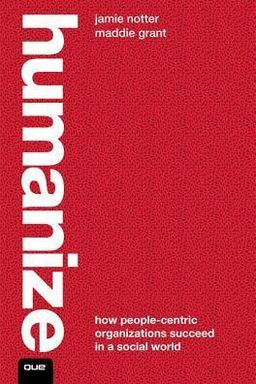
You stand at a crossroads between two eras: one dominated by mechanistic organizations built for control and predictability, and another shaped by the social web—a world where human connection, authenticity, and collaboration are primary forces. In Humanize, Jamie Notter and Maddie Grant argue that social media is not just technology but a mirror revealing how organizations must evolve to remain human. The book’s central claim is simple yet profound: if the Internet has become social, organizations must do the same.
The authors open with a vivid metaphor—the red pill moment. Like Neo in The Matrix, you can continue inside the machine or choose to awaken to networks built around people. The routines of modern work—flat processes, rigid hierarchies, exhaustive approvals—are artifacts of the industrial era. Social technologies challenge these assumptions and invite you to redesign for openness, trust, generativity, and courage. Those four qualities form the trellis that supports this revolution.
From Machines to Social Systems
For more than a century, management evolved from the logic of factories. Employees became replaceable parts, strategic plans assumed stable environments, and hierarchy promised efficiency. The social web overturned that logic. The rise of Facebook, Twitter, YouTube, and other platforms revealed that voice, participation, and speed now shape every public and internal conversation. Millions co-create content, collaborate across boundaries, and bypass institutions entirely. Markets, as the Cluetrain Manifesto declared, are now conversations—and that means your organization must learn to talk and listen like a person, not a monolith.
Scale and the New Power of Participation
The numbers alone confirm the shift. Billions of posts, videos, and interactions flow daily; mobile access makes influence near-instant. You no longer control information; you participate in networks. A single dissatisfied customer can provoke global attention overnight. But scale is not the threat—it is the opportunity. Influence now travels through connections; small actions can magnify if they resonate. To use that scale wisely, you must treat social presence as infrastructure: a core part of how value moves through your system.
People Become Producers
The early web was passive—users read. The modern web is active—everyone creates. Blogging, video-sharing, remix culture, and crowdsourcing have democratized production. This shift breaks old boundaries between expert and amateur, employer and customer. As Clay Shirky notes, the 'publish now' button turned the world into a system of collaboration and continual invention. Smart organizations recognize this not as chaos but as generative energy: the crowd itself becomes a lab for ideas, feedback, and innovation. Lego, Dell, and OpenIDEO demonstrate that co-creation builds both products and relationships.
Filtering, Curation, and Meaning
When everyone can speak, information overload becomes the new management problem. The authors quote Shirky’s insight: it’s not information overload, it’s filter failure. Organizations must develop curators—humans and algorithms who detect relevance, context, and signal amid the noise. Content curation, listening systems, and real-time dashboards form the sensory organs of modern networks. Without these, truth gets lost and decision cycles decouple from reality.
Management Myths and Institutional Adaptation
Most managerial habits—strategic planning, HR systems, and leadership models—were built for predictability. Mintzberg’s critique of planning and Senge’s systems principles both indicate why these fail now: organizations are living systems, not machines. The book dismantles the illusion that best practices guarantee success. In dynamic complexity, what worked for others may fail for you tomorrow. Instead, adopt 'next practices'—disciplined experimentation, measured learning, and organizational reflection. Innovation becomes a management discipline, not just a product-design activity.
The Trellis: Cultivating Humanity Inside Systems
The trellis organizes the book’s argument into four dimensions: Open (decentralize decision and voice), Trustworthy (share truth with purpose), Generative (create inclusion and shared value), and Courageous (produce learning and experimentation). Each dimension transforms culture, process, and individual behavior. Openness enables local decision-making; trust builds resilience; generativity multiplies innovation; courage sustains learning. Failures like Motrin’s PR crisis or BP’s oil spill show what happens when one or more elements collapse: silence replaces dialogue; control replaces connection.
Purpose and Practice of Humanization
The authors’ conclusion is not sentimental. Humanizing organizations is rational strategy. Systems that align with natural human values—autonomy, curiosity, contribution—learn faster and adapt better. Technology alone cannot humanize; only redesigned norms and structures can. Start where you are: open one process, create one public voice, launch one small experiment. Each step makes the organization a living organism capable of continuous learning, not an artifact of managerial control.
Social media succeeded because it amplifies what humans naturally value: openness, authenticity, collaboration, and courage. Organizations that reflect those same forces internally will thrive in a connected, transparent, and constantly evolving world.
This human revolution is not a shift in marketing tactics—it is a transformation of purpose. You are invited to build systems that work like people do: adaptive, curious, connected, and alive.