
Idea 1
Humanity at Work: Thriving in a Smart Machine World
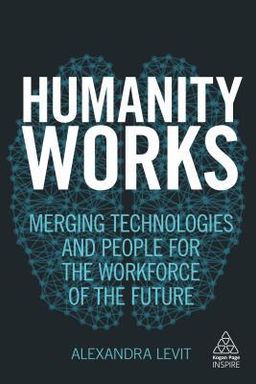
Have you ever wondered what it really means to "prove your humanity" in a world run by machines? In Humanity Works, futurist and business consultant Alexandra Levit asks exactly that question—and offers reassurance that the rise of automation and artificial intelligence doesn’t mark the end of human work. Instead, it introduces a new era where uniquely human qualities—creativity, empathy, intuition, and judgement—become the most valuable assets in our professional toolkit.
The Human Edge in an Automated Age
Levit’s core argument is both practical and optimistic: the future of work won’t be a dystopia where machines replace humans but a partnership between people and technology. She contends that the skills defining great professionals—from emotional intelligence to moral decision-making—are irreplaceable because machines lack empathy and ethical reasoning. Through examples from companies like Deloitte, Toyota, IBM, and PepsiCo, Levit demonstrates how organizations can consciously cultivate these human strengths to stay relevant.
Her thesis aligns with futurists such as Erik Brynjolfsson and Andrew McAfee (authors of The Second Machine Age), who argue that technology increases cognitive capability but doesn’t eliminate the need for human insight. Both perspectives highlight what Levit calls the “human-in-the-loop” model—where humans and AI collaborate rather than compete. This theme runs throughout the book, informing how leaders should redesign structures, redefine leadership, and reimagine careers in the next decade.
The Great Transition: From Labor to Leadership
Levit starts with demographic and technological upheaval. Falling fertility rates, aging populations, and millennial leadership converging with extended careers among baby boomers reshape how organizations source talent. At the same time, the accelerating automation of tasks—from law to manufacturing—forces professionals to rediscover what makes us irreplaceable. The future workplace demands not just technical literacy but the ability to inspire, innovate, and empathize.
The author reframes automation as an opportunity: humans who understand how machines learn and apply information will assume roles as trainers, explainers, and sustainers—guiding technology ethically and effectively. She cites research from Accenture showing that AI can amplify human potential when organizations align moral oversight with computational power.
Culture and Collaboration Reimagined
Beyond the technological backdrop, Levit turns to the human environment—the structures, cultures, and experiences shaping future organizations. She imagines workspaces that are networked rather than hierarchical, flexible rather than rigid. “Co-working” and “swarming” models give professionals more autonomy and connection, while the gig economy and flexible schedules redefine what it means to build a career. In this context, leadership evolves from command-and-control to transformational influence, emphasizing trust, learning agility, and shared goals over authority.
Learning, Bias, and Empathy: The Human Reset
Interestingly, Levit doesn’t just praise human traits—she explores our flaws as well. In a powerful discussion on bias, she calls unconscious bias our “Achilles heel.” While emotion and intuition enrich our decisions, they can also cloud our judgment. Leaders must therefore apply technology to counter human shortcomings, using data analytics and AI tools to expose inequities and ensure fair evaluation. The goal, according to Levit, isn’t perfection but awareness—combining technological precision with human compassion.
Preparing for the Human Future
Throughout the book, Levit speaks to leaders, teams, and individuals who need to prepare today for the reality of 2030. She offers action plans at the end of each chapter—inviting readers to examine their current responses to technology, learning, leadership, and culture. Her message is clear: automation doesn’t diminish our humanity; it demands that we use it fully. The strongest organizations will be those that create empowered, purpose-driven cultures where human potential and machine intelligence combine to produce meaningful work.
In short, Humanity Works is a manifesto for thriving rather than surviving in an automated age. It’s not about resisting robots—it’s about reimagining what being human at work means when the machines join the team. You’ll leave this book understanding how to turn human empathy, creativity, and adaptability into your most indispensable career skills.