
Idea 1
The Human + Machine Revolution
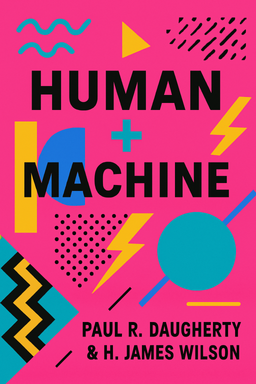
How do you prepare for a future where artificial intelligence isn’t just automating tasks but reshaping the very meaning of work? In Human + Machine: Reimagining Work in the Age of AI, authors Paul Daugherty and H. James Wilson invite you to rethink what it means to collaborate with technology. They argue that the rise of AI marks not the end of human relevance, but the beginning of a profound partnership that redefines business, creativity, and purpose. Their central claim is simple but transformative: the future of work depends on humans and machines working together—each amplifying the other’s strengths rather than competing for dominance.
Rather than accepting the popular dystopian narrative of machines replacing people, Daugherty and Wilson introduce what they call the ‘missing middle’—a space where humans and intelligent systems collaborate to do things neither could achieve alone. This space is where the most groundbreaking innovations will arise, and where organizations can gain exponential performance gains. Through vivid examples—from BMW’s collaborative factory robots to AI-driven diagnostic systems at GE—the authors show that companies across industries are already thriving by embracing this new symbiosis.
From Automation to Adaptation
For decades, technology has focused on automating existing tasks: making them faster, more standardized, and more efficient. Daugherty and Wilson point out that this approach has reached its limits. The next wave—what they call the third wave of business transformation—is built on adaptive processes that evolve dynamically using real-time data and human input. Companies that treat AI merely as automation will plateau, while those that reimagine their processes as organic collaborations will leap ahead.
To illustrate, they compare business automation to GPS navigation: early systems simply digitized static maps, while today’s AI-powered tools like Waze use live data to optimize routes in real time. The lesson? AI doesn’t just make old processes digital—it makes them adaptive, self-improving, and human-aware.
The Missing Middle and Fusion Skills
At the heart of this transformation lies the missing middle. In this space, people train, explain, and sustain smart machines, while machines amplify, interact with, and embody human capabilities. The authors call these shared competencies fusion skills—new human abilities required to thrive in an AI-infused workplace. These skills include teaching algorithms empathy, learning to interrogate intelligent systems, and rehumanizing time by focusing on creativity and judgment rather than repetitive tasks.
These skills redefine careers: data scientists become ‘algorithm trainers,’ managers learn to balance automation with ethics, and factory workers partner with cobots that make production safer and more engaging. As Arianna Huffington observes in her endorsement of the book, this isn’t about machines replacing human potential—it’s about technology augmenting our humanity.
Why This Revolution Matters
The authors argue that ignoring this collaborative model will create a divide between winners and losers in the economy. The winners are not those who have implemented the most AI, but those who have reimagined their culture, leadership, and processes around human empowerment. Daugherty and Wilson warn that companies fixated on automation risk falling into the “digital Darwinism” trap—where technology evolves faster than their ability to adapt.
Their research across 1,500 organizations revealed that only about 9% have stepped fully into this adaptive future. These leading-edge firms follow five principles, summarized by the acronym MELDS: Mindset (rethinking human-machine collaboration), Experimentation (testing and learning continuously), Leadership (governing AI ethically), Data (building intelligent supply chains), and Skills (developing fusion capabilities). This framework, the authors contend, is the recipe for lasting innovation in the age of AI.
An Ethical, Human Future
The book’s ultimate goal is optimistic but pragmatic. It urges you—as a leader, employee, or policymaker—to stop thinking in terms of “humans versus machines” and start asking “how can humans and machines do better together?” This shift requires responsible AI systems that are explainable, fair, and transparent. It also requires leaders to place people at the center of transformation—ensuring training, equity, and accountability stay ahead of technology itself.
The Core Message
The AI revolution is not about replacing human work, but reimagining it. By embracing the missing middle, building fusion skills, and cultivating adaptive processes, you can turn AI from a threat into a partner for creativity and growth. As Daugherty and Wilson conclude, AI gives us “superhuman capabilities” so we can spend more time being human.