
Idea 1
The Art of Ethical Human Hacking
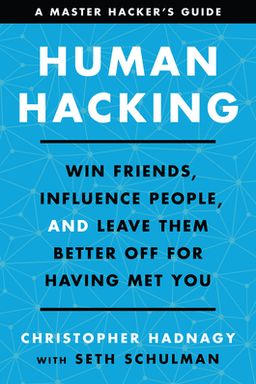
Have you ever wished you could read people’s minds, influence their decisions, or turn awkward encounters into moments of connection? In Human Hacking: Win Friends, Influence People, and Leave Them Better Off for Having Met You, social engineer Christopher Hadnagy argues that these skills aren’t the stuff of manipulation or deceit—they’re the culmination of ethical influence grounded in empathy. Drawing from his background in cybersecurity and behavioral psychology, Hadnagy reveals how the same psychological techniques hackers use to infiltrate systems can be repurposed to build trust, improve communication, and make everyday human interactions more successful and humane.
At its heart, Hadnagy’s message is both empowering and cautionary: human hacking is a superpower. When combined with empathy, self-awareness, and ethical intent, it can transform relationships, careers, and personal growth. Used without moral boundaries, it becomes manipulation—a form of psychological coercion as dangerous as any computer virus. His rallying cry—“Leave people better off for having met you”—anchors every method in this book.
From Cyber Espionage to Everyday Communication
Hadnagy begins with his extraordinary backstory, describing high-stakes break-ins to secure facilities and computer networks for corporate and government clients. These ethical "penetration tests" rely not only on technical prowess but on what he calls social engineering—the ability to persuade people to reveal information, access restricted areas, or take specific actions. The twist? In these missions, the most powerful hacking tools are not machines, but words, gestures, empathy, and timing.
He recounts vivid episodes—posing as a journalist to gain entry into a heavily guarded site, calling employees under false pretenses to extract confidential details—all while highlighting that these same conversational cues and emotional strategies can be wielded for good. Ethical hackers use them to expose vulnerabilities so organizations can fix them before malicious actors exploit them. Ordinary people can use them to build closer relationships, diffuse conflicts, and become more persuasive without manipulation.
Empathy as the Hacker’s Core Code
Hadnagy redefines what it means to "hack" someone. It’s not deception—it’s deep understanding. The foundational principle of human hacking, he explains, is empathy: getting into another person’s emotional world, seeing reality through their lens, and interacting in a way that fulfills their unspoken needs. This process of emotional mirroring disarms defensiveness and builds genuine rapport.
Studies on oxytocin (as referenced by neuroscientists such as Paul Zak) show that trust is literally biochemical—small acts of empathy and kindness release brain chemicals that make others more open and generous. Hadnagy’s approach aligns with what Dale Carnegie popularized in How to Win Friends and Influence People, but updated with 21st-century behavioral research and real-world security insights.
From Awareness to Action: The Human Hacking Framework
Throughout the book, Hadnagy builds a structured path for mastering interpersonal communication, guiding readers from self-awareness to behavioral flexibility. Early chapters emphasize knowing your own communication style through tools like the DISC model, which classifies people as Dominant, Influential, Steady, or Conscientious. Understanding your own default behaviors allows you to adapt to others more effectively.
Subsequent sections explore the practical "hacker toolkit": how to create convincing pretexts (contexts that make communication natural and safe), how to build rapport quickly using body language and tone, and how to influence others using research-backed principles like reciprocity, social proof, and consistency (concepts also grounded in Robert Cialdini’s work on persuasion). The result is not coercion, but cooperation—helping you and others achieve win-win outcomes.
Hadnagy also details how these techniques reveal vulnerabilities, not just in organizations but in ourselves. Recognizing how easily emotions, fear, or flattery make us susceptible helps us build stronger defenses—psychological firewalls against manipulation and fraud.
Hacking for Good: Ethics, Empathy, and Empowerment
Unlike con artists or scammers, Hadnagy upholds a strict code of ethics: never manipulate people for your own gain at their expense. Each reader is asked to sign a pledge, promising to use these skills to help, not harm. This ethical anchor transforms human hacking from a trickster’s craft into a self-improvement discipline grounded in compassion and responsibility.
The power of this mindset is transformative. Whether resolving workplace conflicts, handling negotiations, or navigating family dynamics, ethical human hacking teaches you to listen deeply, respond strategically, and leave emotional footprints of trust. Ultimately, the book argues that learning to connect—consciously and empathetically—might be the most vital skill in our increasingly divided and digital world.
“The best way to hack a human,” Hadnagy writes, “is to care about them.”
Through powerful stories, psychological insight, and actionable frameworks, Human Hacking shows that you don’t have to be a spy to think like one. In a world where influence is constant—marketing, media, politics, relationships—this book gives you a moral compass for persuasion. The goal isn’t to control others but to connect deeply, communicate effectively, and create outcomes that make both parties walk away feeling valued.