
Idea 1
Haters Aren’t Your Problem—Ignoring Them Is
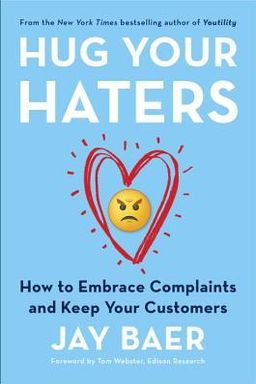
Have you ever received a harsh review, a complaint, or an angry message from a customer—and decided to ignore it? Jay Baer argues that this common choice is a dangerous mistake. In Hug Your Haters, he contends that complaints are not a burden but a once-in-a-generation opportunity to set your business apart. His main message is simple yet transformative: the only thing worse than being criticized is being silent about it. If you want to stand out in a noisy marketplace, you must embrace your critics, engage with your detractors, and turn negativity into loyalty.
Baer’s central thesis is that customer service has undergone a revolution. Once confined to toll-free numbers and emails, it now plays out publicly on social media, review sites, and discussion forums. The rise of the “always-on” consumer means that every complaint is now a performance that others are watching. As Tom Webster notes in the foreword, customer service has become a “spectator sport.” The brands that thrive are those that see complaints not as interruptions but as marketing opportunities—a chance to show compassion, competence, and authenticity in front of an audience.
Why Haters are a Gift
Baer believes the modern marketplace gives you two types of customers: the happy and the vocal—those who sing your praises—and the unhappy and equally vocal—your haters. But unlike the silent majority who simply leave without explanation, haters give you something precious: feedback. They tell you exactly what’s wrong, in public, giving you an opportunity to fix it and show that you care. Ignoring them doesn’t make them go away; it makes their message the only one people see.
Studies back this up. Baer’s proprietary research with Edison Research found that responding to a complaint—in any channel—always increases customer advocacy, while ignoring complaints always decreases it. In other words, talking to haters converts some into promoters; ignoring them amplifies their negativity. Responding is one of the most financially powerful actions a business can take—akin to dramatically cutting prices or launching a new product, but far less costly.
From Service to Spectacle
What makes today’s customer service different is its visibility. When a complaint is left on Yelp or Twitter, it isn’t just communication between brand and customer—it’s theater for everyone watching. Baer argues that this visibility changes the stakes and the meaning of service. Every public response becomes a marketing message; every ignored complaint becomes a silent broadcast that your business doesn’t care. “Not responding is a response,” writes Baer, quoting Likeable Media CEO Dave Kerpen. “A response that says, ‘I don’t care about you.’”
This shift creates a tension many companies haven’t adapted to yet. While 80% of firms believe they deliver “superior” service, only 8% of their customers agree. The gap isn’t caused by poor intentions—it’s caused by outdated assumptions. Service hasn’t evolved since the 1970s, but customer expectations have. Baer argues that businesses that fail to adapt to real-time, public feedback are setting themselves up to lose the next generation of customers.
Turning Complaints into Competitive Advantage
The book positions “hugging your haters” as the ultimate competitive advantage. In a world where products and prices can be copied overnight, what can’t be easily duplicated is your humanity—your response to the people who challenge you. Legendary service brands like Zappos, Nordstrom, and Ritz-Carlton have built empires not because their products were unique, but because their service culture was. Baer suggests that any company, regardless of size, can do this by transforming complaints into opportunities for visibility, retention, and loyalty.
For instance, he highlights Fresh Brothers Pizza, a small chain in California where the co-owner, Debbie Goldberg, personally responds to every Yelp review—good or bad—with empathy, an apology, and often a free meal. Or KLM Royal Dutch Airlines, which responds to every social media message, in 14 languages, around the clock. These brands demonstrate that responding to haters isn’t just about damage control—it’s about differentiation. They show that when service is authentic, fast, and public, customers reward you with trust and advocacy.
The Psychology Behind Hugging
Why does hugging your haters work so well? Because service failures create emotional dissonance. Customers don’t just want resolution; they want recognition. When you validate their experience, you signal that they matter. Even angry customers want to be heard more than they want to be right. By answering them respectfully—and quickly—you flip the script from confrontation to collaboration. This psychological principle, known as the “service recovery paradox,” shows that people who see their problems solved with care often become more loyal than those who never experienced a problem at all.
Baer urges you to apply this more broadly: don’t just “manage” complaints—embrace them. Every hater is an early-warning signal for what’s broken and a megaphone for how well you fix it. In other words, haters aren’t your problem; ignoring them is. This mindset shift—from fear to gratitude—turns negativity into data, data into improvement, and improvement into loyalty.
What You’ll Learn from This Approach
Throughout the book, Baer breaks down the new rules of modern service: the two types of haters (“offstage” private complainers and “onstage” public ones), the tools to respond effectively, and the frameworks to build a culture that values feedback. You’ll learn why service is now “the new marketing,” how to recover an angry customer, and why even large-scale enterprises like Discover Financial and Apple thrive by responding personally, publicly, and consistently.
Ultimately, Hug Your Haters delivers a hopeful message: negativity doesn’t have to destroy your reputation—it can reveal your character. Every complaint is an invitation to show your best. When you engage with your critics rather than evade them, you win not just their respect but also the invisible jury of bystanders who are always watching.
Key takeaway: When you respond to haters with humility, speed, and sincerity, you don’t just fix a customer’s problem—you build a company’s identity.