
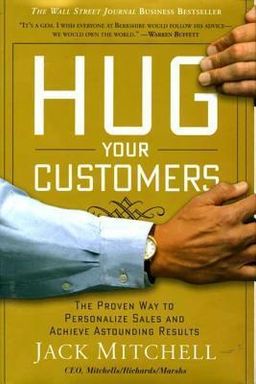
Hug Your Customers cover

Hug Your Customers

by Jack Mitchell

Hug Your Customers reveals the secrets to crafting a customer-centered business that thrives. Learn how to create a ''hugging culture'' that caters to customer needs, ensuring financial success and satisfaction through personalized service, strong relationships, and strategic use of technology.

Selling as a Lifestyle: The Hug Philosophy

Have you ever realized that every conversation, job interview, or relationship is, at its core, a sale? In Selling the Hug Your Customers Way, Jack Mitchell argues that selling isn’t just about transactions—it’s about human connection. Mitchell contends that great selling is really great caring: an approach where salespeople transform ordinary business into extraordinary, lifelong relationships. The premise of the book—and of the Mitchell family’s multimillion-dollar retail empire—is that selling done with genuine warmth, empathy, and follow-through can shape not just businesses but people’s lives.

Mitchell draws from his decades running family clothing stores (Mitchells, Richards, Wilkes Bashford, Marios), making his case that selling is an art and a repeatable process rooted in integrity and joy—not manipulation. He recalls his own journey, from being a young fundraiser who knew enthusiasm but not process, to developing a six-stage formula for authentic selling success. Throughout the book, he shows that everyone—from salespeople to lawyers, nurses, and parents—is selling something every day, and that doing so with humanity builds trust, loyalty, and happiness.

The Core Idea: Selling Is Caring

Mitchell reframes sales from a self-serving hustle into a genuine act of service. He rejects the old stereotype of the slick, conniving Harold Hill from The Music Man—the kind of salesperson most people distrust because they prioritize profits over people. Instead, he defines selling as an empathetic collaboration where both parties win. The best sellers, he insists, care deeply about their customers’ satisfaction, dreams, and experiences. They make personalized gestures (“hugs”), whether that means remembering names, birthdays, favorite coffee flavors, or grandchildren’s ages. Hugging isn’t physical—it’s any act of thoughtful kindness that connects emotionally and exceeds expectations.

Why Selling Matters

Beyond the immediate business gains, Mitchell argues that selling is the backbone of civilization itself. Every meaningful human exchange—falling in love, getting hired, persuading a friend—depends on selling ideas, emotions, or possibilities. When done right, it’s not manipulation but mutual fulfillment. In a world often driven by products and technology, Mitchell reminds us that people—not data—form the heart of commerce. He offers this counterpoint to sterile, transactional selling: personal engagement outperforms algorithms because humans crave recognition and care.

A Repeatable, Human-Centered Process

The book introduces the six stages of the Hug Your Customers process—five deliberate steps and a final bonus act Mitchell calls “One for Good Measure.” Each step mirrors the phases of a healthy relationship: greeting warmly (Making the Connection), understanding needs (Decoding the Mission), presenting and advising (Show and Share), helping people decide (Allowing the Buy), parting graciously (The Kiss Goodbye), and keeping in touch (One for Good Measure). These aren’t just professional tactics; they’re personal disciplines grounded in caring, passion, listening, and trust. In Mitchell’s world, every sale should end with a genuine smile—and every customer should eventually feel like family.

Why This Philosophy Matters Today

In an era dominated by e-commerce, automation, and social selling, “hugging” stands out precisely because it’s personal. Mitchell demonstrates that the businesses who thrive are the ones that see relationship-building as their true product. Whether your “customer” is a client, coworker, patient, or spouse, connection creates trust—and trust leads to loyalty for life. (In a similar spirit, Ken Blanchard’s Servant Leadership and Dale Carnegie’s How to Win Friends and Influence People champion caring as the ultimate driver of success.)

At its heart, Selling the Hug Your Customers Way is both blueprint and manifesto: a call to transform selling from pressure to partnership, from transaction to transformation. For Mitchell, the truest sale isn’t just the moment a product changes hands—it’s when two people walk away feeling better about themselves and each other.


The Seven Sacred Attributes of Great Sellers

What separates ordinary salespeople from extraordinary ones? For Mitchell, it’s not slick words or closing techniques—it’s character. He outlines seven sacred attributes that define the greats: caring, trustworthiness, curiosity, hustle, execution, passion, anticipation, and teamwork. He calls them “sacred” because they’re nonnegotiable; they can’t be faked or outsourced, and once cultivated, they guide every sale.

1. Caring: The Heart of Selling

The most successful sellers genuinely care about others—not just the sale, but the person. They open stores late for emergencies, send flowers to hospitalized customers, and offer a human touch even when there’s no immediate transaction. Caring can be learned, Mitchell insists, by observing and practicing empathy daily. His brother Bill’s motto captures it perfectly: “Do the right thing.”

2. Trustworthiness and Honesty

At Mitchell Stores, trust is gospel. Sellers always tell customers the truth: if a dress or suit doesn’t fit beautifully, they say so—politely but transparently. Mitchell recalls Ginger Kermian telling a customer, “Take that dress off—it doesn’t look right. We’ll find the perfect one for you.” This candid warmth builds loyalty faster than any discount ever could.

3. Discovery and Big Listening

The best salespeople are detectives. They ask open-ended questions, probe for meaning, and watch body language carefully. “Listen as long as it takes,” Mitchell advises. Instead of assuming what customers want, sellers learn about their lives: their work, families, hobbies, and even pets. The goal is not just to sell a product but to sell understanding. (This mirrors Daniel Pink’s insight in To Sell Is Human—selling is about attunement, not persuasion.)

4. Hustle and Energy

Great sellers move fast—not frantically, but purposefully. Mitchell celebrates “two-step sellers” who rush upstairs two steps at a time, symbolizing energy and urgency. Hustle means serving until the customer says “No más,” not leaving when the day’s target is hit. As he says, “You sell through your goals.”

5. Execution and Focus

Vision without execution is daydreaming. Mitchell urges sellers to “Just do it,” echoing Nike’s mantra that excellence is achieved through disciplined, repeatable processes. He teaches techniques for staying focused: visualize each interaction, write it down, and combine urgency with consistency. Good intentions aren’t enough; execution is where trust is proven.

6. Passion and Positivity

Mitchell’s stores radiate enthusiasm. “Run a fever for what you sell,” his father told him, meaning you must love the product, the people, and the process. Happy sellers make happy buyers—and happiness converts better than pressure. (Major corporations like Starbucks and Southwest Airlines use the same principle: internal joy creates external loyalty.)

7. Anticipation and Foresight

Finally, Mitchell teaches sellers to think ahead like chess players. Anticipation means visualizing the customer’s next move, not reacting to it. If a client always buys a coat every winter, be ready with one before the cold arrives. If a customer’s anniversary is next week, send a reminder and gift idea. Planning turns caring into profit.

Together, these seven attributes form the DNA of lifelong selling. You can’t fake them; you have to live them. For Mitchell, they’re not just work habits—they’re human habits. And when practiced daily, they transform ordinary transactions into extraordinary relationships.


The Six-Stage Hug Your Customers Process

At the heart of Mitchell’s philosophy is a step-by-step process that works across all industries. Whether you sell clothes, insurance, or consulting services, these stages create predictable success while keeping the interaction deeply personal. It’s both art and science—part human warmth, part disciplined structure.

Stage 1: Making the Connection

This first impression sets the tone for everything else. Sellers have roughly 25 seconds—the “25-Second Principle”—to greet customers with a genuine hello (never “Can I help you?”). Smile, move energetically, and make eye contact. Use names and nicknames; they’re emotional currency. Mitchell emphasizes personal touches like offering coffee or remembering a child’s favorite lollipop trick, because “no one cares how much you know until they know how much you care.”

Stage 2: Decoding the Mission

Selling is detective work. Each customer enters with a hidden mission—something they need or dream about but may not articulate. Sellers must “decode” by observing behavior, asking questions, and listening more than talking (ideally 70/30). This is where curiosity and emotional intelligence matter most. Successful sellers treat every interaction like a conversation between friendly neighbors, not a lecture. They also document what they learn—names, birthdays, hobbies—turning observation into a personalized data system.

Stage 3: Show and Share

Once you understand needs, show solutions with enthusiasm—but not hype. “Don’t give a sales pitch,” Mitchell warns. Replace telling with sharing. Knowledge matters (“Cashmere comes from the undercoat of Mongolian goats”), but empathy matters more. Offer choices and involve customers in discovery. Introduce gentle humor, sensory engagement, and touch—the feeling of soft cloth or firm handshake—to create emotional connection. Confidence beats pressure; storytelling beats selling.

Stage 4: Allowing the Buy

The biggest mistake in selling? Overselling. Mitchell teaches the “Close Your Mouth Principle”—know when to stop talking and let customers decide. Fear of rejection blocks many salespeople; great sellers overcome it by flipping perspective from “making a sale” to “allowing a buy.” Use soft closures like “If you like it, let’s fit it for you.” Never hear or say the word “no”—reframe refusals as pauses. Build confidence, invite help from teammates (“I need your blessing,” he says), and close with empathy. Every transaction should feel mutual, never coerced.

Stage 5: The Kiss Goodbye

Last impressions last forever. After purchase, walk customers to checkout and personally introduce them to colleagues by name. Offer gratitude, refreshments, and help carrying packages—simple gestures that signal value. Ask permission to follow up: “Would you mind if I checked that the jacket fits perfectly?” Then make the call. Mitchell insists this isn’t an end—it’s a beginning. A great goodbye is planting the seed for a lifelong relationship.

Stage 6: One for Good Measure

The final “extra” stage is what makes the Hug philosophy magical: do one small thing more. Send thank-you notes, call customers on birthdays, include their pets or children in communications, or surprise them with a small gift. At Mitchell Stores, a seller once engraved a hanger with a client’s name so he’d always have a place for his jacket—an unforgettable touch. These extra measures build genuine friendships. For Mitchell, selling doesn’t end when products leave the store; it lives on through continued care.


From Transaction to Relationship: The Win/Win/Win Model

Too many sellers view business as a tug-of-war—win/lose. Jack Mitchell believes true selling means everyone wins: the customer, the seller, and the business. He calls this the “win/win/win” model, where every sale strengthens relationships and happiness rather than exploiting desire.

Selling as Collaboration

Mitchell learned collaboration early, watching his father treat retail as community service, not conquest. His anecdote about Ray Rizzo at Procter & Gamble shows how adversarial selling fails—Rizzo’s hard pitch alienated a buyer until he reset the conversation like a neighbor-to-neighbor dialogue. Selling, Mitchell says, should feel like friendship, not competition.

Emotional Connection Over Transaction

Customers don’t just buy products—they buy how sellers make them feel. Mitchell’s stores serve free coffee, remember family details, and celebrate milestones because emotions unlock trust faster than persuasion does. He reminds businesses that customers might forget what they bought but never forget how they were treated. (This echoes Howard Schultz’s Starbucks Experience: add warmth to routine.)

The Triple Win

Mitchell’s triple win philosophy works like this: when customers feel cared for, they buy happily; sellers find fulfillment beyond commission; and the business thrives sustainably. This circular success depends on personal integrity—trust must be earned through small, consistent gestures. The reward isn’t just money; it’s emotional wealth, purpose, and happiness at work. As Mitchell likes to say, “Selling right makes everyone feel great.”

By redefining success as mutual satisfaction rather than manipulation, Mitchell transforms sales from commercial transaction into shared triumph. Sales done this way become a lifelong partnership—proof that ethical business isn’t just possible, it’s profitable.


Everyone Sells: Creating a Culture of Caring

Selling doesn’t belong to sales departments alone—it belongs to everyone. In Mitchell’s world, the tailor altering a jacket, the barista offering coffee, and even the parking attendant greeting customers are all part of the sales process. His mantra: “Everyone sells.”

From Independence to Interdependence

Mitchell contrasts solitary sales heroism with teamwork. Independent sellers rely solely on themselves; interdependent sellers thrive through collaboration. He likens it to football: the quarterback can’t score without the line blocking. In stores, success depends on visual designers, credit teams, customer service reps, and tailors working seamlessly. This ecosystem creates what Mitchell calls a “hugging culture.”

Human Infrastructure of Sales

Every touchpoint is a selling opportunity. Security officers greet guests as warmly as sellers. Fitters like Phuong and Simone translate trust into perfect tailoring; accountants maintain the rhythm by ensuring smooth operations. Mitchell tells stories of drivers who bring coffee for clients or tailors who repair urgent dresses overnight. Selling is everyone’s shared art form, not isolated effort.

Leaders Set the Tone

Managers and owners must reflect the values they preach. Mitchell himself works weekends on the floor, greeting customers personally. His brother Bill walks buyers to their cars and opens doors. This hands-on leadership proves dignity and humility still count. To support sellers, leaders must empower autonomy: trust employees to “do whatever it takes” for customer happiness.

Team selling isn’t just efficient—it’s joyful. When everyone in the organization hugs the customer, loyalty and morale soar. Mitchell’s stores show what happens when a company decides to treat both staff and customers as family: satisfaction becomes contagious, and selling transforms into a shared celebration of caring.


The Everyday Seller: Life Beyond the Store

Mitchell’s final lesson extends far beyond retail: selling is a universal life skill. He closes the book with daydreams of “selling the hug way” in restaurants, airlines, insurance agencies, and even childhood lemonade stands. For him, every human interaction has selling at its heart—it’s about convincing others to believe, trust, and care.

Selling Everywhere

He imagines airline pilots greeting passengers by name, servers remembering birthdays, and insurance agents calling on anniversaries not to upsell but to check on families. These “hug industries” would transform impersonal experiences into joyful ones. Even in his childhood story selling homemade ice pops, Mitchell unknowingly practiced every stage of his later process—from smiling greetings to thanking customers with water “for good measure.”

Selling the Hug Way as Mindset

This isn’t about gimmicks—it’s mindset. Mitchell ends each “Hug Speech” by asking audiences to commit to three acts: know their top 100 customers personally, hug someone meaningfully within 48 hours, and connect with a neighbor. Every hug builds not just business but humanity. The ripple effect creates kinder workplaces, happier employees, and stronger communities.

Selling Your Life

Ultimately, Mitchell reminds you that the most important person you sell to every day is yourself—the face in the mirror each morning. You “sell” your attitude, confidence, and purpose to yourself first. If you believe that good things will happen today, you’re already selling the Hug Way. As he puts it, “We’re all sellers and all leaders, because the person we report to is that one in the mirror.”

Selling, Mitchell concludes, is humanity in action. Whether you’re closing a contract or comforting a friend, every sale is a chance to care—and that’s the most enduring transaction of all.

Dig Deeper

Get personalized prompts to apply these lessons to your life and deepen your understanding.

Go Deeper

Get the Full Experience

Download Insight Books for AI-powered reflections, quizzes, and more.