
Idea 1
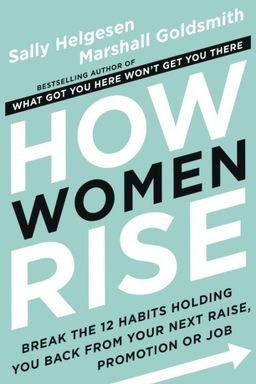
How Women Rise: Breaking the Habits That Hold You Back
Have you ever felt stuck in your career despite working relentlessly, delivering outstanding results, and doing everything that seems right? In How Women Rise, authors Sally Helgesen and Marshall Goldsmith argue that many successful women plateau not because of external barriers alone, but because of invisible habits that sabotage their progress. These are not flaws in character—they are learned patterns that once served women well but eventually limit their ability to rise higher.
Goldsmith’s previous book, What Got You Here Won’t Get You There, focused on the behaviors that hold back high-achieving leaders, mostly men. But Helgesen, a renowned expert on women’s leadership, noticed that many of those patterns look very different for women. Men may fall prey to arrogance and overconfidence, but women tend to get stuck in excessive modesty, perfectionism, or pleasing others. Together, the authors blend behavioral coaching and gender research to reveal how women can replace self-defeating habits with empowering ones.
The Core Argument: What Holds Women Back
The book builds on one powerful premise: the very behaviors that help women succeed early in their careers often hinder them later on. Women are often rewarded for being conscientious, modest, and loyal—qualities that win praise in entry and mid-level roles. But as they move into leadership, these same habits can signal passivity or lack of ambition. The authors identify twelve common habits—such as the reluctance to claim achievements, expecting others to notice your contributions, or the perfection trap—that consistently stall women’s advancement.
Helgesen and Goldsmith remind readers that these habits are not unique moral failings but adaptive strategies shaped by upbringing, workplace culture, and social expectations. Girls are encouraged to be helpful and humble, while boys are rewarded for assertiveness and daring. Over time, women internalize the idea that being self-promotional or ambitious is unbecoming. When these beliefs carry into professional life, they can come at a steep cost.
Why This Matters: Internal vs. External Barriers
The authors acknowledge the persistence of structural barriers—biased performance criteria, male-driven networks, and cultural expectations—but insist that focusing only on external obstacles can feel disempowering. What truly transforms careers, they contend, is learning to change what lies within your control: your behaviors. The good news is that behavioral change is possible at any age because of neuroplasticity—our brains’ ability to rewire through repetition (a concept popularized by psychologist Carol Dweck and coach Peter Drucker).
Once women identify habits that no longer serve them, they can substitute new ones and gradually internalize more effective responses. This behavioral approach is practical and empowering compared to abstract debates about gender inequality.
The Personal Definition of Success
A major theme is that women often define success differently from men. Helgesen’s research shows that women value work quality, autonomy, meaningful impact, and relationships—sometimes more than salary or prestige. This difference is not a weakness; it reflects a broader, more inclusive vision of leadership. But it also poses a trap: by being less fixated on titles or power, women may underinvest in their own advancement, assuming that great work will “speak for itself.”
The book challenges women to reconcile purpose with ambition—to accept that aiming high doesn’t betray their values. As Drucker famously said, “We spend too much time teaching leaders what to do; not enough time teaching them what to stop.”
From Awareness to Action
Through dozens of vivid case studies—from nonprofit directors like Amy, Silicon Valley engineers like Ellen, and law firm partners like Maureen—the authors illustrate how patterns of overwork, reluctance to speak up, and fear of self-promotion quietly stall promising careers. More importantly, they show how small behavioral shifts—like saying “thank you” instead of deflecting praise, or practicing a well-rehearsed “elevator speech”—can help women get unstuck.
“It’s not what you add that changes you—it’s what you stop doing.” The journey to rise isn’t about working harder; it’s about rewiring the habits that silently keep you in place.
Ultimately, How Women Rise is both diagnostic and prescriptive. It helps you identify the “old template” guiding your behavior, understand why you keep repeating it, and find a realistic way to change. You’ll learn to claim your achievements, speak your truth with clarity, let go of perfectionism, and cultivate allies who can amplify your successes. By replacing self-sabotaging behaviors with intentional habits, you position yourself not only to rise professionally but to lead authentically and effectively—on your own terms.