
Idea 1
The Surprising Science of How We Really Learn
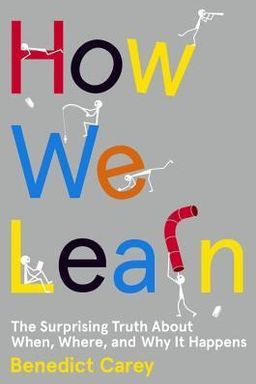
What if almost everything you’ve been told about learning—about concentration, discipline, and sticking to a single study routine—was wrong? In How We Learn, science journalist Benedict Carey turns the traditional image of the earnest, hyper-focused student on its head. He argues that true learning doesn’t come from brute effort or memorization but from working with your brain’s natural rhythms—its quirks, distractions, and periodic forgetfulness. Learning, Carey insists, is not a straight climb up a mountain of knowledge. It’s more like a wandering journey through a forest where getting lost, taking detours, and even breaking the rules can accelerate understanding.
Why Traditional Study Myths Fail
Carey begins with his own transformation—from the classic grind who believed hard work and total focus were the only pathways to mastery, to a more relaxed, curious student who learned better once he loosened his grip. He uses this story to highlight how common habits—long study marathons at the same desk, late-night cramming, endless repetition—actually limit comprehension. These habits ignore how the brain really operates: a dynamic, pattern-seeking organ that learns best when its environment, timing, and focus are varied. Many of us try to force the brain into a kind of mechanical discipline, Carey writes, when in fact learning is more organic, more eccentric, and more playful than we realize.
The Brain as a Story-Making Machine
Part of the reason these myths persist is that we misunderstand memory. Carey, drawing on neuroscientists such as Michael Gazzaniga and Brenda Milner, shows that memory isn’t a filing cabinet but a living network constantly rewriting itself. The brain, he says, is a “story maker”—endlessly constructing narratives to make sense of what we experience. Forgetting, revising, and reconstructing are integral to how it strengthens skills and knowledge. That’s why distractions or breaks often help rather than hurt: they allow the subconscious to connect fragments and reinforce meaning, something pure repetition can’t do.
A Map of Modern Learning Science
Carey organizes the book like a scientific expedition through modern cognitive psychology. He begins with basic brain biology—the partnership between the hippocampus, neocortex, and neural “storytelling” systems that create, lose, and reforge memories. Then he explores how scientific discoveries about memory timing, context, and testing can be reused as practical study tools. Each of the four main parts of the book—Basic Theory, Retention, Problem Solving, and Tapping the Subconscious—introduces a technique that flies in the face of common wisdom but boosts long-term learning. For example, varying where you study (context), spacing out sessions, testing yourself before you’re ready, quitting right before success, and even sleeping strategically all improve performance. Later chapters expand to creativity, incubation, and how rest and play refine insight.
The Big Takeaway: Learning as a Way of Life
Carey’s core argument is both scientific and humanistic: learning is not about raw intellect or effort but about managing attention and forgetfulness wisely. When we integrate learning into daily life—when we absorb information amid the noise, schedules, and randomness of our days—we begin to use the brain as it evolved to work. This makes learning feel less like drudgery and more like living. He compares this to the hunter’s instincts of our ancestors: the brain is a forager, designed to explore widely, take cues from the environment, and make sense of the world through trial, error, and surprise. The more we mimic that natural curiosity, the deeper our knowledge goes.
In the pages ahead, you’ll learn why forgetting is a friend, not a failure; why distractions and variation enrich memory; how testing yourself improves understanding; why stopping before you’re finished can boost creativity; and how sleep cements ideas. Carey’s message is liberating: we don’t need to fight our mental rhythms to learn—we need to work with them. That shift turns learning from a disciplined grind into an adaptable, lifelong habit, shaped by curiosity, rest, and even a little chaos.