
Idea 1
The Fragile Architecture of Trust
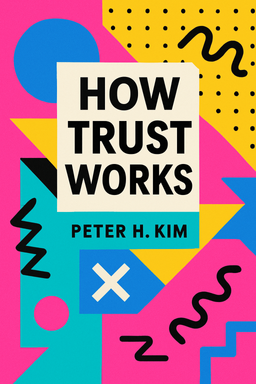
Why do we find it so easy to lose trust—and so hard to rebuild it? In How Trust Works, behavioral scientist Dr. Peter Kim explores one of the most fragile yet fundamental forces in human life: our willingness to rely on one another. Drawing from two decades of research and personal experience, Kim reveals that most of us misunderstand how trust functions. We believe trust is built slowly, deteriorates with reason, and can be logically repaired. Yet the truth, he argues, is that trust often begins high and crumbles with a whisper. Worse, we’re wired to handle its breakdowns in ways that often make things worse.
Kim’s project is as ambitious as it is human. He wants to dissect the anatomy of trust—how it forms, how it breaks, and how it might heal—not only in our personal lives but across politics, business, and society. He fuses psychology, sociology, and real-world case studies, from Theranos and Facebook scandals to domestic violence, political polarization, and post-genocide reconciliation in Rwanda. In each arena, he shows that the stakes of misunderstanding trust go far beyond relationships: they determine whether nations can unite after trauma and whether people can live with integrity after betrayal.
Trust as a Universal Currency
Kim begins from the personal: his immigrant family’s faith in the American dream. Their journey—from hardship to hope, from trust broken to trust renewed—anchors his inquiry. Trust, he notes, isn’t a soft virtue; it’s the currency that keeps societies functioning. Every friendship, medical visit, and democratic election depends on it. Yet people are notoriously poor at judging who deserves it. We rely on shallow cues—appearance, group identity, or professional status—to decide, often leading us astray. His early experiments showed that people grant surprising trust to strangers, even when reasoning would caution otherwise. This instinctual optimism serves humanity’s cooperative nature but leaves us unprepared when betrayal strikes.
Competence vs. Integrity: The Twin Pillars
The heart of Kim’s framework lies in two attributes that shape all trust: competence—the ability to perform reliably—and integrity—the alignment with shared moral principles. These dimensions shape our perceptions differently. A failure of competence, we’re quick to forgive: an honest mistake can be fixed. But a failure of integrity feels like poison in the well. Once someone’s motives appear corrupt, even redemption seems self-serving. Kim’s research shows that people see one misstep in honesty as damning, while one instance of skill usually earns forgiveness. This fundamental asymmetry explains why apologies help only in some cases and why denials, though morally risky, can sometimes restore trust more effectively.
From Personal Betrayal to Global Crisis
Across eleven chapters, Kim extends this lens from the personal to the collective. He begins with the psychology of everyday trust, showing that most of us start less cynical than we think. In fact, humans are predisposed to give others the benefit of the doubt—an evolutionary quirk that makes cooperation possible. Then he moves to what happens when that faith is broken. Through stories of domestic abuse, corporate scandals, and social injustice, Kim reveals how betrayal splinters not just relationships but also the belief systems that bind societies.
Later chapters take us through the perils of apology, the role of power in forgiveness, and how echo chambers (“the hive mind”) magnify outrage instead of redemption. Kim explores how cultures differ in blame and atonement—from Japan’s ritualized apologies to Western society’s obsession with individual responsibility. He ends with the monumental question of how nations heal after atrocities, comparing Nuremberg, South Africa’s Truth and Reconciliation Commission, and Rwanda’s Gacaca courts. His conclusion: justice without restoration traps societies in cycles of resentment; reconciliation without truth breeds denial.
Why It Matters Now
Kim wrote this book in the aftermath of the January 6th U.S. Capitol attack and amid worldwide collapses of institutional trust. His data echoes the sentiment: more than half of Americans say they cannot rely on neighbors, government, or the media. The result, Kim warns, is civic paralysis. Distrust doesn’t just fracture relationships; it cripples the collective imagination of what’s possible. But he’s not pessimistic. Beneath the fractures, he insists, most of us long to be good—to be trusted and to trust again. Rebuilding begins with understanding how trust works, how it breaks, and how the same mechanisms that destroy it can, with reflection, repair it.
In the pages that follow, Kim reveals the paradoxes of trust repair: why apologies can fail, why victims and offenders see the world through different moral lenses, and how culture, power, and group identity skew our sense of fairness. Yet he leaves us with hope—that the same science exposing our biases can help us listen across divides, forgive wisely, and rebuild the fragile architecture of trust that every human life depends on.