
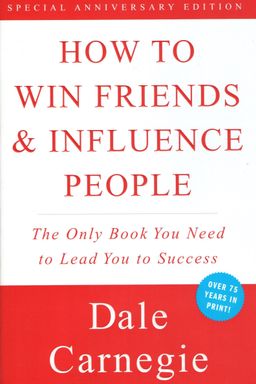
How to Win Friends & Influence People cover

How to Win Friends & Influence People

by Dale Carnegie

Discover the timeless secrets to thriving in social and professional environments with Dale Carnegie''s classic ''How to Win Friends & Influence People.'' Transform your interactions and relationships with proven strategies for effective communication, genuine appreciation, and influential leadership.

The Art of Winning Friends and Influencing People

How can you make people like you, listen to you, and be inspired by you — without manipulation or force? In How to Win Friends and Influence People, Dale Carnegie argues that human relationships are the cornerstone of every kind of success. Whether you’re selling a product, managing a team, or raising a family, your ability to connect with others determines your outcomes far more than your technical skills or intelligence.

Carnegie contends that most people fail in their careers and personal lives not because of lack of talent, but because of their inability to handle people. To thrive, you must understand the deeply emotional nature of human beings: their need for respect, appreciation, and significance. He argues that no one can be influenced through criticism, domination, or logic alone — but almost anyone can be influenced when their self-esteem is preserved and their humanity acknowledged.

Why This Book Still Matters

Originally published in 1936, Carnegie’s book was born out of decades of teaching in communication and public speaking, distilled from thousands of real-life encounters. Its wisdom remains timeless precisely because human nature hasn’t changed. We still crave recognition. We still resist those who make us feel inferior. We still respond powerfully to warmth, listening, and genuine interest.

What makes this book especially relevant today — in the age of digital communication and remote work — is its reminder that influence depends less on clever messages than on human empathy. It’s not what you say that moves people, but how you make them feel.

Core Principles of Human Interaction

At its core, Carnegie’s message revolves around simple but profound truths:

  • People don’t want to be corrected — they want to be understood. Criticism rarely changes behavior; it only breeds resentment.
  • People crave appreciation more than anything else. It is not flattery, but sincere recognition that awakens the best in others.
  • People act from desire, not duty. To truly motivate someone, you must align what you want with what they want.

These ideas form the foundation of the book, and the rest of Carnegie’s work shows how to apply them to everyday situations — from handling criticism and building rapport, to persuading others and leading effectively.

From Understanding to Action

Carnegie divides his principles into four major parts: handling people, making people like you, winning them to your way of thinking, and leading them without resentment. Through captivating stories — from Abraham Lincoln’s gentle diplomacy to Charles Schwab’s use of enthusiasm instead of reprimand — he illustrates that people respond best to understanding and encouragement.

“A great man shows his greatness,” Carnegie quotes Carlyle, “by the way he treats little men.”

This line captures the essence of the book — respect isn’t something you demand; it’s something you earn by granting it first.

Learning by Doing and Becoming

Carnegie emphasizes that this is not a book about tricks, but about forming new habits of empathy. He encourages readers to read actively, practice continuously, and review often. His nine suggestions for mastering the material make it clear: learning to win friends is learning to live differently — to replace pride, judgment, and resentment with curiosity, encouragement, and optimism.

Ultimately, he reminds us that success in human relations isn’t about technique, but about character. When you earn trust through sincerity and inspire enthusiasm through understanding, influence follows naturally. The heart of Carnegie’s philosophy is simple but radical: be genuinely interested in others — and everything else will fall into place.


Fundamental Techniques for Handling People

Carnegie opens with a powerful warning: if you want to gather honey, don’t kick over the beehive. Criticism, he argues, is the most common yet most destructive act in human relationships. Unlike logic, criticism wounds pride, stirs resentment, and seldom produces change. If even hardened criminals like Al Capone and “Two-Gun” Crowley justify their actions, how likely is it that the people around you will confess fault after being criticized?

The Futility of Criticism

Carnegie’s examples bring this principle to life. When Abraham Lincoln criticized others early in his career, he nearly fought a duel because of his sharp words. He later learned — painfully — that rebuking people only makes them defensive. During the Civil War, Lincoln restrained himself from condemning generals who failed him, realizing that their mistakes came from human limitations, not malice. His mercy made him one of the most respected leaders in American history.

“Judge not, that ye be not judged,” Lincoln reminded his staff. Carnegie elevates this biblical counsel into a social philosophy: understanding human nature is far more fruitful than condemning it.

Replace Condemnation with Curiosity

Instead of anger, seek understanding. Carnegie borrows from psychology (notably from B.F. Skinner’s behavioral research) to show that reward, not punishment, drives learning and cooperation. Criticism demoralizes; appreciation energizes. He urges you to ask, “Why does this person act this way?” rather than “What’s wrong with them?” Every misstep has a story behind it — a struggle, a fear, or a need for recognition. When you listen for that story, you transform resentment into empathy.

The Power of Honest Appreciation

The second technique Carnegie lays out — give honest and sincere appreciation — is rooted in the fundamental human craving to be important. Quoting William James, he calls the desire to be appreciated “the deepest principle in human nature.” Charles Schwab built his leadership at U.S. Steel through lavish praise, never through criticism. “There is nothing else that so kills ambition as criticism from superiors,” Schwab said.

Carnegie distinguishes appreciation from flattery: flattery is manipulative and self-serving; appreciation is genuine and selfless. A simple thank-you, a word of praise, or recognition of effort can transform morale and performance. Even the smallest gesture — sending roses to your spouse, complimenting a colleague’s diligence — can kindle renewed enthusiasm.

Arouse an Eager Want

The third technique unites persuasion and empathy: to influence people, speak to what they want, not what you want. Psychologists like Freud and Dewey reveal that our deepest motives are desire and pride. Carnegie illustrates how parents, salesmen, and even diplomats succeed when they frame requests from the other person’s perspective. Rather than demanding or debating, awaken enthusiasm by showing how your idea benefits the listener.

Together, these three techniques create the foundation for every interaction. Don’t criticize. Appreciate sincerely. Align your desires with others’ motives. The result isn’t manipulation, but mutual respect — and if you master these, Carnegie promises, “you’ll have the whole world with you.”


Six Ways to Make People Like You

Carnegie’s second major section begins with an observation both delightful and profound: a dog makes more friends in two months than most people do in two years because it shows genuine interest. The lesson? You can make anyone warm to you if you care about them sincerely and show it.

Become Genuinely Interested in Other People

The first step to likability is curiosity. People are drawn to those who express concern for them, listen attentively, and remember details. Roosevelt’s habit of calling servants by name, remembering their interests, and caring about their wellbeing exemplifies this timeless rule. To get interest, you must first give it. The more genuinely you enjoy learning about others, the faster respect and friendship form.

Smile and Use Names

Your smile is your greatest social investment. Charles Schwab claimed his smile was worth a million dollars. A smile says “I like you” before a single word is spoken. Similarly, a person’s name is “the sweetest sound in any language,” Carnegie reminds us. Addressing people by name honors their identity and shows attention. Roosevelt, who remembered thousands of names, illustrates that learning names isn’t trivial; it’s transformational.

Be a Good Listener and Talk in Terms of Interests

To connect deeply, reverse the typical conversation formula. Instead of talking about yourself, coax others to share their stories. Carnegie recalls listening for hours to a botanist and being praised afterward as “a fascinating conversationalist” — though he hardly spoke at all. Asking questions and listening not only builds rapport but reveals the motives and desires that guide people.

Furthermore, talk about what matters most to them. When Roosevelt prepared for meetings, he studied his guests’ interests the night before — whether it was horses, ships, or baseball. By speaking their language, he made strangers friends.

Make People Feel Important

Finally, Carnegie’s sixth rule — make people feel important and do so sincerely — crowns the chapter. From waitresses to presidents, everyone wants to feel valued. Recognizing effort, complimenting sincerity, or expressing gratitude costs nothing but yields enormous goodwill.

These six practices aren’t tricks but transformations. When you genuinely enjoy others, radiate positivity, and meet them where they are, people can’t help but respond in kind. (Modern psychology calls this “reciprocal liking”: the more liked someone feels, the more they like in return.) For Carnegie, kindness was contagious — and being liked was as much about character as communication.


Winning People to Your Way of Thinking

Winning arguments, Carnegie insists, is a fool’s game. Even if you prove someone wrong, you lose goodwill. The only real victory comes when people willingly adopt your point of view. This section introduces twelve principles of persuasion based on empathy, tact, and psychology.

Avoid Arguments and Show Respect

The first rule: avoid arguments entirely. Lincoln’s restraint and Roosevelt’s tolerance reveal that peace serves influence better than pride. If someone is wrong, never say “you’re wrong.” Instead, express humility: “I may be mistaken. Let’s examine the facts.” Such phrases, Carnegie says, have “magic” because they defuse hostility and invite collaboration.

Admit When You’re Wrong and Begin Friendly

Few acts disarm tension like admitting fault quickly and cheerfully. Carnegie shares his own experience with a policeman: instead of arguing about his dog’s leash, he confessed guilt immediately, and the officer responded with kindness. (Similar tactics appear in William James’s psychology of disarming critics through humility.) Always start with friendliness; anger only doubles opposition.

Lead People to “Yes”

Borrowing from Socrates, Carnegie teaches that persuasion begins with agreement. When you begin a conversation by emphasizing common goals or eliciting small “yes” answers, people naturally open up. Once they’re agreeing with you, their resistance fades, and they often end by agreeing to your bigger proposal.

Let Others Talk and Own the Idea

Everyone prefers their own conclusions to yours. Ask questions rather than give commands. Let others arrive at your desired answer themselves. When Colonel House helped convince Woodrow Wilson, he planted ideas subtly so Wilson believed they were his own — a psychological method that works in business, politics, and family life alike.

Empathy lies at the heart of these principles. Try honestly to see things from their perspective, and express sympathy for their feelings. Carnegie’s formula for ending conflict — “I don’t blame you one iota for feeling as you do” — remains one of the most effective bridges to reconciliation ever written.

To influence others, appeal to noble motives and dramatize your ideas. People respond to ideals and imagination. Finally, throw down a challenge: human beings are motivated not by orders, but by opportunities to prove their excellence. For Carnegie, persuasion isn’t manipulation — it’s partnership, where both sides win.


Leading Others Without Resentment

The final part of Carnegie’s book focuses on leadership — not authoritarian control, but influence built on respect. True leaders change attitudes without causing resentment. They begin with appreciation, use indirect criticism, and help others grow through encouragement and belief.

Begin with Praise, End with Confidence

Carnegie cites Abraham Lincoln’s careful diplomacy and Calvin Coolidge’s tactful feedback. Effective correction starts with recognition. Before addressing mistakes, highlight achievements and positive traits. This creates a sense of safety, allowing people to accept correction gracefully. Replace “but” with “and” — it keeps praise genuine and makes improvement feel achievable.

Invite Ownership and Save Face

Ask questions rather than give commands. “Could this work?” or “How might we fix this?” preserves pride and invites cooperation. Let others save face when they fail — an overlooked act of leadership. Carnegie’s example of General Electric tactfully reassigning an executive without humiliation shows that dignity sustains loyalty.

Encourage Improvement and Build Reputation

Praise even slight improvements. Highlight strengths until people live up to them. Carnegie’s stories of mechanics, students, and workers improving because someone believed in them illustrate this principle beautifully. “Give a dog a good name,” he urges — meaning assign a positive identity that inspires one to act accordingly. This aligns with modern coaching psychology’s concept of positive labeling: people behave as they are described.

Make Change Rewarding

Finally, make people happy about doing what you suggest. Show how their efforts serve their pride, interests, or goals. This principle combines genuine appreciation with motivational clarity. When people feel the task aligns with their self-image, resentment fades and motivation rises.

For Carnegie, leadership is relational, not mechanical. You don’t push people; you lift them. Influence grows from recognition, empathy, and optimism — from seeing others not as problems to be solved but as potentials to be fulfilled.


Carnegie’s Enduring Legacy and Practical Application

More than eight decades later, Dale Carnegie’s lessons remain foundational in self-development, leadership training, sales, and psychology. His principles influenced thought leaders from Stephen Covey to Simon Sinek. Why does his work endure? Because it transcends tactics to touch the essence of human nature — kindness, respect, and understanding.

From Self-Help to Social Mastery

Carnegie’s methods transform self-centered ambition into interpersonal wisdom. His call to stop worrying about impressions and start serving others elevates communication to an act of generosity. Reading his book isn’t just learning to win people — it’s learning to win peace within yourself by ceasing hostility and embracing empathy.

Practical Use in Modern Life

In business, his advice fuels customer service, negotiation, and management success. In personal life, it restores harmony in marriages, friendships, and family parenting. Every principle — from listening sincerely to admitting error — fosters trust, reduces conflict, and enhances cooperation.

Beyond Technique: Living the Principles

Carnegie’s nine suggestions on applying his ideas urge readers to act daily, reflect weekly, and keep practicing. His philosophy isn’t a checklist but a lifestyle rooted in conscience. As he said himself, “Education is the ability to meet life’s situations.” These skills turn ordinary conversations into opportunities for growth and human connection.

Carnegie’s true genius was not creating tricks to manipulate others but crafting principles that respect human dignity. He teaches us to build bridges instead of walls — to lead by making hearts feel valued. Whether you’re a CEO or a student, his timeless advice reminds you that influence isn’t control; it’s understanding. And that, as he proved, is the greatest art of all.

Dig Deeper

Get personalized prompts to apply these lessons to your life and deepen your understanding.

Go Deeper

Get the Full Experience

Download Insight Books for AI-powered reflections, quizzes, and more.