
Idea 1
Mastering the Art of Winning at Chess
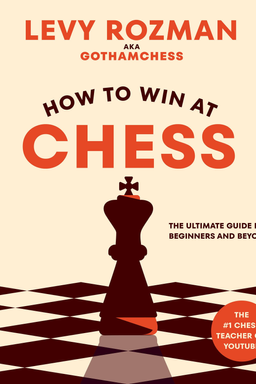
What does it mean to truly *win* at chess? For millions of players, the game is a maze of memorized openings, flashy tactics, and endless online matches. In How to Win at Chess, International Master Levy Rozman—known globally as GothamChess—offers a fresh solution: stop treating chess as an enigma and start seeing it as a system of skillful principles anyone can learn. His conviction is simple yet revolutionary: chess isn’t about innate genius or obsessive memorization—it’s about structure, understanding, and practice. Through this lens, Rozman transforms what often feels like a mysterious pursuit into a practical, learnable craft.
A Teacher’s Mission to Demystify Chess
Rozman’s story begins not from the heights of international competition but from classrooms and livestreams. He taught chess to children and adults alike, developing a relatable, slightly irreverent style that made him one of the most-watched chess educators on the internet. When he speaks of chess, it’s not in cryptic jargon or elitist metaphors—he speaks as a teacher committed to clarity. The book, much like his videos, is structured to take a reader from total beginner to confident intermediate, ensuring no step feels too complex or abstract. It's as much a learning roadmap as a manifesto for making chess fun again.
From Fundamentals to Mastery
Rozman divides his work into two sections—one for beginners and one for intermediates. Part One helps you understand *how a chess game is actually won*, the logic of the openings, the beauty of endgames, and the essence of basic tactics and strategy. You learn not only what to play, but why each move matters. He begins with literal victory conditions—checkmate, running out of time, resignation, or abandonment—and then explores how to actually reach those outcomes. This reframing helps the reader internalize that chess is about creating *checkmate inevitability*, not random cleverness.
From there, Rozman introduces the 'Golden Moves'—a set of opening principles (control the center, develop your pieces, and castle early) that replace the need for memorizing endless openings. He teaches you that chess is geometry married to art: each move shapes the battlefield by expanding your control of space, connecting your army, and safeguarding your king. Through lively examples like the Italian Game, the London System, and the Caro-Kann Defense, Rozman helps readers understand not just how to move—but how to think.
Endgames, Drawing, and the Human Side of the Game
Every chess player fears the endgame: fewer pieces, more precision, and zero room for mistakes. Yet Rozman turns endgames into approachable puzzles where principles shine through patterns. He explains why checkmates like the 'Ladder Mate' or the 'King and Rook Mate' are essential stepping stones, why stalemate awareness prevents heartbreak, and how concepts like opposition, passed pawns, and zugzwang determine results. The lesson is clear: mastering the endgame isn’t mechanical—it’s psychological. Winning is about patience, not panic.
He also dedicates attention to *drawing*, an understated art form in chess. Just as great fighters retreat strategically, Rozman urges players to respect the draw. Stalemates, repetition, and the 50-move rule aren’t failures—they’re methods of survival. The deeper teaching here is humility: you don’t always win by overpowering; sometimes you win by refusing to lose.
Tactics, Strategy, and the Thinking Mind
Once the mechanics are secure, Rozman delves into the mental core of chess—the fusion of tactics (short-term forcing moves) and strategy (long-term planning). Through clear examples, he describes concepts like forks, pins, skewers, and discovered attacks as the tactical “grammar” of chess language. Strategy, then, becomes the poetry written with that grammar: weaknesses, space, posture, and timing are how you tell your story. This dynamic mirrors chess masters like Emanuel Lasker and Garry Kasparov, who showed that logic and creativity coexist. As Rozman quips, the trick to winning isn’t playing brilliant moves—it’s avoiding dumb ones.
He also introduces his signature framework, “CCA”—Checks, Captures, Attacks—a scanning method to ensure you never miss a winning shot or a defensive resource. For Rozman, this systematic habit is the bridge from messy intuition to disciplined thought. “CCA,” he explains, is the habit loop that transforms chaos into clarity.
Intermediate Insights and Psychological Framework
In Part Two, Rozman shifts from mechanics to mindset. He analyzes openings more deeply (the Vienna Gambit, the Alapin Sicilian, or the Queen’s Gambit Declined), reveals how to use gambits wisely rather than recklessly, and reintroduces the reader to endgames where small advantages become victories. He also explores subtle strategic elements: pawn structure, piece coordination, and trading decisions. Perhaps most memorably, he ends with his 'Checklist'—a mental system for reading a chess battle: identify what the opponent wants, scan using CCA, and then only move if you can explain why. This, he argues, is the mark of true growth.
Taken together, How to Win at Chess is more than a guide—it’s an invitation to rethink your relationship with learning itself. Rozman’s humor, accessibility, and precision combine to show that chess mastery mirrors life mastery: clarity of vision, patience, and pattern recognition matter far more than flashy instincts. For anyone who has ever looked at 64 squares in confusion, Rozman’s promise is simple: you can win—if you learn how to think before you move.