
Idea 1
Travel the World—Without Going Broke
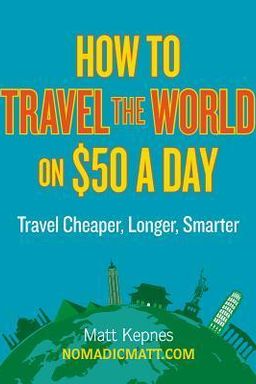
Have you ever dreamed of quitting your job, packing a bag, and seeing the world—only to tell yourself it’s impossible because travel is just too expensive? In "How to Travel the World on $50 a Day," Matt Kepnes (widely known as Nomadic Matt) destroys that myth. He argues that long-term world travel is not only accessible but often cheaper than staying home if you know how to think differently about money, comfort, and what real travel means.
Drawing on nearly two decades of experience backpacking and working abroad, Kepnes offers a practical roadmap for making global exploration affordable. His message is simple yet powerful: travel is not reserved for the rich but for the resourceful. By learning to use money intelligently—through travel hacking, smart budgeting, and tapping into global networks of generosity—you can see the world on less than what you spend on daily life at home. This book challenges cultural norms around work, spending, and the meaning of success.
Breaking the Travel Cost Myth
Kepnes begins by confronting the biggest barrier to travel: fear. For most people, fear of the unknown is wrapped in practical excuses about time, money, or responsibilities. He shares how his own first trip to Thailand in 2004 shattered his belief that travel was only for the wealthy. After meeting backpackers who had been traveling for years on modest budgets, he realized that experience—not income—determines possibility. The book encourages you to take that leap by reframing travel not as an escape, but as a lifestyle experiment in living with less and experiencing more.
He shows that Americans, in particular, tend to saddle travel with unnecessary costs—high-end hotels, short vacation windows, and expensive tours—when other cultures embrace slow travel and budget living as a normal part of life. Kepnes’s mission is to show you how to reject the “two-week vacation mindset” and adopt the global backpacker’s philosophy: maximize value, not spending.
From Mindset to Map: Planning to Go
In the first part of the book, Kepnes helps you prepare for long-term travel in practical ways. He walks readers through how to create a realistic budget, choose the right bank and credit cards, and manage savings in advance. His argument: if you track everything you currently spend—rent, groceries, entertainment—you’ll realize you might already spend far more at home than you would living globally. With a $50-a-day travel budget, a full year abroad costs roughly $18,000, which is less than what many Americans spend just existing.
He also discusses the psychological shift required to begin. The hardest part of travel isn’t logistics—it’s courage. Citing examples from his life and others he met on the road, Kepnes reassures readers that the world is safer, friendlier, and more affordable than fear-based media suggests. This attitude echoes other travel writers like Rolf Potts in "Vagabonding," emphasizing inner readiness over financial perfection.
Mastering the Tools of Budget Travel
The book’s middle sections teach the tactics that turn “impossible” trips into real journeys. Kepnes introduces travel credit cards and points hacking, explaining how sign-up bonuses alone can yield thousands of free miles and hotel nights. He shows how to choose cards with high bonuses, low spending thresholds, and minimal fees—then teaches you how to leverage them safely without damaging credit. For instance, he details how he’s traded points for first-class flights and free nights in luxury hotels through loyalty systems like American Airlines AAdvantage and Hilton Honors.
From booking cheaper flights to using round-the-world tickets effectively, Kepnes gives readers insider strategies. He explains why checking multiple booking sites (Momondo, Skyscanner, Google Flights) leads to better fares, and why flexibility in dates and destinations often matters more than luck. These concrete tools are the backbone for anyone wanting to stretch a small travel fund into a global adventure.
Living Cheaply, Living Well
Kepnes dismantles the idea that frugality ruins fun. He dedicates extensive sections to saving on accommodations, food, and activities—showing that spending less often means connecting more deeply. Instead of luxury hotels, he recommends hostels, hospitality exchanges like Couchsurfing, house-sitting programs, or even WWOOFing on farms for room and board. Instead of restaurants, he advocates for street food, local grocery shopping, and shared kitchens. He encourages engaging with local life—riding buses, joining free walking tours, and taking advantage of museum discount days—because these experiences yield authenticity rather than austerity.
The result is a holistic philosophy: budget travel isn’t about deprivation; it’s about value and immersion. When you travel frugally, you live more like a local, meet more people, and discover more meaning than the insulated tourists paying for comfort they rarely need.
A Global Blueprint for Affordable Adventure
Part three of the book applies his methods region by region—from Europe and Australia to Southeast Asia, India, and South America. Each chapter gives specific budget ranges, average costs, and cultural context. You’ll learn how to spend $30 a day in Peru, $25 in Vietnam, or $70 in Japan. For each place, he offers realistic examples of how to balance comfort and cost. In Australia, where prices soar, he explains how renting camper vans or joining WWOOFing farms can keep you under budget. In Southeast Asia—his “sweet spot” for affordability—he shows that paradise can literally cost less than living at home.
Finally, Kepnes teaches how to maintain this lifestyle long-term—from travel insurance and health safety to minimalist packing and even managing bills back home digitally. His tone throughout is friendly, practical, and deeply optimistic. As he writes, the goal isn’t to escape life—it’s to stop postponing it. Many think travel is an indulgence; Kepnes reframes it as a financial and personal education found nowhere else.
Key takeaway: Travel is not a product to be bought; it’s a craft to be learned. With the right knowledge, you can live richly anywhere on Earth—even on $50 a day.