
Idea 1
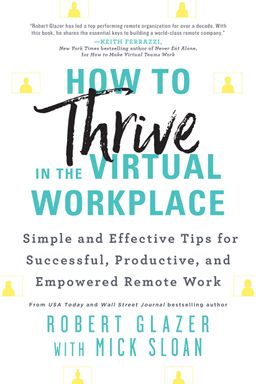
Thriving in the Virtual Workplace
How can you build a fulfilling career and energizing culture without ever walking into an office? In How to Thrive in the Virtual Workplace, Robert Glazer and his team at Acceleration Partners examine what it takes to truly excel in a professional world that’s no longer centered around desks, commutes, and physical proximity. This isn’t just a survival guide for remote work—it’s a blueprint for creating high-performance individuals and organizations who flourish outside traditional structures.
Glazer argues that remote work isn’t simply a temporary fix prompted by the pandemic or a fringe benefit for tech startups—it’s the future of work itself. He contends that when properly implemented, virtual work unlocks greater productivity, satisfaction, and even equity. But thriving remotely isn’t automatic. It requires intentional culture building, trust, clear communication, and disciplined self-management. Too many organizations tried to replicate office life online and ended up frustrated; Glazer insists the remote world demands an entirely new operating system.
The Remote Revolution
Glazer’s own experience frames the book: Acceleration Partners was built from the ground up as a fully remote culture long before it was mainstream. When expanding internationally—from the U.S. to the U.K.—his team faced skepticism about virtual work, yet quickly discovered it was universally viable. Employees appreciated freedom from commuting, better work-life integration, and autonomy. This firsthand case study sets the stage for his central claim: remote work isn’t a compromise—it’s a competitive advantage. When done right, it attracts better talent, reduces overhead, and cultivates happier teams.
The author outlines the global shift toward location-independent employment. The pandemic merely accelerated what was already underway, revealing that productivity doesn’t hinge on where you sit. Even massive organizations—from Twitter to BT Global—proved that distributed workforces could operate efficiently. Employees found that the real problem wasn’t remote work itself but poor systems, outdated habits, and mistrust.
Building Trust and Accountability
A core theme of the book is trust. Remote work collapses the old model of supervision and replaces it with accountability. Micromanagement and surveillance destroy morale; measurable outcomes and transparent goals strengthen it. Glazer urges organizations to shift from evaluating input—time, attendance, hours worked—to measuring output—results achieved. This philosophical shift empowers employees to work smarter and more flexibly while maintaining excellence.
He contrasts “face-time management”—leaders judging employees by visibility—with outcome-based leadership, which focuses on performance. Culture becomes the invisible infrastructure that guides decisions, eliminates ambiguity, and aligns people across distances. “Culture,” Glazer writes, “is how people make decisions when you’re not in the room.” His company proved that remote employees, when trusted and given clear metrics, often outperform their office-based peers.
Why Culture Matters More Than Comfort
Not all remote organizations thrive. The difference, Glazer emphasizes, is culture. Drawing from examples like Southwest Airlines and WD‑40, he shows how authentic values—not superficial perks or slogans—create cohesive teams. Strong values serve as a compass in uncertain conditions. Acceleration Partners distilled its values down to three: Own It, Excel and Improve, and Embrace Relationships. These guide hiring, promotions, and daily decisions. In virtual settings, clarity and consistency are lifelines; without them, employees feel untethered.
Leaders must become architects of culture. They model accountability, measure progress transparently, and inspire connection. Companies that avoid defining their core values end up with diffuse teams that lack direction. Glazer also explores systems—like the Vivid Vision exercise (from Cameron Herold)—helping organizations paint detailed pictures of future success. In remote work, where hallway conversations vanish, written clarity replaces verbal assumptions.
Beyond Flexibility: A More Human Model of Work
The book goes beyond logistical advice; it champions a profound shift in the relationship between work and life. Remote work dismantles outdated ideas of “work-life balance” and substitutes “work-life integration”—the ability to craft a life that aligns with personal priorities. Through stories of employees like Sophie Parry‑Billings and Ben Jolly, Glazer illustrates the emotional freedom people gain when they design their days around wellness, travel, and family. Flexibility isn’t about working less—it’s about living better.
This freedom also levels the playing field. Workers no longer need to live near expensive hubs like London or San Francisco to access top opportunities. Remote work can correct socioeconomic and racial inequities tied to geography and affordability. It also attracts independent thinkers who value autonomy—a trait increasingly vital for creative problem-solving.
The Book’s Roadmap
Glazer organizes his framework in two parts: first, how individuals thrive as remote employees; second, how leaders build thriving remote organizations. Part One equips readers with practices for setting boundaries, managing energy, maintaining focus, and nurturing connection. Part Two reveals the structural playbook—recruitment, onboarding, communication rhythms, technological tools, and trust-building—that underpins successful virtual teams.
Ultimately, Glazer invites readers to see remote work not as isolation but evolution—the chance to reinvent professionalism around independence, purpose, and impact. “Remote work,” he writes, “is the new frontier.” Like any frontier, it rewards those who prepare with intention, lead with clarity, and build with heart.
The message is simple yet profound: thriving virtually isn’t about escaping the office—it’s about designing work that elevates your life and your organization. Whether you’re an employee learning to self-motivate or a CEO reinventing company culture, this book offers a practical, empathetic map for succeeding in the world that’s already here.