
Idea 1
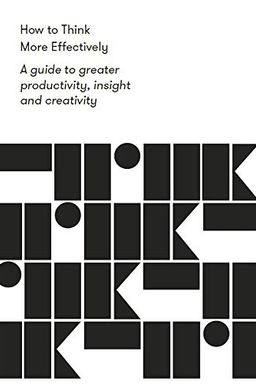
How to Think More Effectively
Have you ever wondered why sometimes your mind feels razor-sharp and creative, while at other times it’s foggy, repetitive, or stuck in loops of trivial thought? In How to Think More Effectively, The School of Life takes you on a thoughtful exploration of how to make your mind a more active, disciplined, and productive companion. Rather than viewing thinking as an innate ability, the book argues that effective thinking is a trainable skill—a craft that can be refined through conscious practice. The text blends psychology, philosophy, and practical exercises to help you examine the mechanisms of your own thought process and deliberately improve it.
The Central Claim: Thinking Is a Practice, Not a Gift
The core argument of the book is simple but radical: thinking isn’t an occasional flash of inspiration, but a set of techniques that, like any discipline—from painting to carpentry—can be cultivated. We too often treat our mind as a mysterious black box, waiting passively for good ideas to arrive. According to The School of Life, this passivity blinds us to our own potential. Our societies are obsessed with the results of good thinking—innovation, intelligence, creativity—but give us no training in its methods. Schools train us to memorize and regurgitate answers, not to probe, reflect, or design our own frameworks of meaning. Consequently, as adults, we struggle to think strategically, originally, and empathetically.
Yet this lack of mental confidence can be overcome. Just as artists use distinct techniques to evoke emotion, or scientists use structured methods to discover truth, thinkers can use certain mental manoeuvres—specific patterns of questioning, reflection, and reframing—to elicit clarity and insight. The book offers fifteen of these approaches, each a mode of thought that can help us become more deliberate, insightful, and self-aware.
From Strategy to Empathy: The Fifteen Modes of Thought
The book unfolds as a gallery of thinking styles, each addressing a common challenge of mental life. For instance, Strategic Thinking warns that we often rush into action without first asking “why?”. Instead of slowing down to set directions, we fixate on execution—meeting deadlines, ticking boxes, and performing duties. This creates efficiency without meaning. Meanwhile, Cumulative Thinking reminds us that thoughts don’t emerge in perfect clarity; they grow over time like plants that need revisiting. Writing, note-taking, and returning to ideas let our best insights form gradually. And Butterfly Thinking shows that meaningful ideas often appear when our guard is down—like when showering or walking—because our anxious self temporarily lets go.
Later chapters explore deeper dimensions of mental maturity. Independent Thinking draws on Montaigne and Emerson to urge trust in your own perceptions, rather than deferring to expert authority. Focused Thinking borrows from Socratic dialogue: its goal is to transform vague feelings (“I want a creative job”) into precision (“I feel most alive designing spaces that make people calmer”). Then there’s Philosophical Meditation, a structured dialogue with yourself centred on three questions: “What am I anxious about? What am I upset about? What am I excited about?”—a modern ritual of self-understanding resembling journaling crossed with therapy.
Beyond the introspective modes, the book looks outward. Friend Thinking reminds you that true listening can help you think better, as conversation clarifies emotion and intention. Reading Thinking redefines reading as a form of partnership: even ‘bad’ books can sharpen your ideas by provoking disagreement. Envious Thinking reframes jealousy as a diagnostic—our envy exposes our unlived desires. Other chapters—Mad Thinking, Analogical Thinking, Empathetic Thinking—encourage you to entertain illogical or imaginative routes, translating ideas between domains or putting yourself in another’s emotional perspective. Finally, Death Thinking and Love Thinking remind us that mortality and compassion are grounding forces—limits and affections that can make all our thinking more humane.
The Deeper Message: Thinking as a Moral Art
Across these essays runs a moral premise: thinking well is not just intellectually beneficial—it’s ethically necessary. A failure to think with care leads to cruelty, conformity, inefficiency, and despair. The rushed manager who prizes speed over strategy creates purposeless work; the lover who never reflects breeds resentment; the citizen who never doubts repeats prejudice. Thinking more effectively amounts to learning how to be more effectively: deliberate, kind, self-aware, and open to ambiguity.
The “mental manoeuvres” throughout the book are deceptively simple, but each is an antidote to an ailment of modern life: distraction, superficiality, busyness, or fear of vulnerability. We can grow intellectually by cultivating environments—physical and social—that encourage reflection. The book even compares monasteries to mental architectures, suggesting that we each need a “monastery of the mind”: time, space, and habits designed for uninterrupted thought. Such thinking isn’t a luxury; it’s a survival skill in an overstimulated age.
Why It Matters Now
In a world of instant communication and shrinking attention spans, How to Think More Effectively is a call to reclaim your mind from noise and inertia. It blends philosophical reflection with practical wisdom reminiscent of Montaigne, Marcus Aurelius, and modern psychology. Its lesson is both ancient and urgent: that better living begins with better thinking. The true work of self-development isn’t about collecting facts, but about cultivating the calm, patient habits that allow insight to form—and to act upon it once it does.