
Idea 1
Stoicism as Therapy for Life
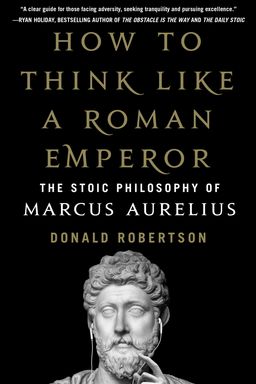
How can you live wisely amid uncertainty and emotional storms? In How to Think Like a Roman Emperor, Donald Robertson argues that the ancient philosophy of Stoicism is not abstract speculation but a practical psychological system—a therapy for the mind. He traces how Stoic techniques mirror modern cognitive-behavioral therapy (CBT), revealing a timeless toolkit for managing emotions, cultivating virtue, and building inner resilience.
The book presents Marcus Aurelius, Roman Emperor and Stoic sage, not as an idol to admire but as a living case study in applied philosophy under pressure. Through Marcus’s experience—his writings, his mentors, his struggles with anger, pain, and mortality—you see how Stoicism can train thought and character. Robertson blends biography, philosophy, and psychology into a cohesive path for personal development.
Philosophy as psychological training
Stoicism begins with a radical insight: our distress comes from judgments, not events. It asserts that human beings are disturbed not by what happens, but by how they interpret what happens. This idea, echoed centuries later by CBT founders Albert Ellis and Aaron Beck, forms the core of Stoic therapy. By changing your internal narrative, you change your emotional reality.
Robertson shows that Stoic exercises—cognitive distancing, reframing, decatastrophizing—parallel modern therapeutic techniques. When Marcus practices the “view from above” or describes pains and pleasures in factual terms, he’s performing a psychological intervention to alter automatic thoughts and emotional intensity. Stoic practice becomes a systematic retraining of perception.
Marcus Aurelius as a model of lived philosophy
Through vivid scenes—Marcus’s death at Vindobona, his reflections during the Antonine Plague, his calm response to rebellion—Robertson portrays Stoicism as something embodied. Marcus had power and loss, war and illness. He faced life’s extremes while maintaining inner freedom. His Meditations are self-therapy notes, written not for publication but for self-correction.
Like a modern therapy journal, Marcus’s writings let you observe how philosophical reflection transforms emotion. He rehearses adversity, practices perspective, and writes aphorisms that prepare his mind for chaos. In this, Robertson invites you to adopt journaling not just as introspection but as a Stoic tool: daily review, corrective maxim writing, and moral rehearsal.
Virtue and the goal of rational life
At the heart of Stoic ethics lies a clear hierarchy: virtue is the only real good. Everything else—wealth, health, reputation—is “indifferent.” That hierarchy liberates you from anxiety over what cannot be controlled. The Stoics call this alignment “living according to Nature,” meaning acting in harmony with reason and moral order.
Robertson clarifies that virtue consists of four cardinal qualities: wisdom, courage, justice, and temperance. These are not ideals to occasionally recall—they are the skills you practice through daily Stoic exercises. When you face temptation, frustration, or fear, each virtue gives you a behavioral template. Stoic philosophy becomes ethical strength training.
Therapy through disciplined routine
Throughout, the book emphasizes practice as the mechanism of transformation. The Stoic day follows a rhythm—morning preparation, daytime mindfulness (prosoche), evening review. In the morning you anticipate challenges and mentally rehearse how a wise person would act. During the day you monitor impressions, refuse impulsive assent, and respond rationally. In the evening you audit yourself mercifully yet honestly.
This daily cycle converts philosophical theory into durable habit. Marcus Aurelius learned it from his mentors like Rusticus and transformed it into inner discipline. You can adapt the same psychology: reflection as exposure, objective description as cognitive restructuring, and journaling as continuous moral feedback. Over time, the ruling faculty—your reasoned self—becomes an inner citadel unaffected by external turmoil.
A therapeutic philosophy for modern life
Robertson’s Stoicism is not ascetic detachment but rational maturity. He invites you to face desire with cognitive distancing, anger with clemency, pain with reframing, and death with perspective. Each exercise reconnects ancient wisdom to modern psychology—turning Marcus’s imperial trials into universal lessons.
(Note: Where modern therapy treats symptoms of anxiety or depression, Stoicism addresses the meaning structure beneath them. The result is not just relief but moral growth—a change in the way you think and live.)
By the end, you realize Stoicism’s enduring power: it teaches you how to build freedom inside your own mind. You learn to act wisely amid uncertainty, to welcome adversity as training, and to live as Marcus did—with perspective, humility, and courage. Philosophy and psychology converge into a single craft: the art of thinking like a Roman emperor.