
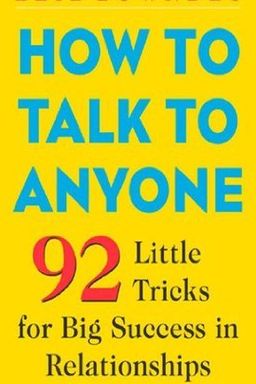
How to Talk to Anyone cover

How to Talk to Anyone

by Leil Lowndes

How to Talk to Anyone by Leil Lowndes is your essential guide to mastering social interactions. Filled with proven techniques and tips, this book helps you navigate conversations with ease, improve confidence, and build lasting relationships, whether at work, parties, or in personal life.

Mastering the Art of Human Connection

Have you ever wondered why some people seem to navigate life effortlessly—winning promotions, forging friendships, and commanding admiration—while others struggle to be noticed? In How to Talk to Anyone, Leil Lowndes insists that success in every sphere of life comes down not to intellect, appearance, or luck, but to the ability to connect skillfully with other people. These social virtuosos possess what she calls a bag of tricks, a collection of subtle communication techniques that make others trust, like, and respect them almost instantly.

Lowndes argues that every human interaction—from a handshake to a business pitch—is an invisible dance revealing our social competence. Whether consciously or not, our behavior sends powerful signals about our confidence, warmth, and credibility. The good news, she believes, is that these signals can be mastered by anyone. Human connection is not innate—it’s learnable. This book is an encyclopedia of concrete, immediately usable techniques to elevate your charisma, deepen rapport, and leave lasting impressions in professional and personal settings.

The Core Argument: Communication as Our Real Currency

Lowndes begins by dismantling the myth that success stems from intelligence or hard work alone. She cites studies showing that 85 percent of success is directly tied to communication skills. Whether you’re a CEO or student, your ability to inspire confidence and empathy determines who promotes you, who befriends you, and who buys from you. It’s not manipulation—it’s about understanding subtle emotional needs and replying to them skillfully. She likens communicative talent to an artist’s brush or an athlete’s training; deliberate practice can transform even introverts into magnetic conversationalists.

Beyond Dale Carnegie—Subtlety in Modern Interaction

Lowndes acknowledges her debt to Dale Carnegie’s classic How to Win Friends and Influence People but argues that the twenty-first century demands more nuanced techniques. Simple advice like “smile more” or “give sincere compliments” can fall flat in a cynical, fast-paced world. Today’s high performers—politicians, CEOs, and influencers—know how to calibrate their warmth strategically. Their smiles, tone, and timing reveal sophistication, not desperation. Lowndes aims to translate these subtleties into accessible tools for ordinary readers who want extraordinary results.

The Architecture of the Book: A Ladder to Charisma

The book proceeds as a series of ninety-two short, vivid chapters grouped into nine parts—each escalating your communicative power. It begins with nonverbal mastery—how your posture, eye contact, and smile silently communicate status and warmth in the first ten seconds. Next come conversation triggers—how to transform awkward small talk into engaging exchanges using simple phrasing and timing. The middle sections tackle situations where power dynamics complicate interaction: talking with bosses, celebrities, or strangers from different cultures. Later chapters refine persuasion and empathy, teaching how to echo others’ words, calibrate emotions, and build subliminal trust. Finally, the book explores higher-level rapport maintenance—how to handle mistakes gracefully, defuse anger, and communicate with rare tact and class.

Why These Skills Matter

Lowndes’s premise is timeless but urgent. Every day is an interview; every interaction is a test of social intelligence. Whether you’re courting a client, calming a conflict, or dazzling a date, you’re judged—consciously and unconsciously—on micro-signals of empathy, confidence, and respect. First impressions form in ten seconds and seldom change. In a crowded digital age where conversation is rare and superficial, being able to make people feel valued and understood is an economic and emotional superpower.

Throughout the book, she turns behavioral science into practical scripts—eye contact methods like “Sticky Eyes” to show attentiveness, verbal tweaks like “The Flooding Smile” to radiate authenticity, and emotional habits like “Accentuate the Positive” to foster optimism and trust. The reader learns that charisma isn’t magic; it’s method. You can study it, rehearse it, and deploy it consciously until it becomes effortless.

Core Insight

People succeed not because they’re smarter—but because they make others feel smart, valued, and interesting. Learning to speak—and listen—to the hidden emotional layer of human interaction transforms every relationship.

In short, How to Talk to Anyone is not just a manual on small talk—it’s a blueprint for influence built on empathy, strategic communication, and social grace. Lowndes shows that mastering rapport isn’t flattery or fakery; it’s recognizing that everyone yearns for respect, and giving that respect eloquently. When you do, the doors to success open naturally.


First Impressions That Captivate

Lowndes opens her program for connection with the fact that you only have ten seconds to look like a Somebody. Before you utter a word, people decide whether you’re confident, credible, and worth knowing. Your posture, gaze, and smile silently announce whether you're a leader or follower. Drawing lessons from actors, caricaturists, and body-language experts, she reveals how to manage this primal transaction consciously instead of leaving it to chance.

The Flooding Smile

The first impression begins with your smile—but not the automatic grin taught by conventional advice. Instead, use what Lowndes calls the Flooding Smile. Instead of flashing an immediate grin to everyone, pause for a moment, look at the person fully, and let a warm smile slowly “flood” across your face. This split-second delay makes your smile feel genuine, as though specially reserved. She recounts how her friend Melissa transformed herself from a giggling novice into a respected businesswoman simply by slowing her smile and allowing sincerity to radiate. The result: people saw confidence rather than overexcitement.

Sticky and Epoxy Eyes

Eye contact, Lowndes shows, is the most potent nonverbal form of connection. Using studies from Yale and Boston research centers, she explains that intense gazing increases admiration and trust. Sticky Eyes means maintaining contact for a beat longer than normal, signaling deep attention. Epoxy Eyes—watching someone even when another person speaks—adds intrigue and influence. Used wisely, these methods make your partner feel seen and valued, whether in business or romance. Overdo it, however, and you risk intimidating or creeping someone out, so she cautions moderation.

Hang by Your Teeth

Your posture, Lowndes insists, defines your perceived status. She proposes visualizing a circus acrobat hanging by his teeth—a metaphor that immediately straightens your spine, lifts your head, and opens your chest. Walking through doorways “biting” that imaginary cable projects energy and assurance. The technique reprograms your physical habits until upright posture feels effortless. She compares this to the Wallenda family’s fearless poise; the body language of a winner signals “I belong at the top” before you even speak.

The Big-Baby Pivot and Hello Old Friend

First impressions also depend on warmth. Lowndes advises turning your whole body—arms, torso, feet—toward the person you meet, just as you would pivot to greet a beloved child. She calls this the Big-Baby Pivot. It creates instant rapport because, unconsciously, everyone craves recognition of their “inner infant”—the part of us that wants to feel special. To deepen that sense of connection, imagine the stranger as an old friend you haven’t seen in years. When you do, your facial expression and tone naturally fill with affection, transforming introductions into genuine moments of human affirmation.

Across these early techniques, Lowndes shows that charisma begins before conversation. You can train your body to communicate warmth, confidence, and credibility automatically. The true secret isn’t mechanical body language—but emotional intent. When you see others through eyes of curiosity and respect, your posture, smile, and gaze do the talking for you.


The Alchemy of Small Talk

Many intelligent people, Lowndes observes, dread small talk; they view it as superficial or awkward. Yet she insists that mastering small talk is mastering opportunity. It’s the bridge to meaningful conversation, trust, and collaboration. Every executive and celebrity she’s studied treats trivial chatter as rehearsal for deeper connection. Rather than dazzling people with content, you win them by matching their mood, choosing the right “hooks,” and showing genuine curiosity.

Make a Mood Match

When you begin a conversation, focus less on words and more on tone. Like a musician tuning to the same pitch, match your conversation partner’s energy before introducing new topics. Lowndes tells the story of elevator encounters with overly enthusiastic Mensa members whose rapid-fire intellect overwhelmed weary strangers. Had they first mirrored her relaxed tone, rapport would have flowed. Mood matching sets emotional rhythm; after harmony is achieved, freshness and insight can follow.

Never the Naked City or Job

Most people sabotage conversation with one-word replies. When asked where you’re from or what you do, Lowndes warns, don’t leave your answers naked. Add color and context. Instead of “I’m from Columbus,” say, “I’m from Columbus—it's known as ‘the most American city in America’ because it’s used for product testing.” Flesh out your job title likewise: “I’m a financial planner; I help clients design their financial futures.” Such elaboration invites hooks for the listener to respond to, transforming obligatory exchanges into lively discussion.

Be a Word Detective

When conversation stalls, become Sherlock Holmes. Listen closely for the subtle “slips of the tongue” revealing what fascinates the other person. If someone laments the rain but mentions how good it was for her plants, that’s the real clue—her garden, not the weather. Pursuing such fragments resurrects dying talk and shows authentic interest. This ability to turn others’ words into topics reflects social insight rather than manipulation.

Encore and Swiveling Spotlight

To make others feel appreciated, ask them to repeat stories they clearly loved telling. “Tell them about the time you caught that huge bass,” you might say. People adore reliving their triumphs—especially when invited publicly. Then swivel the spotlight so they bask in attention while you quietly exit or redirect the conversation. As Carnegie said, people love to talk about themselves; Lowndes refines that truth into actionable performance.

Small talk, in her view, is not filler—it’s emotional glue. When practiced with empathy and curiosity, it transforms strangers into allies. Like a jazz musician improvising on familiar tunes, skilled conversationalists spin even banal topics into connections that feel like friendship.


Speak Like a VIP

Once you’ve mastered small talk, Lowndes elevates you to the social “big leagues.” She compares human interaction to tigers meeting in the jungle: everyone instinctively sizes up others’ communication skills. To sound like a VIP, she says, you must project confidence, refinement, and respect through subtle linguistic choices. She lays out practical methods—avoiding cliché, using rich vocabulary, phrasing questions gracefully, and highlighting others instead of yourself.

The Nutshell Résumé

When people ask what you do, seasoned professionals answer strategically. Instead of raw titles, they give benefit statements that reveal value: “I help people find the right home,” not “I’m a realtor.” This habit conveys purpose, helps others remember you, and opens doors for referrals. Every answer should be tailored to your listener’s interests—the same way job applicants customize résumés. It’s a masterclass in concise self-presentation.

Comm-YOU-nication

To gain respect and affection, Lowndes urges shifting pronoun focus from “I” to “you.” Humans, she notes, remain emotional infants craving attention and relevance. By framing statements around “you,” whether asking favors or giving compliments, you do the thinking for your listener and push their “pride button.” Contrast “Can I take Friday off?” with “Can you manage without me Friday?”—same request, radically different outcome. This subtle linguistic empathy produces smoother collaboration and influence.

Avoiding Clichés and Learning the Lingo

To sound original, never rely on tired phrases (“busy as a bee,” “fit as a fiddle”). Instead, craft fresh imagery, what she terms “Jawsmith’s Jive.” Borrow from skilled speakers and writers; create visual similes that spark imagination. She also warns against euphemisms that betray inferiority—“bathroom tissue” instead of “toilet paper.” Call a spade a spade, she says; big players use precise, confident language.

Killing the Quick "Me Too"

Rapport thrives on shared interest, but rushing to declare similarity (“Hey, me too!”) implies insecurity. Instead, let others enjoy expressing passions before subtly revealing your own connection. When Lowndes held back to let a new friend describe his skiing obsession before mentioning her own, he was far more impressed. Delayed revelation feels confident, not needy.

To talk like a VIP, treat language as performance art. Choose words that honor others, paint vivid pictures, and establish your authority quietly. In every field—from boardrooms to banquets—speech that blends empathy with precision distinguishes leaders from amateurs.


Building Instant Rapport

The middle chapters of How to Talk to Anyone explore the science of emotional mirroring—how to make people feel like you are one of them. Lowndes argues that closeness arises not from shared facts but from subtle psychological resonance. The key is to express empathy the way others experience the world, whether through words, senses, or humor. These methods transform acquaintances into allies within minutes.

Be a Copyclass

Lowndes introduces “Copyclass”—the art of mimicking another’s movement style and tempo. People relax around those who move like they do; it subconsciously signals belonging. Smooth movers mirror smooth movers, quick gestures match quick gestures. If you are selling to a high-energy entrepreneur, pick up your pace; if to a calm artist, slow down. This kinesthetic empathy creates psychological comfort without words.

Echoing and Empathizers

Echoing means repeating people’s specific words and phrases. If someone always says “my toddler,” echo that word instead of substituting “my child.” Their vocabulary is part of their identity; reflecting it says “we speak the same language.” Combine this with verbal empathizers—gentle statements like “I can imagine you felt proud” or “That must have been exciting.” Even replacing “uh-huh” with full sentences signals that you’re truly listening. This mirrors what psychologists call active empathy.

Anatomically Correct Empathy

Borrowing from neurolinguistic programming, Lowndes suggests noticing whether people express themselves visually (“I see”), auditorily (“I hear you”), or kinesthetically (“I feel”). Then respond in their language. Tell visual types “I see what you mean,” auditory types “That sounds right,” and kinesthetic types “I can feel that.” Matching someone’s sensory metaphors fosters unconscious trust.

We and Instant History

To move from strangers to friends, skip triviality and use the pronoun “we” prematurely: “Looks like we’re both stuck in traffic.” The word we creates instant partnership. Likewise, establish an Instant History by recalling a shared moment from a first conversation (“Remember our debate about coffee versus tea?”). It becomes your private inside joke—a foundation of emotional familiarity that often bonds lovers and colleagues alike.

Rapport is micro-alignment: movements, words, senses, and humor combining into a symphony of similarity. You don’t persuade people by logic alone; you make them feel that knowing you is knowing themselves better.


Praise, Grace, and the Art of Compliments

Compliments, Lowndes warns, are double-edged swords: use them poorly and you seem manipulative; wield them gracefully and hearts open. She dedicates an entire section to differentiating genuine praise from flattery, explaining when to give compliments, how to deliver them, and even how to receive them with poise. Mastering praise, she says, is emotional intelligence in action.

Grapevine Glory and Carrier Pigeon Kudos

Complimenting someone directly can arouse suspicion. People trust praise more when they hear it secondhand. Instead of telling Jane she’s brilliant, tell her colleague Diane—knowing it will reach her. Likewise, become a courier of compliments: when someone admires a third party, carry that message to the subject. Everyone loves the bearer of good news; it builds goodwill across networks.

Accidental Adulation and Killer Compliments

People respond best to implied admiration slipped naturally into conversation (“You’re much too young to remember 1969”). This Accidental Adulation feels authentic because it’s unplanned. For stronger impact, craft a Killer Compliment: a specific, personal observation (“You have a wonderfully honest voice” or “Your handwriting is elegant”). Done privately and sparingly, such remarks lodge in memory for years.

Little Strokes and The Tombstone Game

Everyday boosts—“Nice job,” “Well done”—keep morale high. Lowndes cites a mother’s regret after forgetting to praise her child for good behavior; adults crave acknowledgment just as deeply. The Tombstone Game takes complimenting to an intimate level. Ask loved ones what they’d want inscribed on their tombstone (“He was honest,” “She spread joy”). Remember their answer, then tell them later, “I love you because you’re a person of integrity.” You strike directly at their self-concept, cementing bonds.

Boomeranging and Timing

When someone praises you, avoid false modesty. Accept gracefully and return warmth: “That’s so kind of you.” Compliments lose value if delayed; praise must arrive instantly, like a knee-jerk “Wow!” right after success. As she wryly notes, sensitivity sometimes demands lying—tell performers they were great even if they bombed. Your kindness builds courage, not complacency.

Praise, in Lowndes’s view, isn’t sugarcoating—it’s recognition. When thoughtfully timed and authentically delivered, it’s emotional oxygen that fuels trust, motivation, and love.


Talking Like a Politician, Behaving Like a Pro

Later chapters shift from daily conversation to strategic networking—how to work a room like a politician. Lowndes shows that mastery of parties and meetings depends on tactics: choosing arrival time, body placement, follow-up discipline, and subtle attention signals. Success in social settings mirrors success in politics: it's all about preparation and empathy.

The Six-Point Party Checklist

Before attending any event, she advises asking six questions: Who will be there? When should I arrive? What should I bring? Why is the party being given? Where is the collective mind? How will I follow up? This strategist’s mindset transforms parties from random mingling into mission-based networking. Vip guests plan intentionally whom to meet and when to leave; they arrive early, stay just long enough to achieve objectives, then follow up meticulously.

Munching or Mingling and Rubberneck the Room

Never grab food first, she warns—people avoid talking to eaters. Come already fed so your hands are free for handshakes. Upon arrival, pause dramatically in the doorway and Rubberneck the Room—scanning faces, lighting, and energy before diving in. It gives you composure and direction, much like a star making an entrance.

Come-Hither Hands and Tracking

Body language can lure or repel. Open palms and relaxed wrists convey trust, while crossed arms say “keep out.” Stand where people must pass—near doorways or central paths—and smile with “come-hither” hands. Then practice Tracking: remembering details about others’ lives (“How’s your new puppy?”). Mentioning these minor details later makes others feel seen, valued, and connected.

Business Card Dossier

After events, she suggests jotting notes on the back of business cards—personal quirks, interests, or anecdotes. Weeks later, refer to these in calls or letters to impress with uncanny memory. This small habit, she says, turned an ordinary networker she knew into a state senator.

By framing socializing as subtle choreography rather than random chatter, Lowndes empowers readers to interact strategically. Preparedness isn't manipulation—it’s respect for others’ time and intentions.


Mastering Grace Under Pressure

The final chapters turn from charm to character—how top communicators handle conflict, mistakes, and moral tests with grace. Lowndes calls this the hidden difference between small players and big winners. Her vignettes illustrate how dignified silence, empathy, and timing prevent damage and preserve relationships. These are the etiquette codes of power.

See No Bloopers, Hear No Bloopers

When someone spills wine or sneezes, ignore it completely. Big winners don’t draw attention to awkwardness—they let others retain dignity. As she learned from dining with executives impervious to fumbles, professional grace means focusing on substance, not embarrassment. Reacting like “Butterfingers!” marks you as small league.

Lend a Helping Tongue

If an interrupted storyteller loses the group’s attention, rescue them: “So what happened after the puppy ran away?” People remember forever who gave them back the spotlight. Subtle gestures of social mercy create deep emotional debt and goodwill.

Let ’Em Savor the Favor and Tit-for-(Wait)Tat

Timing defines class. When someone grants you a favor, don’t rush to claim it; let them enjoy their generosity before collecting. Likewise, when you do someone a favor, wait weeks before asking anything in return. Premature reciprocity cheapens goodwill and marks you as transactional rather than trustworthy.

Safe Havens and My Goof, Your Gain

Parties and dinners are sacred spaces; never confront, criticize, or negotiate amid conviviality. Save tough talk for office hours. And when you err, overcompensate to make victims glad you messed up—her broken vase replaced by an even finer one won eternal loyalty. Turn mistakes into generosity and errors into empathy.

The Great Scorecard in the Sky

In every relationship, imagine an invisible scoreboard tracking favors and respect. Whoever has less “social credit” should defer politely until balance is restored. This metaphor of mindful reciprocity sums up her worldview: communication is not conquest—it’s coordination. By practicing grace under pressure, you graduate from conversationalist to leader.

Lowndes closes with a moral: excellence is habituated empathy. Every move, word, and silence you choose either raises or lowers your score in others’ hearts. Over time, these micro-decisions determine your destiny—not by manipulation, but by mindful respect.

Dig Deeper

Get personalized prompts to apply these lessons to your life and deepen your understanding.

Go Deeper

Get the Full Experience

Download Insight Books for AI-powered reflections, quizzes, and more.