
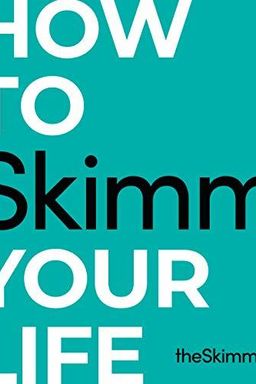
How to Skimm Your Life cover

How to Skimm Your Life

by The Skimm

How to Skimm Your Life distills essential advice on travel, finance, and more, helping you navigate modern life with confidence. Whether you''re choosing wine, packing for a trip, or preparing for a job interview, this book offers practical guidance for making informed decisions and enhancing your everyday life.

Skimming Life to Live Smarter

Ever wonder if everyone else got the manual for adult life while you were absent that day? How to Skimm Your Life by Carly Zakin and Danielle Weisberg is that missing manual—humor-infused, approachable, and designed to decode the confusing parts of adulthood. Drawing from the success of their media company theSkimm, the authors argue that life can be managed like you manage your news: efficiently, clearly, and without unnecessary jargon. They contend that success in the modern world—financial, professional, or personal—comes not from knowing everything but from knowing how to find and act on the right information.

This book’s core goal is simple but powerful: help you live smarter by breaking down complex life skills that too often feel intimidating or “too adult.” Through concise “Skimms” on topics ranging from networking to taxes and health insurance, the authors guide readers to make better choices without needing an advanced degree—or calling your parents for advice every five minutes.

The Big Idea: Adulting Demystified

Zakin and Weisberg present adulthood as a series of decision-making moments—each easier to handle with the right perspective and preparation. Instead of overwhelming readers with theory, they break down life into sections: Skimm Life (personal wellness and habits), Skimm MBA (career mastery), Skimm Money (financial intelligence), and Skimm the World (civic and global awareness). These four pillars shape how you can “Skimm” every area of your life, equipping you with practical frameworks that balance simplicity and confidence.

Throughout the book, they deliver actionable tactics—like folding fitted sheets, negotiating your salary, or understanding health insurance terms—alongside greater reflection about independence, confidence, and how to make informed decisions in an uncertain world. The idea isn’t perfection; it’s awareness. They emphasize curiosity, preparation, and building habits that reduce stress and maximize time for what actually matters.

Why It Matters

Adult life can feel like a juggling act of topics we never formally learned in school. Many of us emerge into the professional world knowing how to write essays but not how to budget, network, or file taxes. TheSkimm’s mission is to fix that gap—especially for women navigating careers and independence. Their conversational style mirrors how their daily newsletter simplifies news; here, it simplifies life. The combination of humor, candor, and concision makes heavy topics accessible and engaging.

The book’s broader social argument—echoing writers like Sheryl Sandberg (Lean In) and Gretchen Rubin (The Happiness Project)—is that empowerment begins with knowledge. But unlike academic guides, How to Skimm Your Life doesn’t preach productivity for its own sake. It’s more of a toolkit for self-sufficiency, helping you to ask smarter questions, negotiate better deals, and manage everyday pressures that lurk beneath modern success.

How the Book is Structured

Each chapter is divided into topics—"Things That Make You Sweat" on interviewing, “Things You Stalk” on networking, “Things No One Understands” on health insurance. Think of it as a crash course that turns chaos into organized lists and conversational how-tos. You learn career navigation through sections on resumes, interviewing, negotiating, and time management; financial literacy through budgeting, investments, and taxes; well-being through de-stressing and self-care; and civic life through government and global affairs.

In a world driven by rapid change and over-information, Zakin and Weisberg invite you to pause, simplify, and make adulthood less intimidating. Their core message: living smarter is about clarity, not complexity. When you learn to Skimm your life, you don’t just make better decisions—you feel empowered to own them.


Owning Your Career and Confidence

One of the book’s most motivating sections dives into how to take control of your career, channel confidence, and build personal authority—even when imposter syndrome hits hard. Zakin and Weisberg emphasize that success doesn’t come from knowing all the answers but from learning how to ask the right ones, advocate for yourself, and consistently show up as your strongest self.

Speaking the Language of Confidence

The authors dissect the power of everyday words, showing how simple linguistic habits shape perception. Words like “just,” “actually,” and “sorry” are polite shields that undermine authority. For instance, saying “I just wanted to check in” sounds apologetic, while “I’m checking in to follow up” conveys professionalism. This linguistic tweak mirrors strategies found in communication psychology and leadership literature (Deborah Tannen’s research on gendered speech patterns is a useful comparison).

They also warn against overusing superlatives and dramatic modifiers—“the best,” “totally,” “amazing”—that can dilute credibility. Instead, precision conveys confidence. You’re not “excited” about a deal; you’re “strategically optimistic about its fit with the company mission.” The point: authority isn’t loud, it’s clear.

Learning New Skills and Shadowing

When you feel uncertain professionally, shadowing becomes your hidden weapon. Observing colleagues or different departments helps you expand your skill set beyond siloed work. Tools like Coursera or Codeacademy offer affordable routes to boosting proficiency. The book recommends approaching learning as continuous—not as remedial training but as career fuel. Zakin and Weisberg illustrate this through accessible examples: wanting to pivot from marketing to data analysis? Find someone who does it, sit in on their meetings, and absorb their vocabulary and workflows.

Navigating Imposter Syndrome

Imposter syndrome—the inner voice whispering “you’re not qualified”—affects everyone from interns to CEOs. The authors address it head-on. Their solution isn’t pretending it doesn’t exist but recognizing it as normal and using preparation to offset self-doubt. If you’re giving a presentation, rehearse until confidence feels earned; if you’re proposing an idea, anchor it with data or outcomes. They remind readers that every accomplished professional has second-guessed themselves. What distinguishes them is their willingness to move forward anyway.

TheSkimm’s pep talk: “Be yourself—but be the version of yourself you’d want to hire.” That phrase becomes a guiding mantra for aligning authenticity with professional performance.

Through resourceful strategies and relatable honesty, Zakin and Weisberg transform career anxieties into tools for self-advocacy. Their bottom line: confidence isn’t arrogance—it’s preparation translated into clear, decisive communication.


Mastering the Art of Networking

Networking—the social currency of professional growth—gets a modern, practical spin in How to Skimm Your Life. The authors demystify networking as less about schmoozing and more about cultivating genuine curiosity and thoughtful follow-up. Every connection has potential value, but only if maintained deliberately.

Building Your 'Stalker Spreadsheet'

Forget the Rolodex. Zakin and Weisberg introduce the “stalker spreadsheet”—a humorous yet efficient way to track contacts, last communication dates, and notes. It’s a data-driven approach to relationships, ensuring connections don’t fade. They suggest reaching out quarterly to your most valuable contacts, even if only to share a quick update or thoughtful article. Like the Pareto principle (80/20 rule), focusing on 20% of relationships yields most opportunities.

First Impressions and Research

When cold-emailing or meeting someone new, preparation is key. Always research the person’s work or affiliations—mention a specific achievement or project, not vague admiration. They call this the “R&R principle”: Research and Restraint. Research shows interest; restraint prevents overtalking. The best networkers, they argue, ask good questions instead of long autobiographies. Example: “I noticed your team partnered with [Company]. What challenges did that present?” invites shared insight rather than self-promotion.

Following Up with Intent

TheSkimm advises sending a brief, under-100-word follow-up within two days. Mention a detail from your conversation, keep tone polite and professional, and avoid attaching your resume unless requested. The sample email they provide contrasts egocentric (“Can you forward my resume?”) with empathetic and professional (“Great meeting you; I appreciated your insights on [topic]. Would love to meet for coffee next month.”).

Paying Networking Forward

Networking’s currency grows through reciprocity. Once you have a network, introduce others who could benefit from meeting. Always notify both parties before making introductions and include concise bios. This proactive habit turns you from contact seeker to connector—a reputation that keeps opportunities flowing. (Adam Grant’s Give and Take reinforces this dynamic: helping others expand their networks yields long-term gains.)

Overall, the authors redefine networking as emotional intelligence in action—listening, learning, and lifting others alongside you.


Smart Negotiation for Modern Careers

Negotiation is often viewed as intimidating, but Zakin and Weisberg turn it into choreography—a “verbal dance,” as they call it. Whether you’re job-hunting or asking for a raise, negotiation is about preparation, timing, and understanding value.

Timing and Tact

Never negotiate prematurely. Wait until the offer is on the table. Then request one or two days to review and strategize—delaying impulsive decisions leads to clearer outcomes. If discussing a raise, avoid emotional timing (not right after praise or during company crises). They emphasize controlling context: you want calm, data-based dialogue, not stress-based reactions.

The MINE Framework

  • Market rates – Research salaries via PayScale, Glassdoor, and industry peers. Know your worth relative to company stage.
  • Illustrate – Present evidence of achievements and a clear 30-60-90 day impact plan.
  • Negotiate – Provide a specific high-end number; never give a range.
  • Earn – Secure offer details in writing and be ready to walk away if necessary.

Strong negotiators treat conversations as equal exchanges, not pleas for help. They use strategic silence and well-structured value propositions. (Chris Voss’s Never Split the Difference parallels these techniques, emphasizing mirroring and emotional labeling.)

Common Mistakes to Avoid

Avoid “TMI” reasons—like saying you need a raise because rent increased. Focus solely on professional value. Similarly, don’t compare yourself to colleagues (“They earn more; when is my turn?”). These weaken credibility. The lesson: negotiation should be about performance metrics, not personal circumstances.

By treating negotiation as respectful persuasion, Zakin and Weisberg empower readers—especially women—to turn discomfort into decisiveness.


Money, Taxes, and Adult Financial Health

Finance may not be glamorous, but Zakin and Weisberg make it as digestible as a newsletter. They turn budgeting, saving, investing, and taxes into stories of empowerment, encouraging readers to view financial literacy as self-care.

Budgeting Basics

Their I Go Far To Make Money formula (Income, Goals, Fixed expenses, Tracking, Math) simplifies how to begin budgeting. You calculate net income, outline goals, segment “need it” versus “want it” expenses, and analyze spending. They advocate starting small—saving even 1% of take-home pay builds habit momentum. For structure, they promote the 50/30/20 rule: 50% needs, 30% wants, 20% saving or debt repayment.

Loans and Debt

Student loans? The book outlines the “snowball” and “avalanche” methods. Snowball prioritizes small debts for quick wins; avalanche targets high-interest ones first for long-term savings. Keeping separate accounts for loan payments helps avoid accidental spending.

Saving and Retirement

They demystify investment vehicles: standard savings, CDs, and high-yield accounts—then move into 401(k)s and IRAs. The authors simplify jargon like “APY” and explain compounding through humor (“Think: money that gets stronger every time it’s paid attention to”). The main takeaway: start early, even minimally; retirement isn’t an age milestone, it’s an accumulation strategy.

Taxes, Demystified

Tax season anxiety gets dismantled through clarity. Understand key forms (W-4 to start, W-2 at year-end, 1040 for filing). They break down deductions—standard versus itemized—and credits like education or childcare. The tone removes fear, replacing it with structure. Even April 15 feels manageable when treated as just another calendar event.

“Budgeting is the b-word,” they note—but it ultimately results in freedom: the power to choose your future instead of fearing it.


Living Calmly and Caring for Yourself

In “Things That Need a Deep Breath,” Zakin and Weisberg tackle stress, sleep, organization, and self-care—the foundation of balance in modern life. They blend practicality with humor: how to breathe, clean, and even fold fitted sheets as ways to cultivate calm.

Stress and Sleep

They bust sleep myths: eight hours isn’t universal; quality matters more than quantity. Quick hacks include singing the alphabet backward, reading nonfiction before bed, switching phone screens to grayscale, and using the 4-7-8 breathing technique. These accessible rituals echo mindfulness methods promoted by authors like Arianna Huffington (The Sleep Revolution).

Declutter and Decompress

Decluttering isn’t just about aesthetics; it's mental hygiene. The “hanger trick” and “30-day list” foster mindful consumption. Cleaning routines—like washing makeup brushes or fridges seasonally—become acts of control in chaotic life. Humor keeps it approachable (“Life is a flat surface—fold it”).

Mental and Physical Health

Exercise and nutrition link directly to mood. 30 minutes of activity and nutrient-rich foods (berries, avocado, mushrooms) are framed as mental maintenance, not vanity. They also destigmatize mental health care, urging readers to seek help through insurance or national hotlines like the Crisis Text Line. This practical self-care—both emotional and physical—anchors their view that wellness comes from small, consistent steps.

Their holistic message: de-stressing isn’t luxury—it’s strategy.


Citizenship and Global Awareness

Skimm the World prepares readers to be globally and civically literate, tracing government structure, world politics, and the importance of voting. Zakin and Weisberg make geopolitics accessible—turning intimidating org charts and acronyms into relatable explanations.

Understanding Power Structures

The U.S. government gets reframed as a company org chart: Congress as operations, the president as CEO, and the Supreme Court as legal counsel. This analogy simplifies complex branches for modern comprehension. Readers learn how bills actually become laws, why budgets stall, and how shutdowns occur—not through ideology, but process clarity.

Global Literacy

The world’s main alliances—UN, NATO, G7, G20—are decoded, emphasizing how global stability shapes personal lives. Understanding sanctions, wars, and climate agreements becomes civic empowerment. It’s not about memorizing facts but about recognizing patterns that affect economies, peace, and daily choices.

Voting and Civic Engagement

Finally, they champion voting as nonnegotiable civic responsibility. Clear instructions—registering, absentee ballots, ID laws—counter complacency. By connecting policy decisions to personal issues (healthcare, climate, taxes), they remind readers that informed participation changes lives more than passive frustration.

The lesson: updating your civic literacy is as vital as updating your LinkedIn.

Dig Deeper

Get personalized prompts to apply these lessons to your life and deepen your understanding.

Go Deeper

Get the Full Experience

Download Insight Books for AI-powered reflections, quizzes, and more.