
Idea 1
Raising Successful People Through TRICK
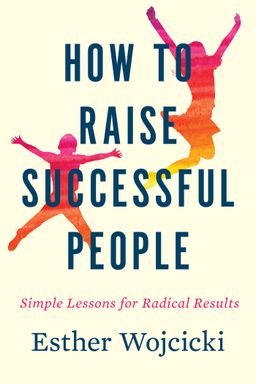
How can we raise children who are capable, happy, and compassionate in a world that seems to demand constant performance and perfection? In How to Raise Successful People, educator and journalist Esther Wojcicki (better known to her students and family as “Woj”) argues that parenting and teaching have lost their way—not because parents don’t care, but because they care too much in the wrong ways. Children today, she says, are drowning in pressure, control, and fear—whether it’s helicopter parenting, anxiety about achievement, or the pursuit of flawless resumes. Her answer to these challenges is surprisingly simple: a value system she calls TRICK: Trust, Respect, Independence, Collaboration, and Kindness.
Wojcicki builds this framework not only on decades as a renowned journalism teacher at Palo Alto High School but also on her own life story: a daughter of poor immigrants who defied strict gender roles, a mother of three powerhouse daughters—Susan, CEO of YouTube; Janet, a leading medical researcher at UCSF; and Anne, founder of 23andMe—and a grandmother guiding nine grandchildren. Her message is clear: parenting and education should empower rather than control; inspire curiosity rather than compliance. The TRICK principles are universal tools—whether you’re raising kids, teaching students, managing employees, or leading others.
Why We Need TRICK Today
According to Wojcicki, both parenting and education are suffering from a crisis of trust. Parents believe danger lurks everywhere, schools prioritize test scores over creativity, and our tech-saturated culture feeds fear of failure. The result? Children who are anxious, risk-averse, and dependent on others to define their success. “We’ve become slaves to our children’s happiness,” she writes, and in doing so, we strip them of resilience and joy. TRICK is designed to free both parents and children from these traps by restoring common sense: trust your instincts, respect individuality, and collaborate instead of dictating.
The Five Pillars of TRICK
Trust is the foundation of all relationships. It means trusting yourself as a parent and allowing your children to trust themselves. It’s the antidote to anxiety-driven parenting and overprotection. Respect means acknowledging children as autonomous beings with their own ideas, passions, and timelines—recognizing that their future does not have to mirror yours. Independence follows naturally: through trust and respect, children learn self-control, accountability, and problem-solving. With Collaboration, parents move from commanding to partnering—engaging kids in decisions and making family life a cooperative enterprise. Finally, Kindness transforms these values into compassion and gratitude. Kindness connects us to others and reminds us that success is meaningless without empathy and service.
Rooted in Personal Experience
Wojcicki’s own experience reshaped her parenting philosophy. Growing up with an authoritarian father who valued obedience over love taught her the dangers of fear-based parenting. She resolved that her daughters would grow up capable of thinking for themselves. That meant giving them responsibilities early, letting them face real consequences, and supporting them unconditionally. From letting her toddlers walk to the store alone in Geneva to encouraging her teenage journalism students to investigate controversial stories, she found that when you trust children, they rise to the occasion. “Teach them to want to be with you, not need to be with you,” she writes—a lesson that flips modern parenting on its head.
Why TRICK Matters Beyond Parenting
Although written for parents, the TRICK philosophy extends far beyond families. Wojcicki argues that the same principles are essential for schools, workplaces, and even society at large. She applies them in her classroom, where students run projects collaboratively, make editorial decisions, and revise their work until mastery—not grades—proves their learning. Many of her methods, such as free writing and peer mentoring, have been adopted globally as models of hands-on, student-driven education. Business leaders from Google to Whole Foods have echoed her call for workplaces built on trust and empowerment rather than control and fear (similar to Daniel Pink’s argument in Drive that autonomy fuels motivation).
A Humanistic Revolution
At its heart, Wojcicki’s philosophy is both timeless and revolutionary. She reminds us that love without respect is suffocating, that discipline without independence breeds helplessness, and that achievement without compassion is hollow. In her classrooms and her kitchen, success is measured not by grades or status but by character—by a child’s ability to think critically, collaborate effectively, and treat others kindly. TRICK is not a formula for perfect parenting; it’s a framework for raising human beings who can live meaningful, responsible lives in a complex world. As Wojcicki insists, “Parents are the first teachers, and our influence never stops.”