
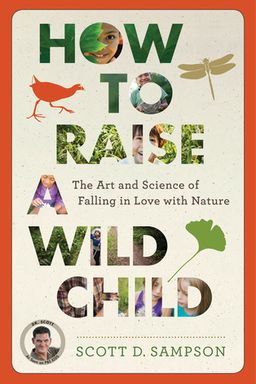
How to Raise a Wild Child cover

How to Raise a Wild Child

by Scott D Sampson

Discover how to reconnect your family with nature using Scott D. Sampson''s insights. ''How to Raise a Wild Child'' provides practical strategies to help kids enjoy the benefits of the great outdoors, enhancing their health, creativity, and academic performance.

Reconnecting Children and Adults with the Living World

How can you help children fall in love with the natural world—and rekindle that bond for yourself? Scott Sampson’s work on nature connection, inspired by mentors like Jon Young, Richard Louv, and Alison Gopnik, argues that the survival of both people and planet depends on reawakening our innate sense of belonging in nature. He challenges a modern paradox: while we live surrounded by technology and abundance, we are more alienated from real ecosystems than ever before. The solution begins not in distant wilderness but in nearby parks, sidewalks, and schoolyards—and it unfolds through intentional mentoring, storytelling, and community practice.

The core argument: reconnection through experience and story

Sampson contends that deep nature connection is not a luxury or extracurricular hobby; it is a biological necessity. Human bodies, brains, and emotions evolved in relationship with landscapes rich in stimuli—sounds, smells, risks, and beauty. Yet the rise of screens, structured schedules, and fear-driven parenting has produced what he calls a “house arrest by good intentions.” The antidote is deliberate reconnection through a three-part process: Experience, Mentoring, and Understanding—the EMU model—that guides learners from direct contact to emotional attachment and insight.

You don’t have to be a biologist to become a powerful mentor. Sampson insists that curiosity, patience, and playfulness matter more than expertise. The goal is not to teach facts but to evoke wonder, empathy, and responsibility. He calls this the Coyote Way—a mentoring style that nudges discovery through layered questions and playful mystery rather than instruction.

From wilderness to doorstep: three kinds of nature

The book reframes “nature” itself into three practical categories: wild (self-willed ecosystems), domestic (gardens, pets, parks), and technological (screens, media, and digital simulations). Each type has value, but only direct, sensory contact changes physiology and behavior. Studies show that forest walks lower stress hormones, gardens boost mood, and views of greenery aid recovery. Peter Kahn’s research confirms that technological nature—no matter how vivid—remains a pale substitute. Real contact matters because unpredictable, multisensory engagement activates the full human organism.

Sampson’s point is practical: prioritize nearby wild or semi-wild experiences, use domestic nature to maintain daily engagement, and reserve screens as teaching supplements. A city stoop with ants or a school garden can offer as much formative power as a national park when approached with curiosity and presence.

Children’s developmental arc in nature

The book traces nature connection across childhood. Early years thrive on play, sensory immersion, and loose parts—sand, sticks, mud—where experiment is indistinguishable from joy. In middle childhood (ages six to eleven), curiosity deepens into the “age of competence,” when children yearn to master real skills like tracking, building, or gardening. Teenagers, drawn to peers and risk, need rites of passage and wilderness adventures that channel danger into growth rather than rebellion. In every phase, the adult’s role shifts: from initiator to companion to respectful witness.

By recognizing these developmental needs, mentors and parents can tailor experiences: short sit spots for toddlers, independent foraging or nature art projects for eight-year-olds, and peer-led treks for teens. The guiding idea is gradual autonomy: let children lead as their confidence grows, with adults hovering at the periphery like hummingbird parents—close enough to intervene for safety but distant enough to allow freedom.

Place-based and communal learning

Sampson stresses that lasting attachment to nature begins with place-based learning: the creeks, trees, and stories of your local ecosystem. Root knowledge builds belonging and stewardship—people protect what they know. Examples range from garden-based curricula at John Muir Elementary to rewilded schoolyards modeled by Sharon Danks. These approaches turn every corner of a community into a living classroom that integrates science, history, art, and cultural memory.

Equally important is community. Family nature clubs and multi-generational mentor networks provide safety, consistency, and joy. The Children & Nature Network’s hundreds of clubs illustrate how collective outings spark engagement and reduce parental fear—because dozens of eyes and hands replace isolated worry.

Storytelling and the Immense Story

Humans learn through story, not statistics. Reviving oral storytelling connects children to topophilia—the love of place hardwired by evolution. Indigenous cultures preserved ecological wisdom through myths anchored in local landscapes; Sampson urges modern mentors to do the same. His “Immense Story,” a cosmic-to-local narrative linking stars, microbes, trees, and people, restores a sense of belonging in deep time. Exercises like Jakob von Uexküll’s soap-bubble perception, imagining the world through another creature’s senses, cultivate empathy across species.

Telling these stories is how you weave moral coordination—children come to feel that care for the world is personal inheritance, not duty. Around campfires or bedtime, such stories transform ecological literacy into identity.

Technology, hybrid minds, and rewilded futures

Sampson recognizes that we live in a digital age. Borrowing from Richard Louv’s “hybrid mind,” he argues that technology can complement rather than consume nature connection. You can alternate between focused digital tools (apps, photography, geocaching) and open-ended sensory awareness (wandering, bird-listening). The goal is cognitive flexibility—the skill to move between spotlight and lantern attention.

Cities, in this vision, become rewilded ecosystems. Planting native species—milkweed for monarchs or oaks for caterpillars—restores the food webs that sustain biodiversity even in urban spaces. Initiatives like Chicago Wilderness and Toronto’s Homegrown National Park demonstrate that small patches aggregate into regional change. Schools, libraries, and households can all model this: a rain garden or native planter box is both act and metaphor—restoring the fabric between people and planet.

Core takeaway

You need not be a wilderness guide or scientist to cultivate ecological belonging. The essential tools—curiosity, patience, questions, play, and story—are ones every human already owns. When applied through consistent routines and community support, they form a culture of reconnection powerful enough to heal children, cities, and the Earth itself.


The Coyote Way of Mentoring

Mentoring, in Sampson’s framework, is both art and science—a balance of presence, questioning, and playfulness he calls the Coyote Way. Named for the trickster teacher in Indigenous lore, this method draws from Jon Young’s nature mentoring philosophy, in which the mentor guides from behind rather than leads from the front.

Three core roles

In any mentoring moment you play three alternating roles: Teacher, offering safety and guidance; Questioner, provoking curiosity; and Trickster, sparking mystery and laughter. This triad keeps learning active and fun while preserving the learner’s sense of autonomy. The aim is to kindle—not control—the fire of curiosity.

Consider the mountain-lion tracking example from the Art of Mentoring: the leader begins with simple questions (toe count), moves to intermediate ones (direction, timing), and ends with an open mystery (did the lion hunt the deer?). That progression sustains inquiry for days and teaches the mentor’s golden rule—ask more than you tell.

Guiding through questions

Sampson offers a practical question ratio: about 70% easy (confidence building), 25% medium (edge-stretchers), and 5% hard (ongoing mysteries). Avoid overexplaining; instead, redirect questions back to the child. Over time you’ll become fluent in reading their cues—when to step in and when to stay silent. This approach mirrors Socratic education, Montessori observation, and Jon Young’s bird-language teaching: curiosity drives memory far better than instruction.

Core routines for mentors

A few routines anchor the Coyote practice: Sit Spots (a quiet recurring place), Wanders (unstructured walks), and Play (child-directed exploration). Simple but consistent, these patterns cultivate sensory acuity and patience. Birds returning to baseline after fifteen minutes of stillness teach children measurable cause-and-effect: their calm shapes the wild’s response.

If pressed for time, schedule shorter, frequent sessions. For young children, five to fifteen minutes suffice; for older ones, build toward longer observations. The message is constancy over endurance—the best sit spot is the one you actually visit.

Coyote insight

A great mentor doesn’t answer every question. They leave openings for wonder to do its work, trusting that discovery learned is discovery kept.


EMU: Experience, Mentoring, Understanding

At the heart of Sampson’s approach lies the EMU framework—Experience, Mentoring, and Understanding—a simple sequence that describes how nature connection deepens. It transforms raw exposure into meaning through guidance and reflection.

Experience: multisensory contact

Direct experience—touching mud, catching raindrops, watching robins—is where love of nature begins. Sampson recalls his own formative moment at a frog pond, cupping pollywogs in his hands. Such early encounters are biologically restorative: research demonstrates that green settings lower cortisol, restore focus, and improve mood and immunity. Frequent local outings—yard explorations, park visits, weekend hikes—build the habit of presence (the Nature Connection Pyramid shows that many small nearby interactions outweigh rare wilderness trips).

Mentoring: human connection

Experience alone fades without relational framing. Mentoring converts contact into relationship. The mentor listens, notices patterns, and asks questions that draw the learner deeper. Jon Young’s bird-language practice exemplifies this: by teaching adults to calm themselves until birds resume normal song, mentors model both observation and humility. Your job is not to lecture but to co-wonder—to accompany the learner’s discovery.

Understanding: making sense of the web

Understanding connects experience to big ideas—the flow of energy, interdependence of species, and deep-time story of evolution. Instead of cramming Latin names, Sampson advises introducing two unifying notions: everything is connected and we are relatives in deep time. Story becomes the bridge from data to meaning. A robin sighting, when linked to nutrient cycles or migration, becomes a thread in a much larger fabric.

Practical integration

During a sit spot, you can apply EMU in sequence: Experience (observe a beetle), Mentoring (ask, “Why is it here today?”), and Understanding (connect to seasonal change). Over weeks, these layered reflections become knowledge embodied by routine rather than rote memorization.

Key takeaway

EMU reminds you that nature connection is not a single spark but a cycle—hands in soil, questions in mind, and stories that tie it all together.


Growth Through Stages: Play, Competence, and Risk

Sampson adapts developmental psychology to nature mentoring, recognizing that each age calls for a distinct invitation. The span from toddler to teen traces an evolution from sensory play to skilled competence to meaningful risk-taking.

Early childhood: the playful scientist

Infants and preschoolers explore the world like scientists. Alison Gopnik’s research shows that toddlers form hypotheses through play—stacking stones, splashing puddles, dropping spoons to test gravity. Your task is to protect this innate curiosity by joining their wonder rather than rescuing it with explanations. Rachel Carson’s call to “help your child to wonder” captures that ethos. Loose parts, dirt, and freedom are better tools than fancy toys, nurturing motor skills, creativity, and even immune health (the hygiene hypothesis). Encourage play, accept mess, and keep sessions short but frequent.

Middle childhood: the age of competence

From about six to eleven, children shift from exploration to mastery. They want to prove capability—to climb, identify, build, and create. Mentors should pivot from hands-on guidance to peripheral support, giving room for autonomy while recognizing achievements. Activities like foraging missions, nature art (as in Zach Pine’s workshops at Muir Beach), or stream surveys meet the craving for skill. Recognition—not praise alone—anchors identity as a competent, nature-connected person.

Adolescence: risk and rites

Adolescents crave novelty, social validation, and challenge. Instead of suppressing that drive, channel it toward meaningful adventure. Wilderness programs such as Outward Bound, NOLS, or community treks provide the right recipe: real risk in a scaffolded environment, shared endurance, and peer belonging. Ceremonial rites—departures, songs like the Elderberry Song, reintegrations—cement the passage into adulthood. Service projects, from habitat restoration to leading younger children, combine skill, purpose, and moral growth. You don’t need a commercial program to replicate this—what matters is structure, challenge, and recognition.

Lifespan insight

If you meet each stage’s need—play for the young, competence for the middle years, and risk with purpose for teens—you grow not only a naturalist but a resilient human being.


Place-Based Learning and Rewilding Cities

You do not have to travel to wilderness to teach about nature; you can start where you live. Sampson makes a passionate case for place-based education—learning grounded in the immediate landscape, cultural stories, and ecological rhythms of one’s community. This approach turns ordinary schoolyards and sidewalks into laboratories of connection and care.

Why local matters

Humans evolved to transmit survival knowledge about specific places—knowing which plants heal, where streams rise, when birds migrate. Teaching through local examples reawakens that ancestral mode of learning. Projects like John Muir Elementary’s garden-based curriculum or Sharon Danks’ Green Schoolyards transform abstract education into hands-on stewardship. Students who plant and harvest become participants in ecological cycles, not spectators.

Rewilding cities

Urban areas, where most people live, present the greatest opportunity for restoration. Drawing on Doug Tallamy’s work, Sampson advocates replacing sterile lawns with native species that sustain complex food webs. A single milkweed patch can anchor monarch recovery; neighborhoods adopting native planting collectively generate corridors of life. Groups like Chicago Wilderness and Toronto’s Homegrown National Park show city ecosystems can be resilient and biodiverse.

Community and institutions

Schools, libraries, and local councils can model rewilding. The Sun Ray Library in St. Paul planned rain and reading gardens; Denver envisions every resident within a ten-minute walk of green space. Each institutional act also signals cultural permission—proof that cities and nature are not opposites but partners. Start small: convert a parking strip, plant a rain garden, or lobby for a native bed at school. Local victories scale through networks and imitation.

Essential message

The wild begins at your doorstep. When you make your home habitat-friendly and use it as a classroom, you teach children that every patch of earth can be a sanctuary.


Balancing Technology and the Hybrid Mind

Sampson acknowledges a truth of the digital era: we can’t, and shouldn’t, separate children from technology. Instead, he urges cultivating a hybrid mind—the ability to alternate between focused digital attention and expansive natural awareness. Borrowing from Richard Louv, he reminds us: “The more high-tech our lives become, the more nature we need.”

Spotlight and lantern awareness

Alison Gopnik likens human attention to two modes: spotlight (narrow, task-focused) and lantern (diffuse, open). Screens cultivate the spotlight; nature restores the lantern. To raise adaptable thinkers, you must teach both. Alternate digital research or photography with immersive outdoor time. For example, after a 20-minute sit spot, use an app to identify one bird or star, then return to direct observation.

Technology as bridge

Digital tools can extend nature experiences rather than replace them: iNaturalist bioblitzes, GPS-based geocaching, or citizen-science photography projects. At a Tilden Park bioblitz, volunteers used phones and portable microscopes to document 219 species—technology amplifying curiosity and connection. Likewise, the author’s PBS series Dinosaur Train modeled how media can motivate outdoor play by ending each episode with an invitation: “Get outside and make your own discoveries.”

Design inspired by nature

Through biomimicry, technology becomes apprentice rather than master—learning from nature’s design. Kingfisher beaks shaped bullet trains; whale fins inspired turbine blades. Teaching children to ask how nature solves problems fosters humility and inventiveness. The point is not anti-tech resistance but ecological literacy in innovation.

Balanced takeaway

Use technology as lens, not wall. When digital and natural intelligences collaborate, curiosity expands beyond any single world.


Communities, Families, and Hummingbird Parenting

The task of raising nature-connected children cannot rest on one parent. Sampson insists on shared mentorship, healthy autonomy, and smarter scheduling to counter the modern triad of overprotection, over-scheduling, and over-screening. The cure begins with community and a new kind of parental stance he calls hummingbird parenting.

From fear to freedom

Today’s children often live under what Hanna Rosin calls “house arrest by love.” Parents restrict outdoor play out of safety fears, yet such control undermines resilience and curiosity. Research and experience both confirm that gradual, supervised independence fosters safer, more confident kids. Hummingbird parents linger nearby but intervene only when necessary, allowing children to test limits while knowing support is close.

Structuring autonomy

Begin with predictable boundaries—time limits, visible zones, simple check-in rules. Over time, step back as skills grow. Schedule nature on the family calendar: a weekly park meetup or Sunday wander builds consistency and anticipation. Families like Renee Limon’s found that conflicts eased when outdoor time became a routine priority. Treat nature as essential as lessons or sports—it resets emotional equilibrium.

Building the mentoring village

Children flourish in networks of diverse mentors—parents, grandparents, teens, neighbors, and educators. Family nature clubs, catalogued by the Children & Nature Network, exemplify this. KIVA (Kids in the Valley, Adventuring) grew from a few outings to hundreds of families, simply by organizing monthly meetups. Shared supervision encourages risk, peer learning, and storytelling. Grandparents add intergenerational depth; teens act as near-peer leaders; community groups provide structure and safety.

Enduring principle

When many eyes watch kindly from the periphery, children encounter the world with courage. Freedom, not fear, is the soil of connection.

Dig Deeper

Get personalized prompts to apply these lessons to your life and deepen your understanding.

Go Deeper

Get the Full Experience

Download Insight Books for AI-powered reflections, quizzes, and more.