
Idea 1
Mastering Growth Investing through Proven Patterns
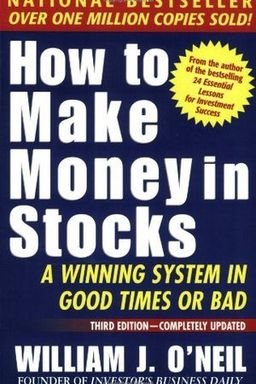
How do you consistently find stocks that lead markets rather than follow them? In How to Make Money in Stocks, William J. O’Neil argues that success in equities comes not from intuition or valuation alone but from understanding historically repeatable patterns of growth and institutional accumulation. His CAN SLIM methodology captures the seven key forces that drive exceptional stock performance: accelerating earnings, annual growth, new catalysts, supply and demand imbalances, leadership, institutional support, and market timing.
O’Neil contends that modern investors can learn from a century of market precedents instead of guesswork. By synthesizing fundamental performance with technical behavior, you can see what elite stocks looked like before they became household names—Apple, Cisco, Syntex, Dell, Microsoft. This is not a prediction tool; it’s a pattern-recognition system rooted in cause and effect. When the right fundamentals align with the right charts in the right market, probabilities shift decisively in your favor.
The CAN SLIM Philosophy
Each letter in CAN SLIM stands for a core trait of past market winners. C and A measure earnings strength—current quarterly surges and annual consistency. N captures newness, the catalyst that propels companies beyond old limits. S reflects the law of supply and demand, revealed through volume and shares outstanding. L separates leaders from laggards by tracking relative strength. I identifies institutional sponsorship—the smart money behind moves. M reminds you to follow the market’s direction rather than fight it.
When you combine these elements, you move from hope to discipline. You select stocks that are expanding earnings rapidly (proof of demand), breaking out of proper chart bases (proof of accumulation), and attracting professional buyers in an up-trending market (proof of timing). O’Neil’s research—spanning thousands of winners over the last century—shows that three out of four had earnings up over 70% right before their major price runs and were part of industry group advances.
Why Charts Matter as Much as Fundamentals
Many investors dismiss charts as speculation, but O’Neil shows they’re indispensable. Price and volume record the crowd’s psychology. Bases like the cup-with-handle or double bottom show where institutions accumulate shares quietly. Breakouts—confirmed by volume spikes 40–50% above average—signal the moment of demand dominance. This fusion of psychology and mathematics lets you enter early, before public enthusiasm distorts prices.
(Note: This approach connects to Richard Wyckoff’s theory of accumulation and distribution—O’Neil’s method modernizes it with empirical data from decades of performance.) By reading charts, you see not just where price has been but how buyers and sellers behave when risk and conviction meet.
The Discipline Behind Success
Finding winners is half the battle; keeping gains is the other half. O’Neil’s sell discipline enforces a simple rule: cut every loss at 7–8%. The math guarantees survival—small losses protect you from catastrophe and position you for the few huge gains that make your year. Never average down or rationalize mistakes. Conversely, let winners run—especially those that surge 20% in two weeks, a sign of leadership just beginning.
Position sizing and portfolio focus are equally crucial. Owning 4–7 thoroughly researched stocks beats holding dozens of mediocre names. Concentration lets you act decisively when charts turn or earnings reports confirm strength.
From Individual Stocks to Market Context
Even perfect stock picks fail in bear markets. O’Neil teaches you to interpret index charts—distribution days (heavy selling by institutions) and follow-through days (legitimate reversals). When the market shows five distribution days in a month, stop buying and raise cash. When a confirmed follow-through occurs, redeploy into fresh breakouts. These signals let you align your actions with institutional trends rather than emotions.
Institutional sponsorship underpins most major moves. Funds are both the fuel that drives breakouts and the pressure that can collapse overowned stocks. Tracking their buying patterns distinguishes durable leadership (like Microsoft’s volume surge at its breakout) from speculative pops that fade when managers retreat.
Core Paradox of Leadership
O’Neil’s “Great Paradox” overturns a common instinct: the best stocks look expensive when their greatest runs begin. Stocks near new highs, backed by new catalysts and accelerating earnings, tend to advance further. Cheap laggards almost never lead recoveries. The market rewards those who buy strength, not weakness—those who trust data and pattern quality over perceived value.
Institutions, Mutual Funds, and Long-Term Compounding
For long-term wealth, O’Neil extends the same logic to institutional vehicles—mutual funds and, selectively, ETFs. The mathematics of compounding is straightforward: 15% annual returns for 35 years transform modest sums into millions. Choose top-quartile growth funds, reinvest dividends, and hold through cycles. Mutual funds and disciplined reinvestment are practical applications of the same principles—riding professional accumulation through extended time horizons.
Ultimately, O’Neil’s system blends data, psychology, and discipline. You learn to buy what the market is proving right, sell when evidence shifts, and treat investing as a trained skill—not a gamble. Success depends less on prediction and more on preparation—the ability to recognize leadership, act with conviction, and protect yourself when trends reverse.