
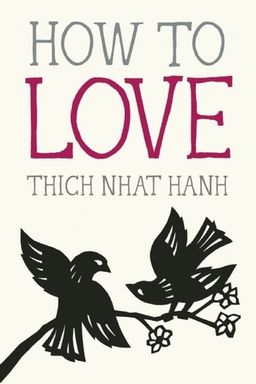
How to Love cover

How to Love

by Thich Nhat Hanh

How to Love by Thich Nhat Hanh explores the power of mindfulness to transform love into a deep, empathetic journey. This insightful guide reveals how love, nourished by happiness and self-respect, can foster profound connections with others and oneself.

The Practice of True Love

How do you love in a way that actually brings joy, stability, and peace instead of anxiety, attachment, and suffering? In How to Love, Zen master Thich Nhat Hanh—often called “the father of mindfulness”—argues that true love is a form of deep understanding. It’s not just an emotion or a desire, but a living practice that requires mindfulness, compassion, and presence. Love, he says, is not merely what you feel; it’s what you do, moment by moment, through awareness and understanding.

Hanh draws on Buddhist wisdom to redefine love as something both spiritual and practical. When we practice love with understanding—toward ourselves, our partners, our families, even strangers—our relationships transform. He teaches that love is made up of six elements: the traditional four elements of loving kindness, compassion, joy, and equanimity, plus two essential additions: respect and trust. Together, these qualities form a foundation for a love that is spacious, fearless, and enduring.

Love as Understanding

At the heart of Thich Nhat Hanh’s teaching is the idea that to love is to understand. Without understanding, love becomes mere attachment or craving. Understanding requires mindfulness—the capacity to be fully present and aware of the other person’s reality and suffering. When you understand someone’s suffering, you relieve it. As Hanh puts it, “Understanding is love’s other name.”

This perspective challenges our usual Western notions of love as passion or possession. Rather than seeking someone to complete us, Hanh invites us to discover our wholeness first, so that we can love freely without fear or neediness. True love is not a prison—it gives both people “a lot of space.”

Love Begins with Yourself

Before you can offer love to another, you must first love yourself. This means treating yourself with the same kindness and patience you would offer to a dear friend. In Buddhist language, this is metta, or loving kindness toward oneself. You can’t offer happiness if you don’t already have it. Loving yourself is not selfish—it’s the foundation for all compassion.

Hanh uses simple metaphors to make this truth come alive. He likens love to a flower: if you don’t water it, it will wither. Likewise, our capacity to love others depends on whether we nourish the “flower” inside us with mindfulness, joy, and understanding.

The Four—and Six—Elements of True Love

The Buddha taught that true love is composed of four elements: loving kindness (maitri), the capacity to bring happiness; compassion (karuna), the desire and ability to relieve suffering; joy (mudita), the ability to delight in another’s happiness; and equanimity (upeksha), the sense of balance and nonattachment that makes love spacious. Hanh adds two more: respect and trust. Without trust, love is incomplete. And without respect—for yourself and for the other person—love decays into manipulation or fear.

Each of these qualities can be cultivated through awareness. For example, Hanh’s story of “watering the flower” reminds us to express appreciation regularly. In one story, a husband who had neglected his wife simply spent ninety minutes naming all the things he appreciated about her—and their relationship transformed instantly. That’s how quickly understanding can heal resentment.

Mindfulness and Communication

Mindfulness is the continuous thread running through all of Hanh’s teachings. It means being fully present—aware of your thoughts, words, actions, and their impact. This presence can transform something as simple as a hug into healing. In his practice of hugging meditation, for example, you hold the other person mindfully and breathe consciously, realizing how precious it is that both of you are alive right now. Moments like this reconnect you with gratitude and tenderness.

Communication also becomes an act of mindful love. Hanh provides tools such as the Six Mantras—simple phrases like “I am here for you” or “I know you are suffering”—that express presence, understanding, and humility. These mantras may sound simple, but when spoken with full awareness, they dissolve misunderstanding and build deep trust.

Love as Daily Practice

Ultimately, How to Love is not a philosophical treatise but a manual for living. Hanh invites you to bring mindfulness into every aspect of daily life—walking, eating, listening, hugging, and even arguing. When anger arises, he suggests three helpful sentences: “My dear, I am suffering and I want you to know it. I am doing my best. Please help me.” This is the practice of love as mindful honesty.

In a world where relationships are often transactional and fleeting, Hanh’s message feels both timeless and deeply practical. Love, he teaches, is not a feeling that happens to you—it’s a craft that you hone with patience, insight, and kindness. It's the art of nourishing happiness in yourself and those around you. If you know how to breathe, walk, and smile with awareness, you already know how to love.


The Four Elements of True Love

Thich Nhat Hanh’s definition of love centers on four foundational elements that can be practiced in daily life: loving kindness, compassion, joy, and equanimity. These elements—known in Sanskrit as maitri, karuna, mudita, and upeksha—are the building blocks of relationships that nurture rather than exhaust us. Each one addresses a specific quality needed for love to thrive—and all four are interdependent.

Loving Kindness: The Desire to Make Others Happy

Loving kindness is more than affection—it’s the ability to bring genuine happiness to others. But it begins with yourself. You cannot offer peace or joy to another if your own heart is turbulent. This is why mindfulness and self-care are acts of love, not selfishness. Hanh reminds us to “be the sunshine” for another person, meaning to embody warmth and happiness they can feel simply by being near you.

Compassion: Understanding Suffering

Compassion, or karuna, is the natural response to truly understanding someone’s suffering. It’s not pity—it’s the wish to relieve pain. For instance, if your friend or partner lashes out, compassion reminds you to look beneath the words and see the suffering that causes them. “Understanding suffering brings compassion and relief,” Hanh writes. This kind of empathy transforms conflict into connection.

Joy: Celebrating the Well-Being of Others

In many relationships, envy or fear interfere with joy. But true love delights in the happiness of another. Joy, or mudita, adds freshness to relationships. You can offer this joy simply through your presence—a smile, a moment of attention, or mindful time together. Hanh’s question “Are you able to make the other person smile?” becomes a gentle way to measure love’s health.

Equanimity: Spacious and Nonpossessive Love

Equanimity, or upeksha, means balance and nonattachment. It’s the understanding that your happiness and your loved one’s happiness are intertwined, but neither of you owns the other. When love includes equanimity, there is freedom rather than clinging. Hanh compares it to two fingers of the same hand working in harmony, neither superior nor inferior. Equanimity keeps love from becoming entrapment.

“True love gives us beauty, freshness, solidity, freedom, and peace.”

When you practice all four elements together, love becomes boundless—it grows naturally, like a tree rooted in rich soil. And as Hanh points out, if love stops growing, it starts to die. The practice of the Four Immeasurables ensures that your love remains alive, expansive, and deeply healing—for yourself and everyone around you.


Understanding Is the Nature of Love

One of Thich Nhat Hanh’s most profound teachings is that love and understanding are the same thing. You cannot truly love someone unless you understand them—and you cannot understand them unless you take the time to listen deeply. This is why he says the best gift you can give anyone is your understanding.

Deep Listening and Loving Speech

Hanh emphasizes two forms of communication that cultivate understanding: deep listening and loving speech. Deep listening means you listen only to help the other person suffer less, without judgment or correction. “Even fifteen minutes of listening like this can be healing,” he writes. Loving speech complements this by offering words that nourish rather than harm. Practicing these together transforms conversation into compassion.

He tells couples to schedule regular listening sessions to understand each other better. Just ten or fifteen minutes of mindful sharing can replace months of resentment. This way, communication becomes a form of meditation—a path toward greater intimacy rather than argument.

Mindfulness in Conflict

Understanding often begins with mindful awareness during conflict. When anger arises, Hanh suggests pausing to practice conscious breathing instead of reacting immediately. His “Three Helpful Sentences” encapsulate this approach: “My dear, I am suffering and want you to know it. I am doing my best. Please help me.” These phrases disarm blame and invite connection.

Even practicing silence can be healing. In his story of a crying woman at one of his talks, he teaches her husband that simply expressing appreciation—the act of “watering the flower”—can restore joy. Understanding flourishes when mindfulness replaces reactivity.

Overcoming Pride and Asking for Help

Many of us resist vulnerability, believing that asking for help is weakness. But Hanh insists that in true love, there is no room for pride. To love someone is to trust them with your suffering. “The person you love most is also the person best able to help you,” he reminds us. This humility—saying, “I am suffering. Please help.”—is a powerful act of connection that restores trust and deepens love.

Understanding, then, is not merely intellectual—it’s emotional and spiritual insight born of mindfulness. It dissolves fear, nourishes empathy, and creates what Hanh calls “holy intimacy,” where two people meet not as separate selves but as parts of one shared being. In this space, there is no more discrimination, no more “you” and “I”—only interbeing, which is the nature of love itself.


Feeding Our Love Every Day

Love, like all living things, needs food to survive. Thich Nhat Hanh draws on Buddhist metaphors of nourishment to explain that everything—including love—depends on what we feed it. There are four kinds of food human beings consume: edible food, sensory food, volition, and consciousness. Understanding these sources helps us keep love alive, rather than letting it wither through neglect.

Edible Food: Respecting the Body

The way you eat is a form of love. Eating mindfully, with moderation and gratitude, shows respect for your body and for the Earth. When you care for your body lovingly, you become more capable of respecting others’ bodies as well. “If we don’t treat our bodies with respect,” Hanh warns, “how can we respect others?”

Sensory Food: Consuming Wisely

We also “eat” through our senses—by reading, watching, or listening to certain things. News, social media, television, even gossip all influence the mind. Toxic sensory food feeds craving, jealousy, and fear; wholesome sensory food, like nature walks or poetry, nourishes calm and joy. Love can only grow in a peaceful environment, so Hanh advises choosing sensory input as carefully as you’d choose your meals.

Volition: Nourishing with Purpose

The third kind of nourishment—volition—is your deepest intention. It’s the energy that moves you through life. If your desire is rooted in compassion and understanding, it will nourish love. But if your motivation is to control or possess, that volition becomes toxic. Hanh suggests writing a vow like: “I commit to developing understanding and compassion in myself so that I can become an instrument of peace.” This transforms your willpower into spiritual fuel for love.

Consciousness: The Collective Mind

The last kind of food is consciousness—both individual and collective. We absorb the attitudes of those around us. If we spend time in anger or anxiety, we become that energy. But living in a community of compassion and understanding, whether a family or group of friends, strengthens our habit of peace. This is why Hanh founded Plum Village, a place where people practice mindful living together, nourishing each other’s love daily.

“Everything needs food to live, even love.”

By becoming aware of what you feed your body, mind, and heart, you take responsibility for the health of your love. You stop asking, “Why is this relationship dying?” and begin asking, “What am I feeding it?” This shift—from blame to nourishment—is one of the deepest practices of mindful love.


The Six Mantras of Loving Speech

Thich Nhat Hanh offers a simple yet transformative method for building intimacy and dissolving conflict: the Six Mantras of True Love. These are short, sincere sentences you can use to express mindfulness and care in any relationship. They’re not mystical incantations—they’re spiritual technologies for connection. When spoken in presence, they become medicine for misunderstanding.

1. “I Am Here for You”

The first mantra is the essence of true love: presence. When you say, “I am here for you,” you affirm that you are truly with the person—body and mind united. This kind of presence can heal loneliness immediately. Hanh often uses this mantra even when watching the full moon or a flower, recognizing their presence as part of love.

2. “I Know You Are There, and I Am Happy”

This mantra grows from gratitude. It celebrates the miracle of your loved one’s existence. When spoken sincerely, it awakens appreciation for simple togetherness—the same joy you can feel when seeing the sunrise. Love grows when we recognize, daily, that the other’s presence is a gift.

3. “I Know You Are Suffering, and I Am Here for You”

This mantra reminds us to notice and care for another’s suffering. Often we are too busy to see that our loved one is in pain. When you offer this phrase with sincere mindfulness, you already relieve part of their suffering. You don’t have to fix anything—just be present.

4. “Darling, I Am Suffering. Please Help.”

Saying this mantra requires courage and humility. It’s hard to admit pain, especially when it’s caused by someone you love. But Hanh reminds us that love cannot exist where pride prevents honesty. Asking for help is an act of intimacy, not weakness.

5. “This Is a Happy Moment”

This fifth mantra is a medicine for forgetfulness. Too often, we overlook happiness in the present. By saying, “This is a happy moment,” we wake up to the joy of being together, turning ordinary time into sacred time. It deepens your appreciation for the now.

6. “You Are Partly Right”

The sixth mantra cultivates humility and realism. When someone criticizes you or praises you, instead of defending or inflating the ego, reply gently, “You are partly right.” This keeps you grounded in awareness that, like everyone else, you’re a mix of strengths and flaws. It’s a safeguard against both pride and illusion.

Practicing these mantras daily can transform relationships. They teach presence, humility, and gratitude—the language of the heart spoken mindfully. As Hanh says, “If you nurture these phrases with your full awareness, they become flowers blooming in your speech.”


Nourishing Joy and Natural Happiness

In modern life, we chase happiness as if it were a rare reward at the end of effort. Thich Nhat Hanh reveals that true happiness is already here—it arises naturally when we are mindful. Love thrives in joy, and joy is born from awareness. You don’t have to seek happiness; you only have to stop running away from the present moment.

Joy as an Expression of Love

Love and joy are inseparable. When your presence makes someone smile, when you appreciate a flower or share a peaceful meal—that’s joy as an expression of love. Hanh asks simply: “Are you able to make the other person smile?” It’s not trivial; it’s a barometer of relational health. Joy nourishes love the way sunlight nourishes a flower.

Happiness Is Not a Future Event

We suffer because we think happiness is waiting for us somewhere ahead. But mindfulness reveals happiness already exists in walking, breathing, and smiling. “If you walk with true awareness of every step,” Hanh writes, “happiness will arise naturally.” Like Jon Kabat-Zinn’s idea in Wherever You Go, There You Are, this teaching invites you to slow down and live deeply in each moment.

Joy Is Healing

In the chapter “Joy Is Healing,” Hanh notes that a love which brings constant tears is not true love. Love must generate joy in both people. Learning to cultivate small, direct joys—playing with your child, watering the garden, savoring tea—can heal emotional wounds far better than grand romantic gestures. This is why mindfulness is therapeutic; it reconnects you to life’s simple wonders.

“When we’re in touch with the wonders of life, we become aware of the many conditions of happiness that are already there.”

When you practice mindfulness and loving awareness, happiness stops depending on external circumstances. It becomes part of your way of being. This inner joy is not fragile—it’s the quiet confidence that being alive, breathing, and loving are already enough.


Respect, Trust, and the Art of Being Present

Thich Nhat Hanh considers respect and trust the hidden elements in true love. While they are implicit in the Buddha’s four immeasurables, Hanh highlights them as distinct because they’re often missing in modern relationships. Without trust, love collapses into suspicion; without respect, love turns into control. Both are cultivated through mindfulness and presence.

Respect: Seeing the Divine in the Other

Respect begins with how you see. Hanh reminds us that when you look at your loved one deeply, you can see that they too are made of the stars. This vision evokes automatic reverence. Treating your partner like an honored guest—even after decades together—keeps love fresh. Reverence is the nature of true love, he says, because it affirms the sacredness of life within the other.

Trust: Confidence in Yourself and the Other

Hanh defines trust as confidence rooted in presence, not illusion. Real trust grows when both people know themselves and communicate openly. He insists that before you can trust another, you must trust yourself—trust in your “good and compassionate nature.” Without self-trust, we project insecurity and erode intimacy. By affirming your basic goodness, you build the inner ground needed for healthy love.

Presence: The Basis of Respect and Trust

Presence binds respect and trust together. When you are truly present—body and mind in one place—you affirm the other person’s worth. In Eastern traditions, bowing is a physical embodiment of respect; in Hanh’s modern reinterpretation, mindful listening and attentiveness serve the same role. You can show reverence simply by putting down your phone and saying, “I am here for you.”

In relationships built on respect and trust, love feels like spacious freedom rather than confinement. You no longer need to possess or control because you’ve discovered something deeper: a shared confidence in being. In Hanh’s words, “True love gives us space.” Space to grow, space to speak, and space to simply be.


Love as a Path of Healing and Growth

For Thich Nhat Hanh, love is not a destination but a path—a way to awaken wisdom and heal suffering. Every relationship is an opportunity to grow in understanding. When practiced with mindfulness, love becomes a teacher that reveals your fears, your pride, and your potential for compassion. Even mistakes and heartbreak become fertile ground for transformation.

Turning Garbage into Flowers

Hanh often uses the metaphor of compost: just as garbage can nourish beautiful flowers, suffering can nurture growth. Mistakes are not failures but lessons in unskillfulness. Each time you handle anger or disappointment mindfully, you transform emotional “waste” into understanding. This alchemy is the essence of mindful love.

Letting Go of Notions and Complexes

We suffer, he says, not only because of our emotions but also because of our ideas—beliefs about how love or happiness should look. To be free, we must let go of rigid notions and complexes: superiority, inferiority, and equality. These illusions create separation. Learning to “inter-be”—to see that “you are him and he is you”—replaces competition with compassion.

Love as Healing Presence

A lover, in Hanh’s view, is a healer. The Sanskrit word for compassion, karuna, means not just to share suffering but to transform it. Your presence, when grounded in understanding, acts as medicine for the other person. Healing doesn’t mean you fix them; it means you create space where both can become whole. Even a mindful hug or an act of silence can be deeply therapeutic.

“When our hearts are small, we suffer; when our hearts expand, everything becomes bearable.”

In the end, How to Love transforms love from a fragile emotion into a lifelong spiritual practice. Love begins as self-care, matures into understanding another, and culminates in a universal compassion that embraces all beings. As your heart grows wider, like Hanh’s metaphorical river, it gains the capacity to hold the entire world in compassion without breaking.

Dig Deeper

Get personalized prompts to apply these lessons to your life and deepen your understanding.

Go Deeper

Get the Full Experience

Download Insight Books for AI-powered reflections, quizzes, and more.