
Idea 1
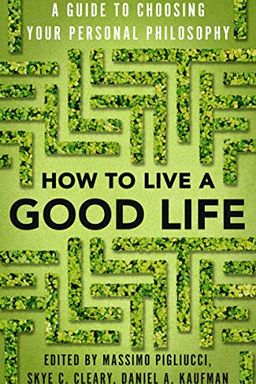
How to Live a Good Life: Choosing Your Guiding Philosophy
What does it really mean to live a good life? Is it about happiness, virtue, faith, or making a difference? In How to Live a Good Life, editors Massimo Pigliucci, Skye C. Cleary, and Daniel A. Kaufman bring together contemporary thinkers, philosophers, and religious scholars to explore that question through fifteen distinct philosophies of life. The book doesn’t hand you a single answer—it invites you into a global conversation about meaning, morality, and flourishing.
The authors argue that everyone already has a philosophy of life, whether consciously adopted or inherited through culture, religion, and family. The critical question is not whether you have one, but whether your philosophy stands up to scrutiny. Drawing inspiration from Socrates’s idea that “the unexamined life is not worth living,” the book encourages reflection on our guiding values and choices, showing that what matters most is to consciously choose how to live.
A Global Philosophical Anthology
The book is divided into four major sections that cover a sweeping range of traditions: ancient Eastern philosophies (Buddhism, Confucianism, Daoism), ancient Western philosophies (Aristotelianism, Stoicism, Epicureanism), religious traditions (Hinduism, Judaism, Christianity, Progressive Islam, Ethical Culture), and modern philosophies (Existentialism, Pragmatism, Effective Altruism, Secular Humanism). Each essay is written by a practitioner-scholar who lives according to the philosophy they explain, giving the work an intimate, experiential feel. Rather than merely summarizing abstract ideas, each chapter grounds philosophy in the stuff of daily life—struggles, loves, losses, and decisions that test our integrity.
Pigliucci, Cleary, and Kaufman position their book at the border between philosophy and religion, arguing that both disciplines ultimately ask the same question: How should we live? Whether through reason, ritual, or mindfulness, each tradition in this volume offers a path toward eudaimonia, the Aristotelian notion of human flourishing. The editors reject sharp boundaries between philosophy and religion, suggesting that any worldview that combines a metaphysics (an account of how reality works) with an ethics (a system of how we should act toward others) qualifies as a philosophy of life.
Why Philosophies of Life Matter
Throughout the book, the editors highlight a recurring truth: most people inherit philosophies from their cultures rather than consciously choose them. For example, a person raised Christian, Hindu, or secular humanist often internalizes those views without ever asking, “Does this worldview reflect what I truly believe about the world and myself?” The book challenges readers to make those beliefs explicit, examine them through reason and lived experience, and refine or transform them if necessary.
Philosophy, the editors remind us, literally translates as the love of wisdom. It isn’t just academic theorizing—it’s a way of life. Through engaging essays, the book shows how each philosophical path provides moral guidance and purpose amid the chaos of modern existence. For instance, Owen Flanagan’s Buddhism teaches that compassion and self-awareness help us manage anger and suffering; Bryan Van Norden’s Confucianism emphasizes moral growth through relationships; and Massimo Pigliucci’s Stoicism offers emotional resilience in the face of uncertainty.
The diversity of perspectives—from Aristotle to Sartre, from Hinduism to Secular Humanism—reveals philosophy’s power to adapt to different cultural needs and historical moments. Yet the essays also share a common thread: the conviction that a good life depends on both self-knowledge and ethical engagement with others. Whether through meditation, rational reflection, moral virtue, or altruistic action, all traditions converge on the pursuit of a meaningful, examined existence.
A Conversation Across Time and Culture
Each section in the book forms a dialogue between East and West, past and present. The first group, “Ancient Philosophies from the East,” explores non-theistic traditions that emphasize harmony, compassion, and self-discipline. The next group, “Ancient Philosophies from the West,” reintroduces Greco-Roman thought—not as archaic doctrine, but as living wisdom. In “Religious Traditions,” contributors reinterpret spiritual systems such as Christianity, Judaism, Islam, and Hinduism through an ethical-humanistic lens. Finally, “Modern Philosophies” ventures into the contemporary world, where existential crises, scientific understanding, and moral progress reshape what it means to be good.
The essays reflect how each author discovered their own philosophy of life through personal crises. Skye C. Cleary recounts how existentialism helped her break from societal expectations about marriage and gender roles. Pigliucci describes finding new meaning in Stoicism after a midlife crisis. Adis Duderija illustrates how Progressive Islam reinvited faith to address modern ethics and gender equality. Their stories make abstract ideas vivid and human: philosophy is not just for scholars, it’s for anyone seeking direction.
The Timeless Task of Self-Examination
Ultimately, How to Live a Good Life serves as both invitation and mirror: it invites readers to explore philosophies beyond their familiar intellectual borders, while holding up a mirror for self-reflection. The book doesn’t promise happiness in a simple sense—it asks for effort, reflection, and the courage to face existential uncertainty. The editors conclude that in our era of scientific advancement and moral confusion, consciously choosing our philosophy is as urgent as ever. Modern people suffer from choice overload, moral relativism, and the loss of communal wisdom. A self-aware philosophy of life restores meaning, coherence, and integrity.
As Pigliucci, Cleary, and Kaufman observe, the world’s rich diversity of thought—from Buddhist compassion to Stoic courage to humanist reason—provides a toolkit for anyone willing to examine their own life. The question now is: which philosophy will guide yours?