
Idea 1
The Art of Truly Seeing and Knowing Others
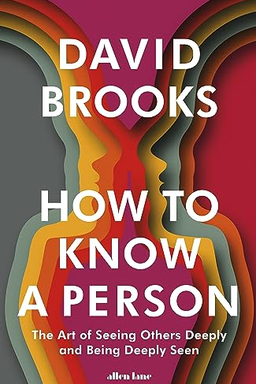
When was the last time you felt truly seen—not just noticed, but understood to the core of who you are? In How to Know a Person, David Brooks asks this question to reveal a profound truth: in a world obsessed with performance, productivity, and digital connection, we have forgotten how to understand one another deeply. Brooks argues that the foundational skill of being human is the ability to see and make others feel seen. Without it, relationships hollow out, societies fracture, and our sense of meaning dissolves.
Brooks contends that the act of knowing another person is not a casual gesture—it’s an ethical, emotional, and spiritual practice. To know someone well, he says, you must master the small, everyday acts that build trust and compassion: listening without judgment, asking insightful questions, and accompanying people through their pain and triumphs. Across its three parts—“I See You,” “I See You in Your Struggles,” and “I See You with Your Strengths”—Brooks takes readers on a journey toward becoming what he calls an Illuminator: someone who lights up others by paying deep, respectful attention.
The Crisis of Being Unseen
Brooks begins by diagnosing a cultural and moral illness. Over the past decades, he observes, Western society has shifted its focus from moral formation to career success. Schools teach us how to build résumés, not how to build relationships. The rise of social media gives us the illusion of intimacy while replacing genuine understanding with quick judgment. The result is what Brooks calls an epidemic of blindness: widespread loneliness, disconnection, and a loss of the basic skills required for empathy. Studies he cites show that Americans report less trust, more isolation, and soaring rates of despair. People are desperate, he writes, not for money or fame but for recognition—for someone to look at them with loving respect and say, “I see you.”
From Detachment to Illumination
Brooks’s own life mirrors this journey. Raised in a reserved household—“Think Yiddish, act British,” as he puts it—he learned early to repress emotions and retreat into his intellect. His transformation began after a group hug with Anne Hathaway and a panel of passionate theater artists—it jolted him into realizing that living detached from emotion was living withdrawn from life. From that moment, Brooks began learning what it means to be open-hearted, vulnerable, and wise. Yet openness alone wasn’t enough: wisdom, he discovered, rests on social skill. To be fully human, one must learn the craft of seeing people well.
Brooks divides the world into two types: Diminishers, who make others feel small and unseen, and Illuminators, who radiate curiosity and respect. Diminishers stereotype, judge, and withdraw. Illuminators, by contrast, possess what Brooks calls “the brightness of care” that helps others see themselves clearly and feel valued. To illustrate, he describes an engineer named Harry Nyquist, whose coworkers at Bell Labs were mysteriously more productive. They discovered it wasn’t his technical skill—it was his ability to listen deeply and ask questions that made people think harder and trust more.
The Craft of Seeing
Seeing others well is not instinctual; it’s a craft learned through practice. Brooks borrows from psychology, acting, biography, teaching, and therapy to show how professionals across fields cultivate this art. The core skill, he argues, is empathic accuracy—the capacity to perceive what another person is feeling and thinking. Yet we tend to overestimate our abilities. Studies reveal that even close friends and family correctly read one another’s thoughts only about 35 percent of the time. Couples grow less perceptive as marriages lengthen, because they trap each other in outdated versions of who they used to be. To know another person, Brooks says, means constantly updating your understanding of them as they grow and change.
Why This Matters Now
The stakes of this skill extend beyond relationships; they define our collective survival. In pluralistic democracies—where people of different backgrounds must coexist—trust depends on our ability to look across difference and say, “I’m beginning to see you.” Whether in business, education, friendship, or politics, Brooks warns that when we fail to see others fully, alienation and resentment grow. The only antidote is to cultivate moral empathy: to sense, not just intellectually understand, the world through another’s eyes.
In this book, Brooks invites you to transform how you attend to the people around you. He shows through stories—like Frederick Buechner mourning his father or Deeogratias escaping genocide in Burundi—that true understanding changes lives. To know someone, Brooks writes, is a sacred act of creation: when you “beam the light of your attention” on another, they blossom. Learning this art is not only the path to compassion—it is the essence of wisdom itself.