
Idea 1
Turning Innovation from Myth into Measurable Impact
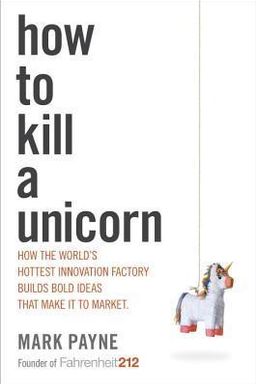
Why do so many bright ideas die before they ever see the light of day? In How to Kill a Unicorn: How the World’s Hottest Innovation Factory Builds Bold Ideas That Make It to Market, Mark Payne pulls back the curtain on this mystery. He argues that the problem doesn’t lie in a shortage of creativity, but in the way modern innovation is pursued. Too many good ideas—what Payne calls “unicorns”—are wonderfully imaginative but fail to become real businesses. They’re enchanting yet untethered, intriguing but unprofitable. Payne’s mission is to show you how to build ideas that are not only inspiring but also workable, fundable, and commercially viable.
The Myth of the Unicorn
A “unicorn” in Payne’s world isn’t a billion-dollar startup—it’s a beautiful but imaginary innovation. It’s that slick prototype or visionary concept that dazzles executives in a presentation but never hits the shelves. Too often, the corporate world treats innovation like a Friday afternoon brainstorming session—lots of Post-its, few results. Payne, cofounder of Fahrenheit 212, an innovation consultancy that’s worked with companies like Samsung, Coca-Cola, and Procter & Gamble, set out to fix this failure equation. His book is both a manifesto and a field guide for turning inspiration into realization.
He challenges the prevailing innovation orthodoxy dominated by design thinking, which emphasizes empathy and user needs but often ignores business realities. Payne believes innovation shouldn’t be a choice between artistic imagination and commercial rigor—it should demand both. He describes Fahrenheit 212’s model as equal parts Money (profitability, business strategy, execution) and Magic (creativity, empathy, design).
From Inspiration to Realization
At the book’s core is a powerful insight: innovation must start as a two-sided problem. Every idea should solve simultaneously for the needs of the consumer and the needs of the business. Neglect either side, and even a brilliant idea will fail. Payne brings this to life through vivid narratives—from brainstorming Samsung’s translucent LCD screens (“It’s cool, but so what?”) to redesigning a Middle Eastern bank’s loyalty system to spur long-term customer growth. Each story underscores his fundamental belief that creativity untethered from commercial sense leads to endless unicorn chasing.
Payne connects these lessons through real-world case studies. When his firm worked with Samsung, for instance, the team had to transform cutting-edge technology into something consumers actually needed and companies could produce profitably. For a UAE bank, success came by linking consumer psychology with organizational barriers to create Mosaic—a system where buying more products from one bank actually improved the customer’s existing terms. These examples show how an innovation must pass through equal measures of inspiration and scrutiny to survive.
Innovation’s Two Hemispheres
The book’s structure mirrors its philosophy. Part storytelling, part strategic model, it alternates between the creative and analytical hemispheres of innovation work. Chapters like “The Wow and the How” explore how you balance flash and feasibility. Other sections—“The Stretch Factor,” “The Two-Sided Solution,” and “The Need for Speed”—address the strategic and operational rigor needed to deliver true market success. Payne’s background at P&G, where innovation and discipline are symbiotic, informs every lesson here. He insists innovation isn’t mainly an art; it’s a craft with rules, methods, and measurable outcomes.
Payne also dissects the culture surrounding innovation, calling out myths that stall progress: that creativity can’t coexist with profit, that prototypes solve all problems, or that failure is inherently virtuous. For him, “failing intelligently” means moving fast, learning, and adapting—not glorifying nonperformance.
Why This Matters
In a world saturated with incremental improvements and “innovation theater,” Payne sees a pressing need for a new breed of innovators: disciplined dreamers. Real business growth, he argues, comes from ideas that are both visionary and executable. Whether you’re a startup founder, a corporate leader, or a creative trying to make your ideas stick, How to Kill a Unicorn makes the stakes clear—you either build something real, or you get lost chasing imaginary creatures.
In the pages ahead, you’ll discover how to dissect problems with two lenses (The Money and The Magic), why meaningful transformation starts with the right questions, and how to avoid the common traps that derail innovation teams. Ultimately, Payne’s message is both inspiring and practical: You don’t have to kill your imagination to make innovation real—you just have to stop letting unicorns run the show.