
Idea 1
Rediscovering Humanity in a Divided World
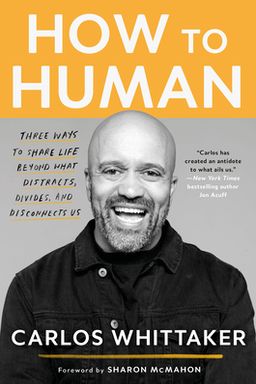
When was the last time you felt truly human—seen, known, and connected beyond screens or labels? In How to Human, Carlos Whittaker invites you to remember what you were designed for: to love deeply, live simply, and show up for others with compassion rather than contempt. He argues that while 2020 exposed how fractured we’ve become, it also revealed our capacity to rebuild humanity by recalibrating how we be, see, and free each other.
The Crisis of Being Human
Whittaker begins with his own story—watching a barbershop full of strangers chase down a child’s kidnapper in 1985. That moment stamped a conviction in him: people instinctively run toward good. But as he shows through the pandemic and political tension of 2020, that reflex has been buried beneath fear, hate, and endless scrolling. We’ve traded presence for opinions, and compassion for comparison. Yet beneath the noise, he insists, remains the spark of divine design—what he calls a “human reflex to unite.”
His central message is clear: humanity doesn’t need to be rebuilt—it needs a reset. Like pressing Control–Alt–Delete on an overloaded computer, we must recalibrate back to our operating system: we were made in the image of God, wired to love, serve, and help others flourish. Whether you’re religious or not, he says, those traits aren’t moral extras—they’re our default mode.
The Three-Part Path: Be, See, Free
The book unfolds across three sections that mirror both a personal and social transformation. To Be human is to rediscover your identity and capacity for love—by being yourself, loving others simply, and recovering awe in a world that runs too fast. To See human means re-learning to notice, listen, and understand others, even—or especially—those you disagree with. And to Free human is to act: releasing others (and yourself) from isolation, shame, judgment, or oppression through intentional, tangible compassion.
These aren’t abstract pillars; they’re sequential steps. You can’t free others if you haven’t seen them, and you can’t see clearly unless you’ve first remembered who you are. As Whittaker puts it: “Be. See. Free. That’s how we human.” Each section blends personal storytelling—funny, messy, spiritual—with lessons from the life of Jesus, who the author portrays not as a distant deity but as “the human who did humanity best.”
Why It Matters Now
Whittaker frames the urgency through real crises. In 2019, thousands prayed online for his daughter’s healing. Months later, some of those same people retracted their compassion when he spoke against racial injustice. What happened? The same humans who had poured out empathy suddenly weaponized belief. For him, these contradictions mark the “Covid coma” that dulled empathy worldwide. Healing begins not with policy but practice: ordinary acts of seeing, touching, and freeing others—what he calls “the small stuff that saves us.”
The book's structure echoes what psychologists and theologians describe as integral transformation—moving from awareness to action (similar to Brené Brown’s progression from vulnerability to courage). Whittaker reminds readers that emotional growth must be embodied. You “love God and love people,” he says, in tiny, visible ways—a blow-up Santa in March, a kind word to a janitor, paying for someone’s coffee.
The Human Revolution Awaits
Ultimately, Whittaker’s invitation is revolutionary in its simplicity. He doesn’t call for cultural war or political dominance. He calls for a recalibration of the soul. The path forward isn’t to out-argue others but to out-love them. Drawing parallels to Jesus’s command in John 15:12—“Love each other as I have loved you”—he shows that being human requires humility, curiosity, and reckless generosity. When we rediscover that, we not only heal relationships but find freedom ourselves.
“You can’t change the world by standing on issues,” Whittaker writes. “You change it by walking with people.”
By the end, How to Human becomes less a book and more a blueprint—a reminder that you already possess what the world needs. It’s about slowing down, seeing people as people again, and daring to be love in a world consumed by fear. If you’ve ever mourned what humanity has lost, Whittaker assures you: it’s not gone. It’s just buried. And it’s time to dig it out together.