
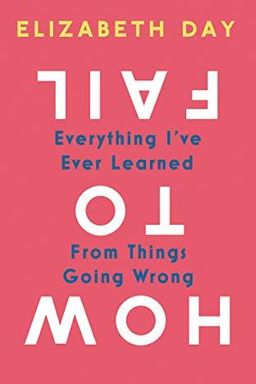
How to Fail cover

How to Fail

by Elizabeth Day

How to Fail by Elizabeth Day uncovers the hidden rewards of failure, transforming mistakes into pivotal life lessons. Through personal stories and others'' experiences, Day reveals how setbacks can become stepping stones to resilience, self-discovery, and authentic living.

Failing Forward: Redefining Success Through Mistakes

What if your greatest failures were actually your most profound teachers? In How to Fail, Elizabeth Day invites you to reimagine what it means to succeed by exploring how falling short—at love, career, friendship, fertility, and even mastering anger—becomes an unexpected path toward authenticity. Drawing from the raw material of her own life and the honesty of her podcast interviews, Day reframes failure as a necessary companion on the journey to self-knowledge, not a shameful detour from it.

Day argues that failure isn’t the absence of success—it’s its foundation. From her failed marriage and IVF treatments to being ghosted in love and humiliated in work, she contends that the moments society labels as ‘failures’ are what shape courage, resilience, and integrity. Her message is that success without self-understanding is hollow. True accomplishment, she believes, emerges when you accept imperfection and allow vulnerability to guide growth.

The Courage to Redefine Success

In a culture obsessed with curated perfection—Instagram filters, LinkedIn promotions, and relentless positivity—Day’s philosophy feels radical. Like Brené Brown’s work on vulnerability, she argues that openness about mistakes is an act of courage. For Day, talking about failures isn’t therapy by another name; it’s rebellion against a world that glorifies achievement while punishing humanity. She suggests that admitting failure reconnects us to something bigger: compassion, humility, and empathy.

Her podcast How to Fail with Elizabeth Day, where celebrities reveal their private flops, became an overnight success precisely because failure, though universal, rarely receives honest airtime. It’s the messy, unfiltered stories of heartbreak, self-doubt, and rejection that make people feel less alone.

The Anatomy of a Failure

Every failure Day discusses has layers—emotional, practical, even philosophical. She isn’t simply cataloguing missteps; she’s dissecting how people respond to them. Each chapter functions as a case study: failing at relationships, at career milestones, at fitting in as a child, at managing anger, or even at embodying society’s beauty ideals. These failures collectively tell a larger story—the evolution of a woman learning how to live by her own definition rather than by external validation.

She uses her failed marriage, for example, to illuminate how people-pleasing can mask emotional detachment. In exploring fertility challenges, she confronts how female grief is often silenced when it doesn’t conform to cultural ideals of motherhood. In reflecting on episodes of anger, she examines how women’s emotions have been historically demonized—a critique echoing Rebecca Traister’s Good and Mad.

Learning Through Honest Reflection

Day draws as much on the authenticity of her guests as on her introspection. Writers like Jessie Burton admit to mistaking academic approval for self-worth; Phoebe Waller-Bridge jokes about disastrous dates that later became comic gold. This grounded honesty underscores the book’s central insight: that wisdom cannot exist without fallibility. The difference between collapse and evolution lies in how you interpret what happens. Failure stops being a dead end and becomes a mirror that reveals who you are when everything else falls away.

Her tone—wry, conversational, self-deprecating—feels like having coffee with an intelligent friend who’s been through hell and lived to laugh about it. And what makes it powerful is the inclusivity: she doesn’t speak as a guru but as a participant in the human experiment. Her motto, learned through her own heartbreak and professional mishaps, could be summed up simply: “Fail fast. Fail often. Just don’t fail to learn.”

Why It Matters

The question Day implicitly asks every reader is, “What would you attempt if you weren’t so afraid to fail?” Her response is a roadmap for living with bravery. In a world that moralizes success, she insists that growth demands discomfort and that your most painful stories may someday become your most empowering narrative. How to Fail isn’t a lament—it’s an anthem for imperfection. By the end, failure emerges not as an ending but as the beginning of a more grounded, realistic, and compassionate life.


The Lessons Hidden in Early Failures

Day’s journey begins in childhood, where the first stings of not belonging and not measuring up left deep marks. Growing up in Northern Ireland during the Troubles, she experienced dislocation—an English girl in a divided culture where even accents were political. Her failure to fit in at her Belfast school taught her early how difference can isolate but also sharpen empathy. Being mocked for her English voice and awkward clothes planted the seeds of what would later become her creative voice as a novelist and interviewer.

Failing to Fit In

As a child moved suddenly across borders, Day obsessively tried to belong. Yet her accent, manners, and curiosity marked her as other. Instead of turning inward in silence, she started to observe—a skill that evolved into her writer’s sensibility. The humiliation of being the outsider who couldn’t crack the playground code taught her something adult life rarely does: not belonging can be a strength. It cultivates empathy, independence, and perspective. The very traits that once made her a misfit became the foundation of her professional voice.

But there was a cost. The young Day learned to seek safety in compliance. Her default response to rejection became people-pleasing—an adaptive behavior that reappears later as self-erasure in relationships and work. What seemed like survival became a pattern of self-betrayal.

Early Lessons on Shame and Self-Worth

Day remembers being mocked by classmates and internalizing the idea that “difference equals deficiency.” This sense of wrongness haunted her through adolescence. She became hyper-aware of how others perceived her, a mental loop of self-monitoring that she would later unlearn in therapy. Yet even this early failure had a hidden gift: it forced self-definition. Without the comfort of group affirmation, she had to figure out who she was alone—a skill that would become crucial after divorce and professional crises.

This mirrors psychologist Carl Rogers’s idea that authenticity emerges not when people approve of us, but when we stop hiding behind personas to gain that approval. Day’s school failures, though painful, were setting the stage for honesty.

Transforming Pain Into Purpose

By the time she returned to England for boarding school, Day had learned the art of adaptation—first to survive, then to thrive. She excelled academically but felt hollow inside. Her story illustrates how achievement can mask insecurity when self-worth depends on external praise. Yet in tracing this early heartbreak—the mocking, the loneliness, the hidden tears—Day invites readers to confront their own origin stories of not-belonging. Because empathy, she suggests, is born not from triumph, but from rejection. The failures we hide in childhood often become the raw material for our adult strength.


Unlearning Perfection in Love and Relationships

Few chapters in Day’s memoir resonate as deeply as her exploration of romantic failure. Her honesty about a collapsed marriage, heartbreak, and unfulfilled hopes of motherhood exposes how perfectionism poisons intimacy. She unpacks how her lifelong pattern of people-pleasing—born of early exclusion—translated into relationships where she performed rather than connected.

Marriage as a Mirror

In her first marriage, Day believed love meant being endlessly accommodating. She minimized her needs, thinking unconditional service would secure affection. Instead, it bred invisibility and resentment. Her husband—a high-achieving, older professional—became the center of gravity, and Day revolved around him. When the marriage dissolved, she realized she had confused harmony for happiness. Her failure wasn’t the divorce itself but the years spent ignoring her voice. “If you don’t say what you need,” she writes, “it’s hard for people to give it to you.”

Day’s candor recalls Cheryl Strayed’s essays on radical self-honesty: to save your life, you must stop pretending. The end of her marriage forced her to stand alone, uncamouflaged by coupledom, and rediscover her own desires separate from others’ expectations.

Dating and the Myth of Control

After divorce, Day entered a bewildering dating landscape of apps, ghosting, and emotional volatility. Her anecdotes—like the man who brought a camp-bed to her flat or those who feared commitment—offer both humor and heartbreak. Each encounter became a small experiment in boundaries. She discovered that trying to manage love through logic or strategy never works. Love, like failure, resists control.

Her realization—that solitude can be more healing than bad companionship—frees her and, by extension, the reader from the cultural compulsion to be coupled. In losing relationships, Day recovers self-respect. Only when she stops performing “Cool Girl” perfection does she meet J, a partner who values her wholeness instead of her compliance.

The Power of Self-Acceptance

Day’s story reminds you that romantic failure isn’t evidence of unlovability. It’s a measure of your capacity to evolve. Every painful ending—her divorce, her younger boyfriend’s sudden departure—teaches her that self-esteem must precede love. She redefines adulthood not as settling down but as learning to live with integrity. For readers conditioned to equate worth with relationships, Day’s journey feels liberating: the truest partnership might be the one you form with yourself.


Failure at Work: Saying No to Success Scripts

Day’s professional story is a cautionary tale for anyone who confuses productivity with purpose. As an ambitious journalist, she worked for major British newspapers—including the Observer—for eight years, dutifully saying yes to every assignment. From interviewing celebrities to covering grisly feasts with a “roadkill chef,” she performed competence but felt caged inside someone else’s idea of success.

The Trap of Competence

At first glance, her career looked enviable: prestigious job, public recognition, social clout. Yet the real failure lay in her inability to set boundaries. Like many women navigating male-dominated workplaces, she mistook obedience for reliability. Always agreeable, always efficient, she became indispensable—but invisible. Her “failure” at negotiating for advancement was systemic too: studies show women are less likely to ask for raises and more likely to do uncredited “office housework.”

When she realized her title and salary hadn’t changed in nearly a decade, Day’s confidence cracked. The shock catalyzed her rebellion. She left the safety of salaried prestige and bet on herself as a novelist and freelancer. It was terrifying—but freeing.

Learning from Howard Pink

The turning point came through fiction. While writing her novel Paradise City, Day channeled her frustration into a character named Howard Pink, an unapologetic, swaggering entrepreneur modeled partly on men she had interviewed. “What would Howard do?” became her mantra. In adopting his fearless self-belief—minus the ego—she discovered assertiveness. She learned to drop apologetic email openers, stop over-explaining, and treat her time as valuable.

Paradoxically, leaving stability led to more success. She wrote bestselling novels and launched a podcast that reached hundreds of thousands of listeners. By refusing to conform to institutional scripts, Day learned a deeper truth: authenticity is more sustainable than overperformance.

Redefining Professional Success

Day’s reflection challenges society’s worship of workaholism. Professional failure, she suggests, isn’t being fired or making mistakes—it’s betraying your creative voice for approval. Real success begins when you stop waiting for external validation. Her leap from newsroom employee to independent creator illustrates how courage, not compliance, builds a meaningful career.


Motherhood, Infertility, and the Myth of Having It All

One of the book’s most searing sections chronicles Day’s struggle with fertility. After two heartbreaking IVF cycles and a miscarriage, she confronts both her grief and society’s punitive expectations of womanhood. Her candor humanizes an experience often silenced by shame. She exposes how medicine, language, and culture conspire to make women feel defective for failing at reproduction.

The Medical Machine

Day’s descriptions of clinics and cold examinations reveal not only the physical invasiveness of IVF but the gender bias underlying fertility treatment. Most doctors she encounters are male; their language clinical and patronizing. They label wombs “inhospitable” or reproductive organs “incompetent,” turning biology into a moral verdict. Her anger at this system becomes political—why are women still defined by their capacity to bear children?

From Personal Grief to Collective Empathy

After her miscarriage, Day writes that silence was “particularly difficult to bear.” Well-meaning friends minimized her loss or tried to fix it with trite optimism. Slowly, she realized that healing required speaking the unspeakable. By writing about her experience, she gave language to countless women who have lived similar heartbreaks in isolation. Like Chrissy Teigen or Meghan Markle sharing their stories publicly, Day turns private pain into public solidarity.

She reclaims childlessness not as tragedy but as another valid way to live fully. The myth of “having it all,” she argues, is a capitalist and patriarchal fantasy that traps women in comparison. It’s possible to have purpose without motherhood, wholeness without offspring. Her identity as a writer and loving friend becomes proof that creation takes many forms.

A New Kind of Womanhood

Day concludes this chapter with fierce compassion: women who don’t have children—by choice or by circumstance—deserve joy, respect, and representation. She joins a growing lineage of female authors (like Elizabeth Gilbert and Rebecca Solnit) who challenge the assumption that motherhood equals meaning. Far from a failure, her childlessness becomes a declaration of self-definition: life without children is still full, rich, and worthy.


Anger, Gender, and the Power of Owning Emotion

Day’s essay on anger shifts the book from memoir into social critique. After a devastating breakup with a younger man who wasn’t “ready” for children, she traces how her grief morphs into fury—not just at him, but at a culture that permits male indecision while penalizing female desire. This chapter becomes both personal healing and feminist manifesto.

Women’s Rage as Rebellion

Historically, society pathologized female anger: witches were burned, hysterics confined to asylums. Quoting authors like Rebecca Traister and Betty Friedan, Day argues that anger in women has long been treated as madness rather than moral clarity. Yet anger, she insists, is a natural and necessary response to injustice. “Female anger is fuel,” she writes. “It’s power.”

By recognizing her own suppressed rage, Day transcends the polite self-containment that once defined her. She comes to see anger not as dangerous but as catalytic—the spark for creativity, activism, and change. Like Phoebe Waller-Bridge’s rebellious heroines or Beyoncé’s “Lemonade,” Day channels outrage into art.

Reframing Emotion as Wisdom

What distinguishes her insight is nuance. She doesn’t romanticize fury or advocate perpetual indignation. Instead, she teaches how to transform “hot” anger into “cool” clarity. Once she acknowledged her anger, she could act consciously instead of reactively. The breakthrough came when she realized: anger isn’t a weakness to hide; it’s information to heed.

Empathy and Anger Can Coexist

Day closes with a reconciliation: empathy and anger are not opposites but allies. To be emotionally awake is to contain both compassion and righteous fury. When women stop apologizing for their intensity, they reclaim not only their voices but their values. As she puts it, “We can be angry. We can be honest about it. And we can use it as fuel, motherfuckers.”


Friendship and the Art of Being Seen

For Day, friendship is the quiet thread stitching the book together. Where romance falters, friendship endures. She credits her friends for rescuing her after divorce, miscarriage, and heartbreak, proving that chosen families can offer the deepest love. This chapter reads like an ode to the sustaining power of friendships between women.

From Childhood Loss to Adult Connection

The heartbreak of losing a childhood best friend to someone cooler—her first social betrayal—taught Day that relationships change, and love must breathe to survive. As an adult, she applies that wisdom to practice non-possessive friendships: allowing people space without taking their distance as rejection. True friendship, she believes, contains freedom, not obligation.

In adulthood, after years of investing emotional energy in partners, she realizes her friends were her constants. They were the ones who answered late-night calls, offered spare rooms, and reminded her of her worth. Friendship, she concludes, is not secondary love—it’s the blueprint for how to love well.

Friendship as Feminist Act

Day’s portrayal parallels Elena Ferrante’s and Phoebe Waller-Bridge’s celebration of female companionship as political solidarity. By centering emotional truth over societal aspiration, women transform friendship into resistance against isolation. It’s about being witnessed, not polished; held, not judged.

The Long Game of Loyalty

The emotional climax of this section is Day reconnecting with her childhood friend Susan. Decades later, their bond remains intact, softened by mutual acceptance. That return becomes a metaphor for healing: time doesn’t erase loss, but friendship—like failure—can evolve into forgiveness. In seeing and being seen by true friends, Day reminds you that belonging isn’t about perfection; it’s about presence.


How to Succeed at Failing

The book’s afterword crystallizes Day’s central argument: failure is not an endpoint but an essential process of living. Drawing on philosopher Eckhart Tolle and stoic wisdom, she proposes that suffering becomes transformative when we take responsibility for our interpretation of it. You cannot control outcomes, she says, but you can decide how to frame them. That choice determines resilience.

Owning Your Narrative

When Day recorded her own episode of her podcast, she feared that public vulnerability would make her look self-indulgent. Instead, listeners flooded her inbox with gratitude. Strangers thanked her for voicing feelings they couldn’t articulate. The experience proved her thesis: honesty creates connection. Shame shrinks in the light of empathy.

Her insight recalls E.M. Forster’s injunction to “only connect.” For Day, connection—the ability to share failures without fear—is the antidote to modern loneliness. We become more humane when we refuse to curate ourselves into perfection.

Resilience as a Practice

Day adopts a stoic stance: both victory and defeat are transient. The challenge is to interpret experiences not as “good” or “bad” but as data in the experiment of being alive. As writer James Frey tells her, “It just is what it is.” This radical neutrality frees us from guilt and fear. Accepting failure as inevitable—while insisting on learning from it—transforms it into liberation.

The Growth Beyond Perfection

In the end, How to Fail argues for a new metric of success: not money, status, or romance, but the courage to live authentically. To fail well is to refuse stagnation. As Day’s own life attests—from heartbreak to bestsellerdom—mistakes don’t define you; they reveal you. The task isn’t to avoid falling, she concludes, but to fall with open eyes, learn the terrain, and rise with wisdom intact.

Dig Deeper

Get personalized prompts to apply these lessons to your life and deepen your understanding.

Go Deeper

Get the Full Experience

Download Insight Books for AI-powered reflections, quizzes, and more.