
Idea 1
How to Create a Happier, More Harmonious Life and Job
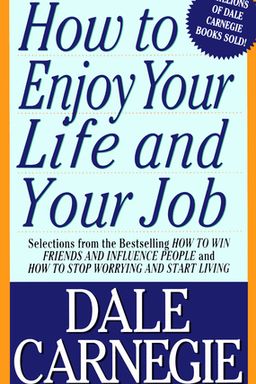
Have you ever wondered why some people seem to radiate contentment and enthusiasm—at work and in life—while others struggle against worry, boredom, and strained relationships? Dale Carnegie, one of the most influential self-improvement teachers of the twentieth century, believed that happiness and success come not from external circumstances, but from mastering how we think about ourselves, our work, and the people around us. How to Enjoy Your Life and Your Job distills his timeless insights into an accessible guide for creating a more joyful, peaceful, and productive life.
At its core, this book argues that happiness is not handed to us—it’s cultivated. You can transform your everyday experience by changing your perspective and developing emotional intelligence. Carnegie contends that the keys to satisfaction lie in two complementary domains: managing yourself (through confidence, relaxation, and gratitude) and connecting effectively with others (through empathy, appreciation, and tact). Drawn from his bestselling classics How to Win Friends and Influence People and How to Stop Worrying and Start Living, this volume presents a condensed philosophy of self-mastery and positive human interaction.
Mastering Yourself: The Foundation of Inner Peace
Carnegie begins by confronting a fundamental truth: most of us spend the majority of our waking hours on the job, so our attitude toward work largely determines the texture of our lives. If we are bored, worried, or resentful at work, that negativity seeps into everything else. But if we approach our days with enthusiasm and gratitude, work becomes not a burden but a source of purpose. He suggests cultivating four habits that prevent fatigue and worry: clear your desk except for what matters most, do things in order of importance, solve problems promptly, and delegate instead of trying to do everything yourself. These simple rules lay the groundwork for energy and effectiveness.
Carnegie also demystifies what really makes us tired—not work itself, but our attitude toward it. Boredom, resentment, and anxiety drain more energy than physical exertion. By learning to relax physically and mentally—letting go of unnecessary tension, practicing calm focus, and approaching tasks with genuine interest—you can achieve what William James called the “Gospel of Relaxation.” This freedom from strain replenishes vitality and joy.
Finding Yourself and Appreciating What You Have
Another cornerstone of Carnegie’s approach is authenticity. “Find yourself and be yourself,” he urges. The author shares stories of people like Edith Allred, whose life transformed the moment she stopped imitating others and accepted her uniqueness. From Hollywood dreamers trying to be “second-rate Lana Turners” to Dale Carnegie himself imitating great actors early in his career, he shows that success begins only when we play our own part in life’s orchestra. You are “something new in this world,” he reminds us—scientifically and spiritually unique. To live happily, you must develop the gifts that no one else can offer.
Alongside individuality comes gratitude. In the famous story “Would You Take a Million Dollars for What You Have?”, Carnegie invites you to calculate the worth of your eyesight, limbs, hearing, or loved ones—and realize that your existing blessings are beyond price. He cites tales of people finding joy even in suffering: Borghild Dahl, nearly blind for fifty years, rejoiced like a child when surgery restored her vision, marveling at rainbows in soap bubbles and sparrows in the snow. Her gratitude, Carnegie argues, puts our daily complaints to shame.
Mastering Relationships: The Art of Human Connection
Carnegie famously transformed social psychology with eight simple words: “Don’t criticize, condemn, or complain.” In the second half of the book, he applies this principle to every area of human contact. Most people, he explains, are driven by a deep “craving to be appreciated.” If you make others feel valued, you unlock their best selves and build cooperation that no argument can destroy. Whether you’re managing employees, raising children, or dealing with critics, appreciation and tact change everything.
He provides vivid examples—from Abraham Lincoln’s restraint with his generals to Charles Schwab handing cigars to workers ignoring “No Smoking” signs—to show that respect and kindness accomplish what rules and reprimands never can. For Carnegie, leadership is the art of making others feel important, not small. Every person you meet, he writes, “is superior to you in some way; in that, learn of him.” When you begin in a friendly way, listen sincerely, and appeal to people’s better motives, cooperation becomes natural.
Why These Ideas Matter
In an age of stress, distraction, and disconnectedness, Carnegie’s ideas remain strikingly modern. His advice anticipates the findings of modern psychology—positive reinforcement works better than punishment (B.F. Skinner), gratitude increases well-being (Robert Emmons), authenticity fuels motivation (Carl Rogers). But his genius was in translating those truths into everyday, actionable language. Instead of preaching theory, he gives you tools: smile more, praise sincerely, think less about yourself and more about others. These habits, simple yet profound, transform relationships and restore peace of mind.
By combining self-mastery with social intelligence, How to Enjoy Your Life and Your Job sketches a philosophy of practical optimism. You can’t always control circumstances, but you can control your reaction to them. You can choose to see your work, your colleagues, and your life as a chance to express your best self—to be, as Douglas Malloch’s poem says, “the best of whatever you are.” That, Carnegie insists, is the surest path to enjoyment—not only of your job, but of your entire life.