
Idea 1
The Pattern Recognition Mind
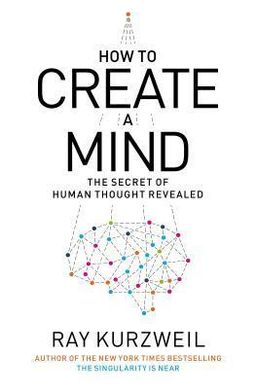
How does intelligence arise from the biological fabric of the brain? In How to Create a Mind, Ray Kurzweil argues that consciousness, thought, and creativity emerge not from mysterious processes but from a simple principle repeated billions of times: the Pattern Recognition Theory of Mind (PRTM). According to Kurzweil, your neocortex is a layered hierarchy of pattern‑recognition modules that learn, predict, and generalize from experience. These modules are simple, but through massive repetition and interaction, they generate the complex behaviors we call intelligence.
The neocortex as a uniform engine
Kurzweil builds on Vernon Mountcastle’s discovery that the neocortex has a uniform six‑layer architecture. This uniformity suggests that all cognitive functions—vision, language, music, reasoning—use variations of the same algorithm. Neuroscientists like Henry Markram (Blue Brain) and Marina Bedny (MIT) have confirmed this by showing areas of cortex can assume new roles when inputs change, revealing a flexible, general‑purpose network rather than countless specialized circuits.
Each cortical column resembles a miniature learning engine that matches inputs to stored templates and transmits activations upward or predictions downward. Billions of these small recognizers operate in parallel, creating a cascade in which patterns recognize subpatterns and make probabilistic inferences about what comes next.
How hierarchical recognition works
You can imagine reading a word: your lower‑level modules detect edges and curves; mid‑levels assemble them into letters; higher‑levels form words, then phrases. Each layer not only passes evidence upward but also sends expectations downward, lowering thresholds where predicted features should appear. That’s why when you anticipate a familiar phrase, you can decipher messy handwriting or understand speech in noise—the cortex is predicting what should be there.
This two‑way system allows autoassociation (you recognize a face from a single feature) and invariance (you identify objects regardless of size, rotation, or lighting). Recognition is not binary; it’s probabilistic and tolerant, continuously updating certainty as signals travel across levels.
From biology to engineering
Kurzweil’s insight extends from neuroscience to computation. Pattern hierarchies resemble hierarchical hidden Markov models (HHMMs), which his teams used in speech and OCR systems. HHMMs represent exactly the nested sequences observed in cortical processing—phonemes, words, phrases—and perform best when models include size, variability, and probability parameters like biological modules do. This synthesis of biology and engineering makes reverse‑engineering the brain not a mystical challenge but a design problem.
Learning, memory, and continuity
In Kurzweil’s view, learning is simply storing new hierarchical patterns. The hippocampus acts as a temporary index to integrate new experiences into cortical memory. Repetition and novelty determine permanence: memories with redundancy and emotional significance spread across more modules and persist longer; routine experiences fade as overlap saturates learning capacity. Working memory—aided by the thalamus—lets you consciously traverse lists and sequences, moving from goal to subgoal to step, a process you experience as reasoning.
Emotion, motivation, and creativity
The neocortex doesn’t act alone. Older brain systems—the thalamus, amygdala, insula, and nucleus accumbens—supply attention, fear, reward, and drive. Emotions modulate the firing thresholds and learning rates of cortical modules, effectively telling your cerebral pattern engine what matters. From these interactions arise love, ambition, and artistic passion. Creativity itself emerges when patterns from different hierarchies cross‑link, forming novel metaphors and ideas—a process amplified during sleep and dreaming when inhibition relaxes.
Building a digital neocortex
Kurzweil argues that because the cortex’s algorithm is discoverable, you can emulate it digitally. By combining sparse coding (vector quantization), HHMM learning, and evolutionary optimization, engineers can construct artificial recognizers that grow hierarchies from experience. Hybrid systems like IBM Watson or Google Voice already demonstrate this trajectory—combining rules with massive learned statistics. As computation scales exponentially (Kurzweil’s Law of Accelerating Returns), digital neocortices will soon match biological ones in power.
Philosophical and ethical frontiers
These models have profound implications. If consciousness and identity rest on pattern continuity rather than biological substrate, then a mind can persist across media through gradual neural replacement or cloud‑linked augmentation. The challenge becomes ethical, not technical: how to ascribe rights, preserve identity, and guide goals in synthetic minds. Kurzweil’s pragmatic answer is behavioral—accept any entity as conscious if it convinces you emotionally and socially through its words and actions.
Core takeaway
Intelligence emerges from hierarchical pattern recognition and prediction. Once you understand that mechanism, replicating and extending it—digitally or biologically—becomes an engineering problem with philosophical consequences for identity, creativity, and ethics.