
Idea 1
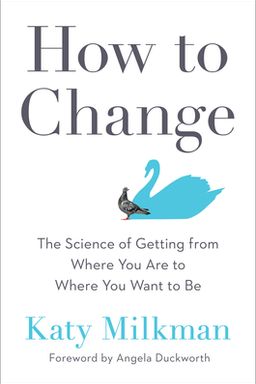
The Science of Getting from Where You Are to Where You Want to Be
Why do our best intentions so often derail when we try to change our habits—whether that means eating healthier, exercising more, or staying focused at work? In How to Change, behavioral scientist Katy Milkman argues that the real challenge isn't knowing what we want to change; it's learning how to overcome the specific psychological obstacles that stand in our way. Her research shows that there’s no one-size-fits-all solution: just as tennis coach Brad Gilbert helped Andre Agassi fix his game by tailoring his strategy to each opponent, you must craft a personalized approach to your own barriers.
Milkman’s central claim is simple but transformative: success comes from understanding your internal opponent—whether that’s impulsivity, procrastination, forgetfulness, laziness, lack of confidence, or pressure to conform—and then applying science-backed tactics designed specifically to counteract that adversary. She turns a complex body of psychological research into an engaging, actionable guide that feels like having a behavioral scientist as your personal coach.
Understanding the Personalized Path to Change
Just as Agassi’s career soared when he stopped forcing himself to play like everyone else and instead exploited what made him unique, Milkman shows that effective behavior change requires personal diagnosis. You don’t fail because change is impossible; you fail because you’re applying the wrong strategy to your particular obstacle. For instance, if you struggle with forgetfulness, a commitment contract won’t help—but cue-based planning might. If you’re lazy, setting clever defaults and habitual systems will outperform sheer willpower. This approach reframes personal transformation as an engineering challenge rather than a moral one.
The Seven Core Obstacles
Milkman divides the journey of change into seven psychological roadblocks: getting started, impulsivity, procrastination, forgetfulness, laziness, confidence, and conformity. Every chapter treats each obstacle as a separate opponent on the tennis court of life and presents empirically proven tactics to conquer it. For example, “Getting Started” examines the Fresh Start Effect—moments like New Year’s Day or birthdays when you feel capable of starting anew. “Impulsivity” teaches how to harness temptation through bundling pleasure with effort. “Procrastination” exposes the power of commitment devices, while “Confidence” shows how giving advice can boost self-belief instead of eroding it.
From Insight to Action
What makes Milkman’s work distinctive is its balance between academic rigor and practical accessibility. Drawing on hundreds of field experiments—from Google to the U.S. Air Force Academy and nonprofit organizations—she reveals how small interventions like timing reminders, setting defaults, or changing peer groups can yield enormous results. Her collaboration with psychologist Angela Duckworth at the Behavior Change for Good Initiative ensures every strategy rests on empirical data, not motivational slogans.
Why This Matters
Milkman emphasizes that personal change is not a sprint but the management of a chronic condition—one requiring continued attention. The obstacles to change are built into human nature, so the right science-based tools must become lifelong habits. Her goal is not just to motivate you but to help you design systems that make good behavior the path of least resistance. In this way, the book offers both hope and realism: lasting transformation is possible, but it demands that you engineer your environment and routines in line with how your brain actually works.
In the chapters that follow, you’ll learn how to harness fresh starts to begin anew, how to make healthy behaviors instantly gratifying, how to tackle procrastination with commitment devices, how to outsmart forgetfulness with cue-based planning, how to turn laziness into an asset through defaults and habits, how to bolster confidence by giving rather than receiving advice, and how to use social forces for good without falling prey to conformity. Together, these insights form a master plan for lasting behavior change—a guide for getting from where you are to where you want to be.