
Idea 1
Unlocking Your Greatness by Working on the Hard Things
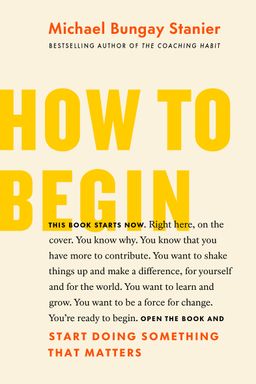
When was the last time you began something that truly mattered—a project that stretched you, scared you a little, and yet filled you with purpose? In How to Begin, Michael Bungay Stanier (often known simply as MBS) poses this exact challenge. He argues that the way we unlock our greatness is not through easy wins or modest progress, but by working on the hard things. This isn’t about chasing success for its own sake, but about choosing a “Worthy Goal”—work that is thrilling, important, and daunting enough to change both you and the world around you.
MBS writes with infectious humor and grounded wisdom, guiding you to move from vague ambition to concrete commitment. Drawing from psychology, leadership theory, and storytelling, he lays out a practical process to help you find clarity about what matters most, commit wholeheartedly, and cross the threshold into meaningful action. He combines personal stories—from caring for his father in his last days to learning through failure at work—with insights from thinkers like Brené Brown, Seth Godin, and Jacqueline Novogratz. The result is a book that feels both philosophical and utterly doable.
Two Ambitions That Amplify Each Other
At the heart of the book is a call to be ambitious twice over: ambitious for yourself and ambitious for the world. To be ambitious for your life means striving toward being your Best Self—becoming more creative, brave, and fulfilled. To be ambitious for the world means choosing goals that give more than they take. When these two types of ambition converge, transformation happens. You grow personally while contributing publicly.
MBS warns against letting fear, social expectation, or complacency shrink your ambitions. He reminds you, quoting his wife’s note at Oxford—“Life is not a dress rehearsal”—that now is the time to act. His process meets you wherever you are: whether you feel stuck, overwhelmed, privileged, marginalized, or unsure what to begin. There’s no “right moment,” only the moment you choose to start.
The Three-Part Journey: Set, Commit, Cross
The entire book is structured as a journey made up of three parts—Set a Worthy Goal, Commit, and Cross the Threshold. Each part mirrors not just productivity advice but a deeper philosophical transformation. “Set” means finding a goal that meets the triple test of being Thrilling, Important, and Daunting. “Commit” means facing the comfort and fear keeping you stuck, weighing the prizes and punishments of both staying put and moving forward. “Cross” means starting in earnest—with humility, strategy, and openness to learning.
This process is human-centered but rigorous: it helps you name the tendencies that hold you back (your “Mosquitoes”), examine past false starts, and say yes only when you can name what you’ll say no to. Every section contains exercises to help you move from ideas to lived experience, whether it’s listing your essential human needs, naming your Best Self through “This/Not That,” or envisioning the people you’ll take on the journey with you—your “Band.”
A Worthy Goal as Catalyst for Growth
A Worthy Goal isn’t just something you achieve; it’s something that changes you. MBS draws heavily from psychologist Robert Kegan’s theory of adult development, comparing growth to moving from “You+” (incremental improvement) to “You 2.0” (a leap to the next level of consciousness). That leap often requires breaking, discomfort, and real courage. He invokes the Japanese art of kintsugi—repairing broken pottery with golden lacquer—to illustrate how our scars and setbacks can make us more valuable, not less. To grow, we need to face the hard things, aware that “wisdom enters through the wound.”
The Eulogy Test and the Legacy of Service
One of the most poignant ideas in the book emerges near its end, when MBS reflects by his dying father’s bedside. He speaks of the “Eulogy Test” —asking who you’ll have been, what words people will use to describe your way of living and serving others. His father, Robert Stanier, embodied life as service: building community, practicing people-centered leadership, and showing quiet generosity. That legacy becomes a model for Worthy Goals that build family, community, and courage. The book closes with a powerful quote from Rainer Maria Rilke’s poem “The Man Watching”: “Winning does not tempt him. His growth is: to be the deeply defeated by ever greater things.” For MBS, a life well lived is one spent wrestling with angels—the hard challenges that reveal your own greatness.
Why It Matters
In a world overwhelmed by hustle culture and performative success, How to Begin offers an antidote: slow, deep ambition anchored in purpose. It reminds you that being ambitious isn’t selfish—it’s how you make the most of your “one wild and precious life” (as poet Mary Oliver wrote). This book is both process and philosophy, both manual and mirror. It shows that the meaningful beginnings we yearn for—creative projects, leadership transitions, personal reinventions—start not with certainty, but with courage and clarity to begin.