
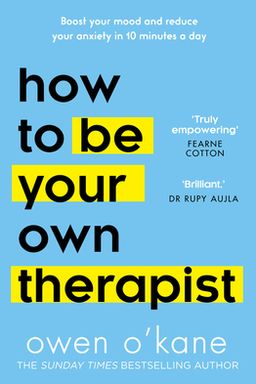
How to Be Your Own Therapist cover

How to Be Your Own Therapist

by Owen O'Kane

How to Be Your Own Therapist empowers you with transformative self-therapy techniques distilled from cognitive behavioral therapy and mindfulness. In just ten minutes a day, these practices help you shed unhelpful habits, boost your mood, and reduce anxiety, guiding you toward a more fulfilling, balanced life.

Harnessing the Therapist Within You

Have you ever wished you could talk to someone who could untangle the knots in your mind, help you see clearly, and feel lighter—without the cost or waitlists of traditional therapy? In How to Be Your Own Therapist, Owen O’Kane argues that therapy isn’t only for clinical rooms—it’s a life skill you can learn and practice yourself. Drawing on decades of experience as a psychotherapist and his dual background in medicine and psychology, O’Kane contends that anyone can develop the awareness, techniques, and mindset required to become their own therapist. His book presents both a deep dive into how therapy works and a toolkit for everyday mental maintenance.

At its core, How to Be Your Own Therapist is a guide to learning the essence of what therapists do: understanding your story, making sense of your struggles, and applying practical methods of transformation. O’Kane’s structure mirrors a course of therapy itself—first establishing foundations, then moving into daily applied practice. Part One builds insight into who you are and how you became that way; Part Two teaches a concise but powerful ten-minute self-therapy routine to keep your mental wellbeing in check every day. In doing so, it helps demystify therapy so it feels both approachable and empowering.

Reframing Therapy as Courage, Not Weakness

For O’Kane, one of therapy’s greatest obstacles is stigma. He grew up in Belfast during The Troubles, in a culture where men were taught to suppress emotion and ignore mental strain. The notion that therapy is for the broken or weak is false, he insists—it is an act of bravery. He candidly shares that his own therapy was life-changing, helping him resolve deeply internalized shame related to his sexuality and upbringing. This vulnerability sets the tone for a book that invites readers to confront their own fears about seeking help or acknowledging difficulty.

O’Kane positions therapy as emotional maintenance—like brushing your teeth or servicing a car. It’s not about fixing what’s wrong but strengthening what’s right. “Everyone would benefit from therapy,” he writes, because everyone faces times of conflict, uncertainty, or loss. You don’t need to wait until life collapses to start taking care of your inner world.

The Two-Part Blueprint

The book’s structure acts as a psychological training program. Part One, made up of five chapters, takes you through what he calls the “foundation work”—exploring your story, understanding why your patterns exist, clarifying what you want from your life, and learning essential therapeutic mechanisms. This section teaches you to connect how past experiences shape current thoughts, emotions, and behaviors. It’s about putting the puzzle pieces together to create clarity.

Part Two transitions into the “maintenance phase”: a ten-minute-a-day practice split into three segments—morning readiness, midday steadiness, and evening reflection. Each segment serves a purpose: grounding yourself emotionally, keeping steady through the day, and resetting before sleep. Just as physical fitness depends on routine effort, mental fitness thrives on consistency and small daily interventions.

Therapy Demystified: The Three-Layer Cake

To help readers understand how therapy works, O’Kane uses a simple analogy: the mind as a three-layered cake. The top layer contains your thoughts and emotions—the surface symptoms most of us notice. Below that, the middle layer houses your learned rules and beliefs: often inherited from family, religion, or culture, they dictate how you think you “should” live. The deepest layer consists of your foundation core beliefs—the bedrock ideas about safety, lovability, self-worth, and hope. These beliefs shape your entire worldview. Therapy works by addressing all three layers, not just the top.

When your sense of safety or self-worth is shaken, your thoughts spiral and emotions overwhelm. The therapeutic process helps reprogram those layers so you can respond to life’s challenges in healthier, more flexible ways. It’s both science and art—drawing from cognitive behavioral therapy (CBT), compassion-focused therapy (CFT), mindfulness, and interpersonal psychotherapy (IPT)—yet O’Kane translates all of it into everyday language and habits that anyone can use.

Meet Your Inner Therapist

Central to the book is O’Kane’s belief that every person possesses an inner therapist—they just haven’t been taught how to access it. He encourages readers to bring curiosity rather than judgment to their thoughts, to investigate painful emotions instead of suppressing them, and to practice self-compassion as consistently as self-criticism has been practiced. Being your own therapist doesn’t mean doing it alone when you need professional help; it means learning skills used by therapists—writing, reframing, regulating emotions, and reflecting—so you can manage life more effectively.

He emphasizes that therapy is active, not passive. You must be willing to turn up, work through discomfort, and act on insights. It’s not about talking endlessly but about changing how you think, behave, and relate to yourself. O’Kane’s tone throughout is reassuring but firm: growth takes courage, patience, and daily effort.

Why These Ideas Matter

Mental health is now at the forefront of public consciousness, yet accessible therapy remains scarce. O’Kane’s book lands in that gap between clinical science and lived daily life. By teaching readers the psychology of therapy through plain language, he democratizes healing. The ability to analyze your own story, identify faulty beliefs, and work towards change empowers you far beyond the therapy room.

Much like Brené Brown’s work on vulnerability or Jon Kabat-Zinn’s mindfulness teachings, O’Kane’s model is compassionate realism—it doesn’t deny pain, but it insists that transformation is possible if you face it directly. His storytelling and humor make heavy psychological material feel approachable. He reminds you, repeatedly, that therapy is not about becoming perfect but becoming more kind, aware, and authentic. When you learn to harness the therapist within you, life can stop being an emergency and start being an adventure in self-understanding.


Understanding Your Story

At the heart of therapy, according to Owen O’Kane, lies the simple yet profound act of telling your story honestly. Most people, he says, have multiple versions of their life story—rehearsed ones told at dinner parties, strategic ones told at work, and sanitized ones shared with friends. But your real story, the one that carries emotion, vulnerability, and truth, is rarely spoken aloud. Becoming your own therapist starts with dismantling those rehearsed narratives to uncover the authentic one.

Why Your Story Matters

O’Kane writes, “Your story is your power.” It’s the raw foundation for all psychological insight. When you begin to tell your story—warts and all—you discover patterns connecting past events with present struggles. He compares this process to assembling a jigsaw puzzle: each piece may look trivial alone, but collectively they reveal the whole picture of who you are. A missing piece means misunderstanding yourself.

Take his client Nigel. Outwardly successful, Nigel felt anxious and dissatisfied. Only when he described being sent away to private school at eleven—feeling unheard and fearing disappointment—did the root of his anxiety become visible. That early experience hardwired feelings of failure and mistrust that echoed through his adult relationships. Telling his story wasn’t self-indulgent; it was liberation from confusion.

Excavating the Layers: The Timeline Exercise

O’Kane guides you through a structured timeline exercise to excavate your story. It unfolds in four stages: drafting the chronology of your life, rewriting it honestly, examining the emotions connected to those events, and finally sharing it with someone safe. He suggests dividing your life in ten-year blocks—0–9, 10–19, 20–29, and so on—and listing high points and low points in each era. This organization helps you find clarity without spiraling into endless rumination.

The rewrite stage is crucial. Many people, when revisiting their first timeline, notice that they’ve sugarcoated painful memories. By re-editing and asking, “Is this the raw truth?” you move from denial to honesty. Then, by documenting what emotions arise—sadness, embarrassment, anger—you begin understanding the emotional impact each event left behind. Feelings are signposts, not inconveniences.

Reconnecting Through Sharing

The final step is sharing. O’Kane insists therapy cannot thrive in silence. Speaking your story aloud to a trusted person allows shame to dissolve. He advises choosing a listener who embodies P.A.L: Present, Accepting, and Loving. Whether a close friend or professional, their job isn’t to “fix” you but to witness you. In his early career, O’Kane observed terminally ill patients experiencing relief simply by telling their life story—proof that being heard can itself be healing.

He writes, “Tomorrow is guaranteed to no one. The time to tell your story is now.” Your narrative doesn’t need to be grand or polished; it needs to be truthful. The act of storytelling reframes you as survivor rather than victim, author rather than passenger. It transforms memory into meaning. (In Viktor Frankl’s Man’s Search for Meaning, the same principle underpins human resilience: making sense of suffering grants power.)

Facing Psychological Defense Mechanisms

While telling your story, you may bump into familiar defense mechanisms—denial, minimization, avoidance, dissociation, or repression. O’Kane describes these as psychological tricks our minds use to soften pain. They are normal but limiting. He recounts how his younger self insisted he was “fine” until his therapist gently observed his sadness and the façade collapsed. Dropping the “I’m fine” act is the first act of courage.

If you catch yourself editing your story to make it sound respectable or less painful, pause and restart with compassion. Your task isn’t to judge the past but to understand how it shaped you. When you fully accept the highs and the heartbreaks alike, therapy truly begins.


Connecting Past and Present

Once you’ve told your story, the next step is connecting it to who you are today. Owen O’Kane teaches that awareness without linkage is incomplete. To become your own therapist, you must link historical events—especially formative ones—to your current thoughts, emotions, and behaviors. This connection transforms your narrative from biography into blueprint.

The Four Core Areas of Human Struggle

According to O’Kane, most emotional suffering can be traced to four fundamental areas: self-worth, safety, hope, and lovability. These mirror the foundational beliefs in his “three-layer cake” analogy. Struggles like anxiety, depression, relationship conflict, and hopelessness often originate from distortions in these four dimensions.

  • Lack of self-worth can manifest as chronic self-doubt, perfectionism, or avoidance.
  • Lack of safety shows up as anxiety or overcontrol, common among those raised in unstable environments.
  • Hopelessness is the loss of motivation or capacity for joy, often learned through hardship or neglect.
  • Doubt in lovability underlies recurring patterns of rejection or attachment insecurity.

One of O’Kane’s clients, Julie, discovered that her lifelong tendency to suppress needs came from a childhood incident—wearing painful shoes because she didn’t want to burden her mother. That moment shaped an adult belief: “My needs cause trouble.” The therapy connection was clear—her physical pain mirrored emotional pain caused by unexpressed needs. Once she saw this pattern, she could finally unlearn it.

Excavating Hidden Influences

O’Kane describes how childhood lessons become adult autopilot. You adapt to survive—perhaps by pleasing others, seeking perfection, or hiding vulnerability—but those same strategies later cause problems. He illustrates this through his own upbringing in Belfast, where cultural and religious messages taught him that being gay meant moral failure. These “rules” shaped years of self-doubt until therapy helped him realize they were inherited lies, not truths.

He urges you to see these influences for what they are: outdated codes written by other people—parents, culture, teachers, media—not immutable facts about you. Your job as a self-therapist is to review those codes and decide which deserve to stay.

Exercises for Mapping Connections

O’Kane then walks you through reflective exercises linking past to present. You review where key life events have impacted your feelings of worth, safety, hope, and love. You ask: Which family messages reinforced these struggles? How did your school, community, or religion amplify them? He calls these “Aha moments”—sudden insights revealing why certain emotions or behaviors make sense.

He reminds readers that connecting past and present can be uncomfortable. It may evoke guilt or anger about family relationships, but blame isn’t the goal. Compassion is. Once you understand how inherited patterns formed, you can gently rewrite them. (In Gabor Maté’s The Myth of Normal, similar reasoning appears: understanding your conditioning allows genuine healing.)

Moving from Insight to Action

Connecting your story doesn’t stop at understanding—it’s an invitation to act differently. Awareness opens the door, but daily behavior change walks you through it. O’Kane cautions against intellectualizing therapy; introspection without action is like buying gym equipment and never using it. Once you identify your triggers—say, criticism reviving childhood wounds of inadequacy—you practice responding differently: calmly, not defensively. Each time you do, your brain rewires slightly toward resilience.

As he writes, “Everyone was born good enough. Any belief to the contrary was taught.” Seeing your struggles through this lens transforms them from flaws into evidence of how well you adapted once—and how ready you are to adapt again.


Rewriting Your Future

Once you know where your pain began, the next question O’Kane asks is deceptively simple: “OK, what now?” Most people, he found, freeze when faced with the opportunity to imagine a different future. Change, even positive change, can be terrifying. Therapy helps you hold that fear gently and move forward anyway.

Facing the Fear of Change

In his clinical story of Selena, a woman recovering from illness, we see how fear blocks transformation. When he asked her what she wanted for her future, she panicked—no one had ever asked her. She was so used to pleasing others that imagining what she wanted felt unsafe. Her reaction illustrates a universal truth: we often stay stuck in familiar misery because it feels safer than uncertain possibility.

O’Kane reframes fear as a signal of growth, not danger. He teaches readers to treat fear like a child needing reassurance—calmly remind it that your adult self is capable of handling change. Change doesn’t erase the past; it integrates it. He repeats a mantra: emotions are internal watchguards guiding you toward healing, not obstacles to it.

Evaluating Your Life Satisfaction

Before setting goals, you take stock. O’Kane introduces a self-assessment: rate key areas of life—work, finances, family, health, fun, confidence, self-care—on a scale of 1 to 10. The goal isn’t punishment but perspective. Recognizing dissatisfaction is empowering; denial prolongs pain. He urges compassion regardless of your score: awareness precedes all improvement.

He reminds readers not to outsource happiness to circumstances. External events—jobs, money, relationships—affect mood but don’t determine wellbeing. Inner stability, cultivated through therapy, helps you ride life’s volatility with grace. “Life happens to all of us,” he writes, “but how we react is everything.”

Defining What You Truly Want

When you plan your future, separate the external from the internal. External goals—career progress, weight loss, buying a house—are valid, yet hollow without internal peace. Internal goals—self-acceptance, compassion, peace of mind—anchor you. His client Callum illustrates this contrast. A dentist listing achievements—car, business, family—realized his list wasn’t his own but his father’s expectations. Therapy helped him rewrite it authentically. His new goals prioritized fulfillment, not imitation.

He challenges readers to create two lists: “Material changes I want” and “Internal changes I need.” Ask: Are these my desires or inherited ones? Will fulfilling them bring peace or merely approval? As you refine, honesty replaces obligation. (In James Clear’s Atomic Habits, similar principles appear: align actions with identity, not external pressure.)

Commitment and Patience

O’Kane ends this chapter with two virtues essential for change: commitment and patience. Without commitment, self-care becomes wishful thinking; without patience, progress feels futile. “Therapy without commitment,” he quips, “is like sunscreen made of cooking oil.” Consistent effort rewires automatic patterns much like muscles strengthen through repetition.

Impatience, he warns, leads to missed opportunities. Growth isn’t instant gratification—it’s gradual sculpture. Just as artists refine masterpieces through countless revisions, therapy refines the self through ongoing practice. When you choose to commit and wait, you become less reactive and more resilient. The process itself becomes the reward.


Changing Through Action

In Chapter 5, O’Kane declares, “Talking gets the ball rolling; action brings change.” Insight alone doesn’t heal—you must live differently. This section translates therapeutic insight into daily behavior through four key actions and four personal commitments. Taken together, they form a practical blueprint for transformation.

The Four Actions

1. Restructure how you think. Most distress stems from distorted thinking—catastrophizing, self-blame, or rigid expectations. O’Kane teaches a four-step technique: recognize negative thoughts, examine evidence, replace with a more balanced alternative, and let go. Each repetition rewires neural pathways toward flexibility. He shares clients who transformed “I’ll never cope” into “I’m learning how to manage” until the brain accepted the new truth.

2. Rewrite your rules and beliefs. Many of us live by “shoulds” and “musts” learned in childhood. Therapy’s job is to make them flexible. Patrick, a perfectionist graduate devastated by a 2:1 degree, discovered rules like “I must never fail” and “I must always please.” Rewriting them to “I can try my best” released him from self-punishment. You’re invited to create similar amendments that fit adult reality rather than childhood fear.

3. Engage in healthier behaviors. Comfort-seeking behaviors—alcohol, avoidance, self-criticism—temporarily numb but perpetuate distress. Identify what sabotages you and substitute healthier outlets such as movement, rest, or expression. O’Kane’s tone here is practical, not moralistic: it’s about balance, not lifestyle policing.

4. Engage with life. His mantra: “The antidote to pain is life.” He recounts Philomena, a depressed woman revitalized by volunteering at a gardening center. Activity reconnects you with purpose; disengagement deepens suffering. He urges small steps—walk outside, talk to someone, join a class—anything that places you back in life’s flow.

The Four Commitments

Real change also demands internal commitments:

  • Talk to yourself like you matter. Replace insults (“I’m stupid”) with compassion (“I’m learning”). Your inner dialogue affects emotional tone directly.
  • Look after yourself. Self-care isn’t indulgence—it’s fuel. Nutritious food, rest, social connection, and gratitude protect the mind from burnout.
  • Go easy on yourself. Self-compassion lowers shame and accelerates growth. When failure strikes, comfort yourself instead of criticizing—a fundamental shift in self-relationship.
  • Show up authentically. Drop perfectionism. In a world obsessed with filters and façades, sincerity is rebellion. O’Kane shares that disclosing his own struggles enhanced his authenticity as a therapist.

You might notice how these commitments echo concepts from Kristin Neff’s self-compassion research or Carl Rogers’s humanistic psychology: unconditional positive regard must start at home. For O’Kane, authenticity and kindness aren’t optional—they are therapeutic tools.

Action bridges insight and transformation. He writes, “The most consistent part of your life is you.” When you learn to travel well with yourself, everything changes—from relationships to resilience. Talking may begin healing, but doing sustains it.


Daily Self-Therapy Rituals

Having laid the groundwork, O’Kane presents his signature method: ten minutes a day of self-therapy divided into morning, afternoon, and evening rituals—Ready, Steady, and Reflect. Each part blends neuroscience and compassion into practical daily maintenance. This is therapy you can do anywhere, every day.

Morning: Get Ready for Your Day

In four minutes, you perform mental hygiene. First, check your emotional, physical, and mental states: “How am I doing today?” Scan for tension, note emotions, and observe thought quality without judgment. Next, ask: “What do I need today?” Respond with small acts of care—rest, connection, or boundaries. Then express three gratitudes and set three intentions. Finally, use a grounding technique: visualize a peaceful place, repeat a calming word, and rhythmically tap your thighs using bilateral stimulation. The process stabilizes your nervous system at the start of the day.

Afternoon: Staying Steady

The midday practice helps you regulate setbacks. Spend three minutes walking or breathing outdoors. Review any thinking traps or emotional flare-ups—such as defensiveness or catastrophizing—and reframe them using the four-step thought-challenging process. Check your behaviors: are you acting in line with your goals? Then, intentionally plan one healthy action and one random act of kindness. Kindness releases serotonin, dopamine, and oxytocin, grounding you socially and emotionally. O’Kane emphasizes that kindness is activism—it disrupts isolation and creates connection.

Evening: Reflect and Reset

Before bed, spend three minutes reflecting on the day’s lessons and letting go. Journal briefly: describe distressing events (factually), your interpretations, consequences, and closure using reframed thoughts. This compresses therapy’s reflective dialogue into self-writing. Next, note one lesson the day taught—often hidden in ordinary moments. Finally, perform a cleansing ritual: wash your hands in water while visualizing negativity washing away, then reconnect with something larger—nature, spirituality, or universal energy. This final act dissolves rumination and prepares the mind for rest.

O’Kane’s daily structure turns therapy into rhythm. Morning readiness cultivates awareness, midday steadiness builds resilience, evening reflection restores peace. Implemented consistently, these ten minutes declutter the mind and build a lifelong habit of self-observation and compassionate correction.


Navigating Life’s Hardest Moments

Even the best self-therapy can falter when life throws a major curve ball. In his penultimate section, O’Kane offers emergency therapeutic guidance for times of bereavement, illness, disappointment, change, or crisis. His tone is gentle, practical, and profoundly human.

Grieving Loss

Grief, he cautions, cannot be rushed or stage-managed. Popular models that label emotions into neat phases risk shaming people for not “progressing.” O’Kane views grief as chaos that requires patience and compassion. You aren’t falling apart—you’re adjusting. He recalls years in palliative care watching families transform pain into love through storytelling and remembrance. Healing begins when you permit sadness without judgment. “You are hurting because you loved,” he writes—a line that resonates like balm.

Managing Change

Change, whether relocation, breakup, or job loss, unsettles the fundamental need for safety. Borrowing lessons from Buddhist mindfulness, O’Kane teaches adaptation through curiosity. He quotes a monk who found liberation by leaving his monastery’s safety for a train journey—a metaphor for embracing uncertainty. When routines dissolve, flexibility saves you.

Illness and Caregiving

Ill health, physical or mental, demands surrender. He merges Acceptance and Commitment Therapy principles with kindness: accept what is, not what should be. Anxiety intensifies pain; relaxation reduces it. For carers, guilt and exhaustion are unavoidable but not moral failings. “You are doing your best,” he reassures. His advice: take breaks, ask for help, journal emotions, and prioritize self-care as survival, not selfishness.

Handling Disappointment and Crisis

Disappointment is universal—whether missing a job or a train, or experiencing deeper losses. O’Kane describes clients spiraling from minor setbacks into despair, illustrating how cognitive misinterpretations cause more suffering than events themselves. He offers mental “perspective checks”: How important is this? Is there another way to see it? What might this teach me? These questions recenter control. In crisis situations—when despair overwhelms and suicidal thoughts appear—his tone turns urgent: seek professional help immediately. “This is not a solo journey,” he insists. Asking for help is strength, not weakness.

Every curve ball, he concludes, is temporary. Therapy’s function isn’t to shield you from pain but to ensure pain doesn’t become permanent. You can survive this, and you will.


The Power of Hope and Closure

In the book’s closing reflections, O’Kane revisits therapy’s greatest gifts—awareness, action, and hope. Endings, he says, are inherently emotional, but they also bring completion. Just as therapy sessions end with reflection, so too must this journey. Closure acknowledges growth and opens new chapters.

Hope After Hardship

Real transformation, O’Kane illustrates, comes not from escaping pain but from learning through it. Margo’s story captures this truth perfectly: after seventeen years of grief for her daughter, trauma therapy helped her reclaim life. She transformed her child’s bedroom into an art studio—but insisted the glitter ball stay, symbolizing light preserved amid loss. Hope isn’t denial; it’s reclaiming joy alongside sadness.

Kyle’s story echoes it. A man haunted by his father’s alcoholism learned through self-therapy that his anxiety was an inherited script, not a flaw. Rewiring those beliefs brought calm and confidence. His final gift to O’Kane—a postcard reading “Your past doesn’t define you”—embodies the core of O’Kane’s message.

The Therapist’s Own Transformation

The book closes with O’Kane’s personal story. His therapy journey—from internalized shame as a gay Irish Catholic to self-acceptance—shows that understanding your story is liberation. Therapy helped him stop running away and start living authentically. His guidebook distills decades of that wisdom into steps any reader can apply.

He leaves readers with a simple truth: imperfection is human, and self-therapy teaches you how to stand back up when life knocks you over. Facing the story, honoring it, and acting on the lessons is how we evolve. “There is always a glitter ball to be found somewhere in the dark,” he writes—an image as memorable as any therapeutic metaphor.

In essence, How to Be Your Own Therapist is a masterclass in compassionate realism. Therapy isn’t about becoming someone new but becoming more wholly yourself. The tools are simple, but their power is profound: curiosity, kindness, and courage. When endings come, O’Kane reminds us, they’re just new beginnings disguised as farewells.

Dig Deeper

Get personalized prompts to apply these lessons to your life and deepen your understanding.

Go Deeper

Get the Full Experience

Download Insight Books for AI-powered reflections, quizzes, and more.