
Idea 1
Becoming Love: The Journey from Seeking to Being
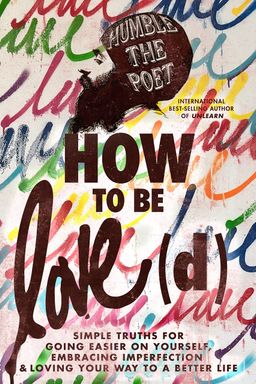
What if the love you’ve been chasing your whole life isn’t something to find but something to become? In How to Be Love(d): Simple Truths for Going Easier on Yourself, Embracing Imperfection & Loving Your Way to a Better Life, Humble The Poet (born Kanwer Singh) proposes that love isn’t a destination or a reward, but a daily practice—a way of living that starts with you. He argues that real transformation happens when you stop striving to be loved and start learning how to be love itself.
At its heart, this book dismantles the myths about love that keep us unfulfilled and disconnected—the lie that we must earn love through perfection, sacrifice, or validation from others. Instead, Humble shows that love is not something others give us; it’s an energy that already flows within. Our job is to clear the blockages—fear, ego, insecurity, and shame—that keep it from circulating freely.
From Seeking to Realizing Love
Humble opens with raw personal stories—breakups, career setbacks, disappointments—that expose how chasing external approval brought him pain. Like many people, he confused attention, validation, and attraction with love. But through painful introspection, he learned that love isn’t found in approval or achievement but in authenticity. The first chapters redefine love as both a verb and an energy. It’s not something you receive; it’s something you generate and share. “Love doesn’t have to be earned or found,” he writes, “it just has to be realized.”
From there, the book frames love as a journey inward. The author urges readers to drop the outdated scripts fed by fairy tales, social media, and cultural conditioning—the beliefs that make us think love comes only after we’re flawless, rich, or chosen. Love, he insists, is within reach to anyone willing to listen, learn, and unlearn.
Unlearning: Clearing the Path
Humble sees personal growth as the process of "unlearning" what gets in love’s way. Ego is the first culprit. In vivid analogies drawn from his Sikh upbringing, he explains that ego separates “you” from “we.” When you serve ego, love dries up; when you release it, love overflows. Other blockages—like perfectionism, secrecy, judgment, and fear—are explored through stories both painful and humorous, such as holding grudges over dog-puke-on-the-rug moments or overexplaining yourself to be liked. He reminds readers that awareness, not avoidance, is the antidote. Awareness turns weakness into a doorway.
Throughout the book, Humble uses playful language to pull you in (“shut the fuck up and listen,” he says in a chapter on communication) but then lands gentle truths underneath the profanity. The consistent message: stop overengineering love and start practicing its simplest expressions—trust, forgiveness, honesty, listening, and presence. These are muscles to strengthen, not ideals to chase.
Self-Love as the Foundation
A major portion of the book centers on self-love, which Humble calls “being your own nurturing parent.” He connects our adult struggles with love to the wounds of childhood—the attention we didn’t get, the conditional affection that made us perform for approval, the silence we mistook for safety. Healing begins when you learn to give yourself what you’ve been outsourcing to others: kindness, validation, nurturing. This is echoed by thinkers like bell hooks in All About Love and Brené Brown in The Gifts of Imperfection—self-acceptance is not indulgence; it’s preparation for compassion toward others.
Self-love, Humble writes, isn’t about bubble baths or mantras. It’s being the friend, the parent, and the coach your inner child needed. When you stop treating yourself as a problem to fix and start treating yourself as someone worthy of care, you make yourself available for love to flow through you.
Love in Relationships
After grounding readers in self-love, Humble extends the lesson outward: we bring to others only what we practice within. The latter half of the book explores romantic and platonic relationships—how to build interdependence instead of codependence, how to communicate with empathy, and how to know when to walk away. He flips common ideas—"nice guys finish last," "jealousy means love," "love conquers all"—and replaces them with patient, real-world wisdom. Love is not a prize or a fix; it’s a process of showing up honestly, communicating clearly, and respecting boundaries—yours and theirs.
To love, he emphasizes, is not to rescue or control but to witness and choose—again and again. Relationships don’t complete us; they reflect us. Learning to close harmful pathways (like toxic relationships) is as loving as nurturing healthy ones. Whether through heartbreak stories (“Diamonds for Paperweights”) or quiet truths (“Listening Is Love”), Humble invites you to stop chasing perfect people and instead build imperfect but genuine connections.
Why This Matters Now
In a world obsessed with achievement, online validation, and fleeting pleasure, Humble’s argument that “love is realized, not earned” is radical. He blends ancient Sikh principles with modern therapy, mindfulness, and pop-culture relatability. His tone is equal parts monk and stand-up comic, mixing self-deprecating confession (“I’m a shitty listener”) with tough love (“Stop using love to fix people who don’t want to heal”).
Ultimately, How to Be Love(d) reminds readers that love isn’t something we wait for; it’s something we create daily through our choices—to forgive, to listen, to be honest, to let go, and to start again. Self-acceptance widens the roads love travels on, and when we live love, rather than seek it, connection becomes inevitable.
“It’s not a labor of love,” Humble writes near the end, “but a labor to love.”
He positions this book not as a how-to guide but a field manual: for unlearning, forgiving, and returning to what we already are. Love isn’t lost; it’s simply waiting for us to remember ourselves.