
Idea 1
Walt Disney’s Creative Blueprint for Life and Work
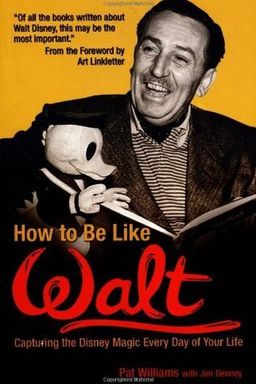
How do you turn imagination into institutions that shape entire generations? Walt Disney’s life offers a living manual for how to build a dream that endures. This book argues that Walt’s genius wasn’t just cartooning or entertainment—it was a complete system of visionary creation, blending storytelling, salesmanship, experimentation, leadership, and resilience. He used memory, risk, and collaboration as raw materials to build a multi-generational enterprise.
Across this biography-cum-playbook, you’ll see how a farm boy from Missouri transformed nostalgia into creative fuel, failure into invention, and corporate management into an art of animated leadership. Rather than luck or innate talent, Disney’s achievements come from disciplined habits—what he called “stick-to-it-ivity.” Each chapter—from his origins to his final projects—reveals principles you can use in your own creative or leadership journey.
From Roots to Creative Vision
Walt’s early life in Marceline, Missouri, built his affection for simple Americana and human warmth. That small-town sense of decency, color, and movement became the DNA of Main Street U.S.A. at Disneyland. His father Elias modeled perseverance and moral discipline; his mother Flora added humor and affection. Those dual lessons—integrity with imagination—became the foundation of Disney’s creative ethic. You, too, can curate your memories, keeping the traits that strengthen your character and converting painful experiences into creative power.
The Alchemy of Selling Vision
Walt learned early to sell dreams before they existed. Whether persuading a Kansas City restaurateur to trade space for drawings or convincing ABC to invest half a million dollars in the unbuilt Disneyland, his secret lay in integrity-based persuasion. He sold ideas through emotional storytelling, vivid prototypes, and contagious enthusiasm. Salesmanship, for him, was not manipulation—it was shared belief. If you can portray your idea so vividly that others feel it, you transform buyers into partners.
Innovation as Problem Solving
Every major Disney innovation was born from crisis. Losing Oswald the Lucky Rabbit birthed Mickey Mouse; technical limits inspired synchronized sound in Steamboat Willie; the high cost of animation led to new training programs. Walt’s imagination worked like a laboratory. He merged artistry with engineering, testing everything from color film to sound experiments. The rule: imagination must act. Ideas meant nothing unless they could be built, tested, and refined.
Leadership that Animates People
Disney’s leadership style fused artistry and discipline. He inspired through performance—acting out stories as lessons in emotional clarity—and demanded follow-through. He created teams where “everyone calls me Walt,” signaling equality, yet paired it with exacting standards. Leading artists, engineers, and financiers, he proved that leadership is storytelling at scale: you continually paint a vision others can believe in and shape together.
Plussing, Persistence, and Purpose
Disney’s culture revolved around “plussing”—the relentless improvement of every detail. He demanded one more refinement, one extra spark. Plussing produced innovations like Technicolor animation, the Matterhorn, and the realism of Snow White. Alongside plussing came his cardinal habit, stick-to-it-ivity: the will to keep building through exhaustion and ridicule. When Disneyland’s opening day collapsed under chaos, he rebuilt, learned, and reopened stronger. The lesson for you: persistence isn’t blind stubbornness—it’s the continual study and solving of problems to deliver something extraordinary.
From Disneyland to Tomorrow
Walt viewed Disneyland as a proof-of-concept for creating the future. He connected imagination, engineering, and public participation—years before Silicon Valley called it innovation. Tomorrowland, the space documentaries, and EPCOT (planned as the Experimental Prototype Community of Tomorrow) embodied an unrelenting curiosity about how technology could improve life. To “ask how about tomorrow” is to constantly prototype progress, not just imagine it.
A Legacy of Learning and Generations
Late in life, Disney shifted focus toward education and legacy. Through the Mickey Mouse Club’s moral lessons, the True-Life Adventures nature films, and his founding of CalArts, he aimed to mentor creators who could blend art, science, and ethics. His philanthropic commitment wasn’t ornamental—it institutionalized his worldview that creativity and education belong together. To live like Walt is to invest in the next generation’s imagination as part of your own success.
The Enduring Model
By the time of his death in 1966, Disney had built more than entertainment—he’d created a self-renewing system of imagination. His pattern—rooted memory, salesmanship, disciplined creativity, servant leadership, and futuristic curiosity—forms a map for anyone aspiring to create meaningful, generational work. Whether your goal is storytelling, entrepreneurship, or education, Walt’s blueprint affirms that a dream worth doing is a dream worth persisting in, refining, and sharing with others.